
Three of the node-based AI canvases that developers keep comparing are not called what most people still type into search. Two of them changed names in the last year, and the change is not cosmetic: it affects who can get an API key, how billing works, and whether you can drive a workflow without a human clicking through a browser. If you are picking one to build on, most of the reviews you will find are already out of date. A good starting point for the wider category is this roundup of developer-friendly AI generation platforms.
For a developer the question is not which canvas looks nicest but which one you can automate: whether there is a documented REST endpoint, what tier unlocks a key, and whether an agent can trigger a saved pipeline as a tool call. These three answer that very differently, and the gap is wider than the feature tables suggest, in part because people treat node-based AI workflow platforms as interchangeable.
This piece compares the three through an API and automation lens, with their current 2026 names, and looks at where the real automation ceiling sits for each.
What actually changed in 2026
Weavy was acquired by Figma in late 2025 and now runs as Figma Weave at weave.figma.com, with logins still working through the old app.weavy.ai address, which is why so much existing coverage never noticed the move. Freepik went further, rebranding the whole company to Magnific in April 2026, so Spaces is now a feature inside Magnific at magnific.com rather than a standalone product. Flora kept its name and its home at flora.ai. The write-up on Weavy alternatives with an API tracks the same shifts.
The rebrands matter because account access, billing, and API availability all moved with them. A tutorial referencing a Weavy endpoint or a 2025 Freepik Spaces plan may point at a page that no longer exists, so each tool below is described as it stands today.
Weavy, now Figma Weave
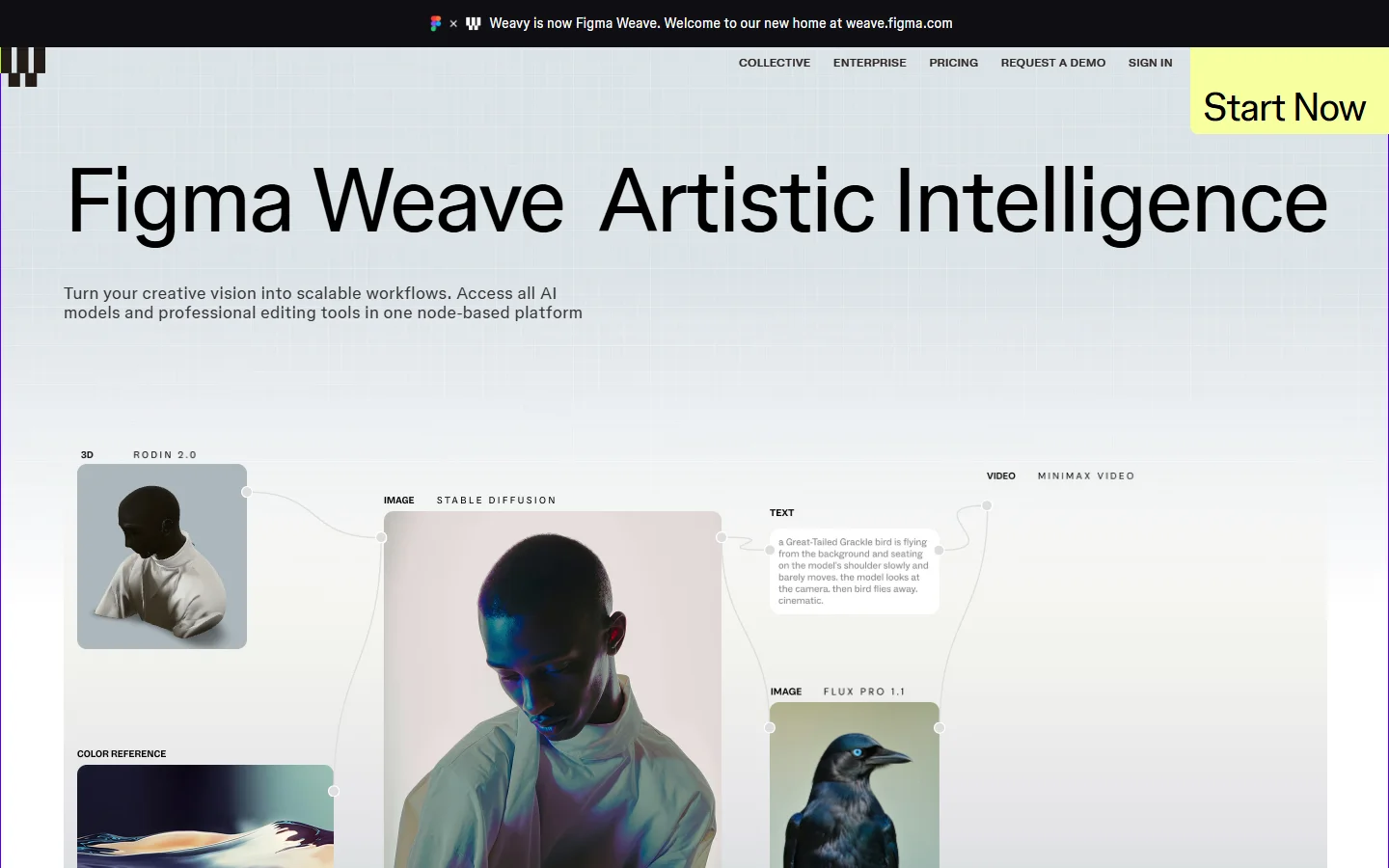
Figma Weave is a node-based canvas that chains multiple AI models with real production editing controls: array nodes for batch variations, alpha masks, curves and levels, and deterministic parameters. For teams already inside Figma, the native integration is the draw. The catch for developers is access. API keys are only issued on the Enterprise tier, so there is no self-serve way to call Weave from your own code on the Free, Starter, Professional, or Team plans. As this look at node-based AI platforms for developer teams notes, that makes Weave a design surface first and an automation backend a distant second.
Pricing is credit-based and, for now, billed separately from Figma seats, scaling up to a Team plan at roughly forty-eight dollars per user per month. None of those tiers opens a key. If your plan involves hitting an endpoint from a server, Weave only fits once you are an Enterprise customer, which puts it in a different bracket from most AI canvas platforms with API access.
- Figma Weave · Strength: production-grade compositing nodes and native Figma integration · Weakness: API access gated to Enterprise only · Best for: design-led teams inside Figma, not headless automation
Freepik Spaces, now Magnific

Magnific gives developers more to work with, with one limit worth understanding first. The platform ships a real, documented REST API with tiered keys, and its pricing lists API plans by credit volume. You can call individual models and tools, such as upscaling or generation, straight from code. What you cannot do is drive a full Spaces canvas end to end through the API: the documented endpoints target individual models, not a Spaces pipeline, so chaining steps still means writing your own glue or clicking through the interface. The breakdown of the Freepik Spaces API walks through exactly which calls are and are not exposed.
That distinction is easy to miss and expensive to discover late. If the job is "call an upscaler or a generator from my backend," Magnific handles it well and the stock-plus-generation licensing is clean. If the job is "run this multi-step canvas every night," the API alone will not get you there. The notes on a Freepik Spaces alternative for developers lay out where that ceiling starts to bite.
- Magnific (Freepik Spaces) · Strength: documented REST API with clear credit tiers · Weakness: no API to orchestrate a full Spaces workflow · Best for: apps that need licensed stock plus model-level generation via API
Flora
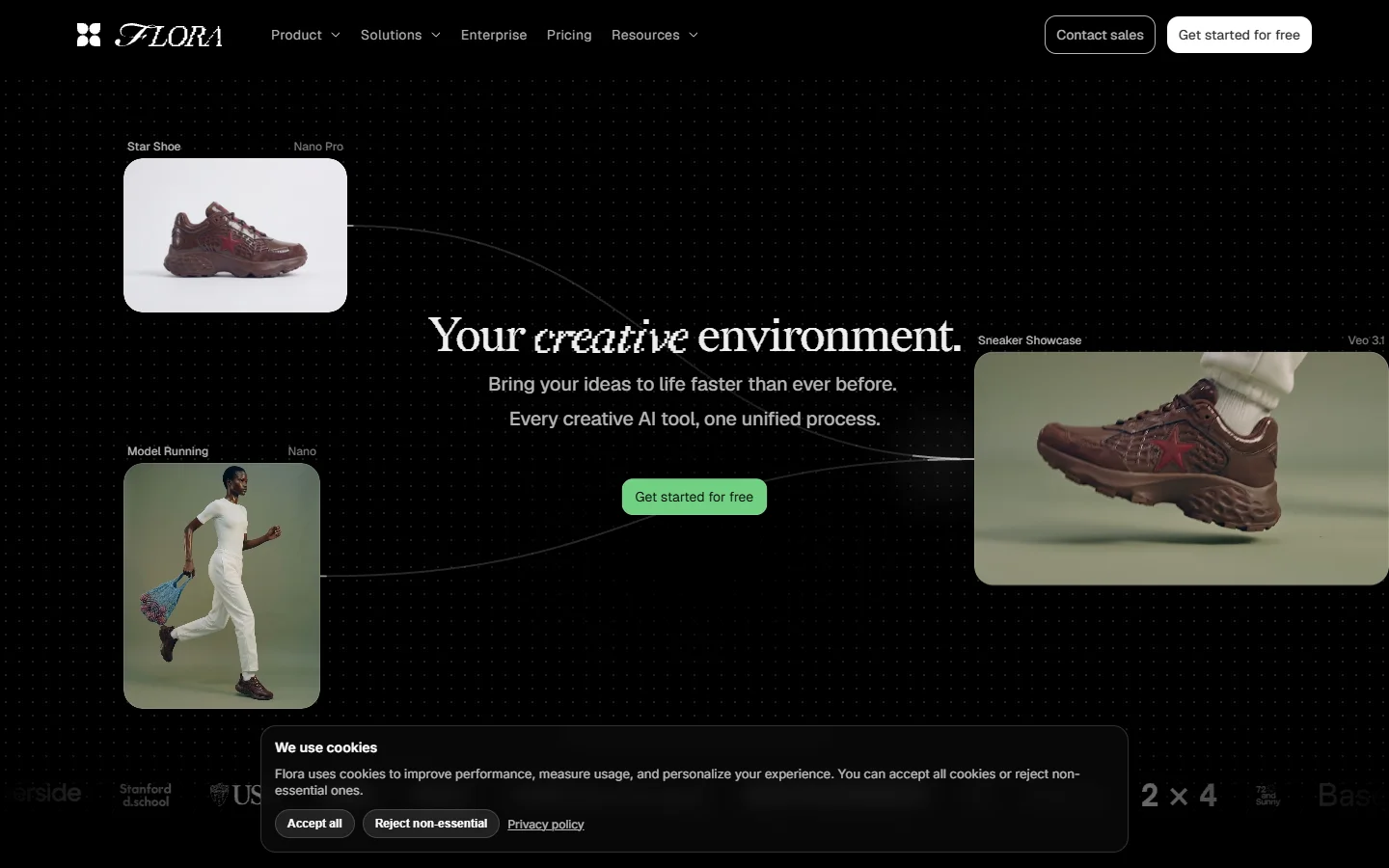
Flora is the most developer-approachable of the three on paper and the cheapest way to reach real programmatic access. Its infinite canvas unifies dozens of generative models with reusable "Techniques" and "Flows," and both an API and an MCP server become available on its lowest paid tier, reported around sixteen to eighteen dollars a month. The MCP server is the standout: it exposes saved Flora workflows as tool calls, so an agent or coding assistant can trigger a workflow instead of navigating the canvas by hand. The overview of the Flora AI API covers how those saved flows map to callable tools.
The honest limit is that Flora frames its API as a way to extend the canvas, not replace it. You can trigger generations and pull results back, which is useful, but building complex multi-model chains still means writing orchestration around the calls. It is the closest of the three to a headless story without being a full orchestration backend on its own. This survey of AI workflow platforms with an API puts Flora next to its rivals.
- Flora · Strength: cheapest entry to both an API and an MCP server · Weakness: API is a canvas extension, not a standalone orchestration engine · Best for: developers and agents that want to trigger a saved creative workflow programmatically
The API automation reality, tier by tier
Stack the three side by side and the pattern is clear. Figma Weave requires Enterprise before any key exists, Magnific hands you a key at a low tier but only for model-level calls, and Flora unlocks both an API and an MCP server at its cheapest paid seat. That ordering lines up with what the survey of no-code AI platforms with API access found across the wider market.
This is also where a lot of teams realize they want something outside the creative-canvas category entirely. If the goal is to chain arbitrary models and APIs into one programmatic pipeline with version control and retries, a purpose-built orchestrator is a different class of tool. The Wireflow platform is one option in that space, sitting alongside self-hosted automation runners and hand-rolled agent stacks, and it is worth evaluating as one candidate rather than a default. The point is that canvas-first tools and orchestration-first tools solve different problems, and mixing them up is how projects stall.
What none of these fully solve
All three are creative canvases with API access bolted on at varying heights. None gives you a clean, vendor-neutral way to define a multi-model pipeline once and call it as a single endpoint. Figma Weave locks that behind Enterprise, Magnific stops at model-level calls, and Flora treats the API as a canvas companion. For batch or headless work without a browser in the loop, you will write orchestration code regardless of which one you choose. The comparison of headless AI workflow platforms shows what a truly automation-first setup looks like.
That gap is a category boundary, not a knock on any product. Creative canvases optimize for a human directing generations on screen; pipeline orchestration optimizes for a program doing it at scale. Knowing which side your project sits on saves wasted integration effort, as the primer on building AI workflows with an API makes clear.
FAQ
Is Weavy still called Weavy? No. Figma acquired Weavy in late 2025 and it now operates as Figma Weave at weave.figma.com, though logins still work through the legacy app.weavy.ai address.
Does Figma Weave have a public API? Not on self-serve plans. API keys are only issued on the Enterprise tier, so the Free, Starter, Professional, and Team plans have no programmatic access. The wider set of AI canvas platforms with API access shows how unusual that gating is.
Is Freepik Spaces still called that? Freepik rebranded the company to Magnific in April 2026, and Spaces is now a feature inside Magnific at magnific.com. Existing accounts and subscriptions carried over automatically.
Can I call the Magnific API to run a full Spaces workflow? Not directly. The documented API lets you call individual models and tools with credit-based keys, but no published endpoint orchestrates an entire Spaces canvas. Chaining steps needs your own code, a limit the guide to AI orchestration APIs for production apps explores further.
Which of the three is cheapest for real API access? Flora. Both its API and its MCP server unlock at its lowest paid tier, reported around sixteen to eighteen dollars a month, well under Magnific's model-level tier and Figma Weave's Enterprise-only gate. The walkthrough on building AI pipelines with REST APIs shows what you can do once that key is live; verify the current price on flora.ai/pricing before planning around it.
What is MCP, and which of these supports it? Model Context Protocol lets an AI agent or coding assistant call a tool programmatically. Flora is the only one of the three that ships an MCP server, letting agents trigger saved Flora workflows as tool calls rather than clicking through the canvas.
Are any of these good for fully headless automation? None solve it completely. Figma Weave needs Enterprise for any API, Magnific works headlessly only for single model calls, and Flora's API is closest but still framed as a canvas extension. Teams that need true headless pipelines often look at API alternatives built for developer teams instead.
The bottom line
Pick by your actual constraint, not the marketing. Choose Figma Weave if your team lives in Figma and Enterprise pricing is fine, Magnific if you want licensed stock plus model-level API calls, and Flora if you want the cheapest path to an API and an MCP server for agent-driven triggers. If your real need is chaining arbitrary models into one programmatic pipeline, none of these three is built for that, and an AI workflow automation platform belongs on your shortlist alongside them. Match the tool to your side of that line and the choice gets simpler.