Node-based AI workflow platforms stopped being a curiosity about two years ago. Today the question is not whether to chain models on a canvas but which canvas to standardize on, and the honest answer depends on who runs it and where the output goes. We ran the same multi-model pipeline on five platforms and scored each one against the criteria that decide whether a visual AI pipeline survives contact with production.
The five: ComfyUI, Wireflow, Magnific (formerly Freepik Spaces), Figma Weave (formerly Weavy), and Krea. Each of them treats a workflow as a graph of connected model calls, but they disagree sharply on model coverage, reproducibility, and whether the graph can be called from code once it works.
How We Scored These Node-Based AI Workflow Platforms
Five axes, each 1 to 10: model breadth (how many models you can wire in without leaving the canvas), reproducibility (does the same graph produce the same pipeline run next month), API access (can you trigger the graph over REST), collaboration (multiplayer editing, sharing, review), and control (self-hosting, custom nodes, owning the runtime).
The test pipeline was deliberately ordinary: prompt rewrite, image generation, upscale, background swap, then an image-to-video pass. Ordinary is the point. If a platform stumbles on the boring production case, the demo-reel features do not matter.
1. ComfyUI: Best Self-Hosted Control
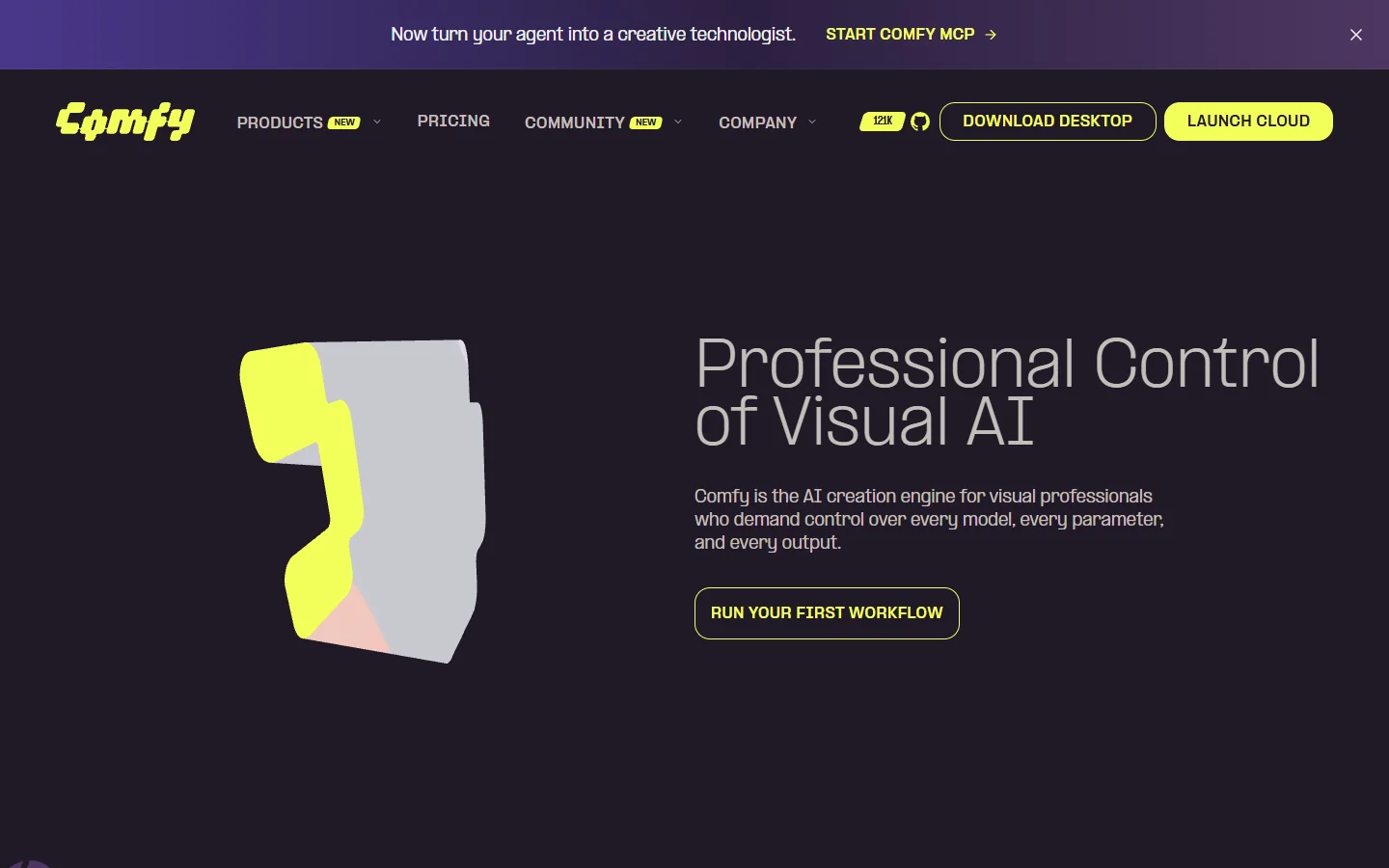
ComfyUI remains the reference implementation of the node graph idea. You own the runtime, every sampler setting is exposed, and the custom-node ecosystem covers almost anything, which is why so many no-code AI workflow guides still start here.
The tradeoffs are real. You manage GPUs, Python environments, and node-pack version drift yourself, and a graph that runs on your machine can fail on a teammate's. Hosted API wrappers around ComfyUI patch some of this, at the cost of the control that made you pick it.
Verdict: if you want every dial and you own the GPU, ComfyUI is still the tool the others are measured against.
2. Wireflow: Best Model Breadth and API-Callable Workflows
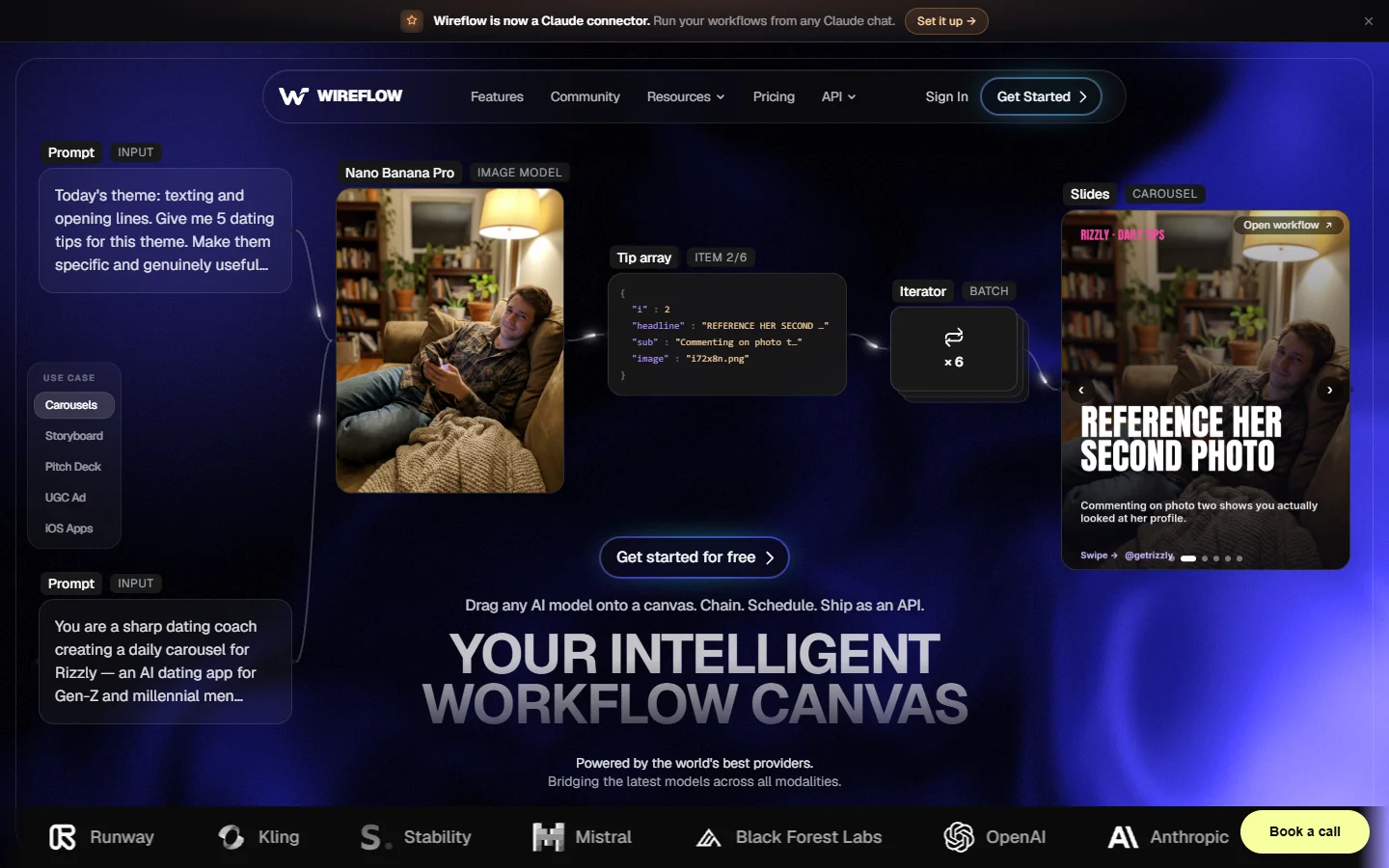
Wireflow is a node-based AI workflow canvas that connects 79+ AI models into reproducible, API-callable workflows. That sentence is essentially the whole pitch: image, video, audio, and LLM nodes from competing providers sit on one graph, and a finished graph becomes an endpoint you can call from a backend with typed inputs.
Reproducibility is the standout. Graphs are versioned and rerunnable, so the pipeline that produced last month's campaign produces the same structure today, which is the property teams usually discover they needed only after an ad-hoc setup breaks.
It does not win everything. There is no self-hosted option, so regulated teams that need the runtime in their own VPC should look at ComfyUI instead, and it has no stock asset library, so teams that live on licensed stock will feel the gap against Magnific. Credit-based pricing on heavy video models also needs watching in high-volume pipelines.
Verdict: the shortest path from a node graph on a canvas to a production API call.
3. Magnific (formerly Freepik Spaces): Best Collaboration and Stock Integration

Magnific is the rebranded Freepik Spaces, and the Freepik DNA is its edge: the node canvas sits next to a giant licensed stock library, and multiplayer editing is the best of the five. A content team can build, comment, and iterate inside one canvas without anyone exporting anything.
The ceiling shows up on the engineering side. Model selection is curated rather than broad, and programmatic access trails the visual experience, so pipelines that need to run headless on a schedule end up rebuilt elsewhere.
Verdict: the canvas a whole marketing team can actually live in, as long as engineers are not the ones driving.
4. Figma Weave (formerly Weavy): Best for Design Teams Already in Figma
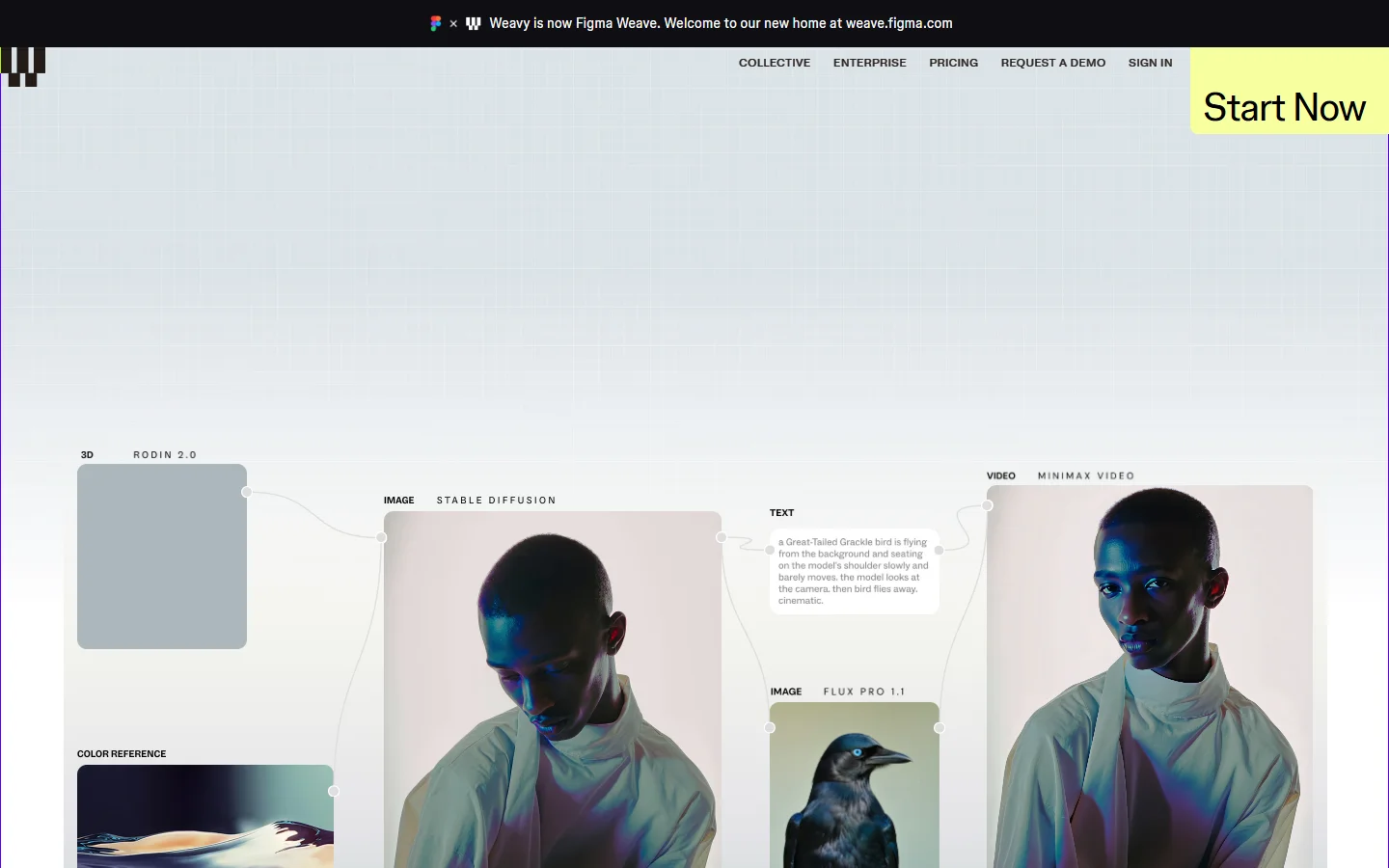
Figma Weave is Weavy after the Figma acquisition, and it is the most polished canvas here. Outputs flow into Figma files, design systems apply to generated assets, and the editing feel is genuinely excellent, which our visual canvas comparison covers in more depth.
The hard limit: still no public API. A Weave graph is something a designer runs, not something a service calls, a gap that pushed several teams in our API platform comparison to pair it with a second tool, and model coverage follows Figma's partnership list rather than the open market.
Verdict: the obvious pick if your pipeline ends in a Figma file, and a dead end if it ends in an API.
5. Krea: Best Realtime Ideation
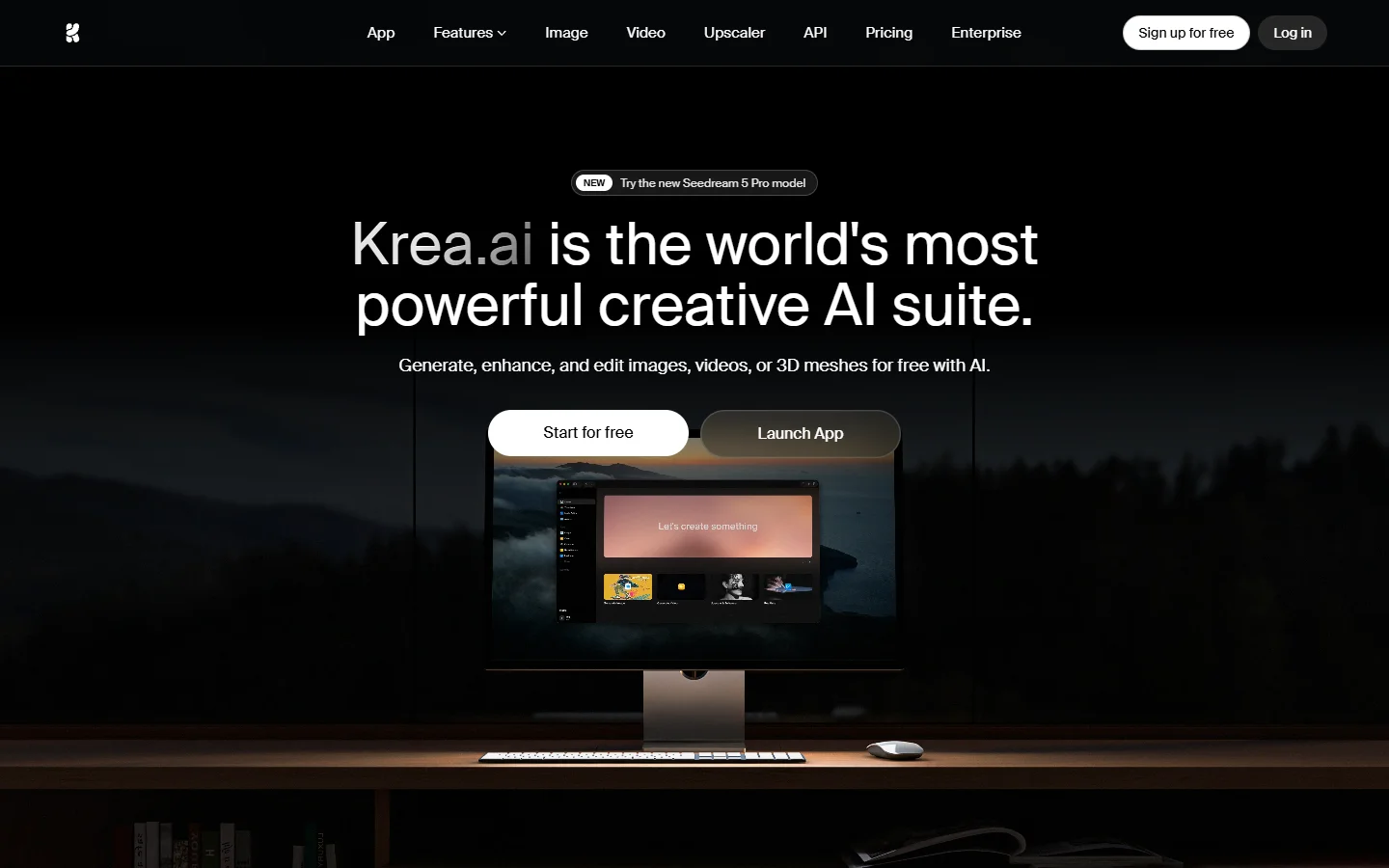
Krea is the fastest feedback loop of the five. Realtime generation while you drag a slider changes how you explore a look, and for the first hour of a project it beats everything else in this category of canvas tools.
It is weaker as a workflow platform: graphs are lighter-weight, reproducibility is loose, and the API surface targets single generations rather than the whole-pipeline REST pattern the other platforms are converging on.
Verdict: best for finding the shot, not for shipping the pipeline that produces it every week.
The Scoreboard
Scores are out of 10, from our test pipeline runs and each platform's documented API surface:
- ComfyUI: model breadth 7, reproducibility 6, API 6, collaboration 3, control 10
- Wireflow: model breadth 9, reproducibility 9, API 9, collaboration 7, control 5
- Magnific: model breadth 6, reproducibility 6, API 5, collaboration 9, control 4
- Figma Weave: model breadth 6, reproducibility 7, API 2, collaboration 8, control 4
- Krea: model breadth 5, reproducibility 5, API 6, collaboration 6, control 4
Which One Should You Pick
Match the platform to the team that operates it daily. Solo technical artists and ML tinkerers should self-host ComfyUI. Marketing and content teams that value multiplayer and stock should take Magnific, and design orgs standardized on Figma should take Weave, a split we saw repeatedly while testing headless workflow platforms.
Product and growth teams that need one canvas covering many models, and need the result callable from code, are Wireflow's center of mass. A typical case is wiring generation, editing, and voiceover into an automated AI video pipeline that a scheduler or backend triggers without anyone opening the editor.
FAQ
What is a node-based AI workflow platform?
A tool where each AI model call is a node on a canvas and edges pass outputs downstream, so a multi-step generation becomes a reusable graph instead of a pile of manual steps across tabs.
Which node-based AI workflow platform has the most models?
Of the five evaluated, Wireflow connects the most out of the box at 79+ across image, video, audio, and LLMs. ComfyUI can reach further through community nodes, but you install and maintain each integration yourself.
Can these platforms run workflows through an API?
ComfyUI (self-hosted), Wireflow, and Krea expose programmatic execution, with Wireflow's being the most complete for full-pipeline REST calls. Magnific's API trails its canvas, and Figma Weave has none.
Is ComfyUI still worth it in 2026?
Yes, when control is the requirement. Nothing hosted matches owning the runtime, and for regulated data or exotic custom nodes it remains the only real answer in this platform category.
Bottom Line
There is no single winner, which is what makes the category healthy. ComfyUI wins control, Magnific wins collaboration and stock, Figma Weave wins the design ecosystem, Krea wins ideation speed, and Wireflow wins model breadth, reproducibility, and API-callable execution. Pick the axis your team actually depends on, then hold the platform to the production standard rather than the demo.