
Every AI image and video model now ships with an API, which sounds like good news for developers until you actually try to build on one. Auth schemes differ, queue behavior differs, pricing is opaque, and half the "developer platforms" out there are consumer apps with an endpoint bolted on. We compared the current field in our roundup of the best AI content generation APIs, and the gap between the best and worst integration experiences is enormous.
This guide looks at the platforms that actually treat developers as the primary customer in 2026: clear docs, predictable latency, sane billing, and models you can swap without rewriting your integration. We also cover the orchestration question, because picking a model provider is only half the job; you can see how teams wire providers together in our guide to building AI pipelines with REST APIs.
One note on scope: we focus on generative media (images, video, audio) rather than LLM inference. The economics and failure modes are different, and the platforms below are the ones we keep coming back to in real projects.
What "developer friendly" actually means in 2026
The phrase gets thrown around loosely, so here is the checklist we scored against. A platform earns the label when it offers stable versioned endpoints, webhooks or async job polling for long-running generations, transparent per-generation pricing, and SDKs that are maintained rather than abandoned. We went deeper on the evaluation criteria in our comparison of AI workflow platforms with APIs.
Two things matter more in 2026 than they did a year ago. First, model turnover: new image and video models land monthly, so a platform that lets you switch models by changing a string beats one that requires a new integration. Second, spend control: generation costs are variable and mistakes are expensive, so hard budget caps and per-key limits have moved from nice-to-have to mandatory, a point we made in our review of AI orchestration APIs for production apps.
fal.ai
fal.ai has become the default answer to "how do I call the newest model the week it comes out." It hosts hundreds of image, video, and audio models behind one auth pattern, with day-one access to most major releases; our walkthrough on using Nano Banana via API runs on exactly this kind of endpoint. Latency is its strongest card; fal invested heavily in inference optimization and it shows on diffusion workloads.
- Strength: fastest route to new models, one API key for the whole catalog, strong queue and webhook support
- Weakness: pricing varies per model and adds up quickly at volume; the catalog is so large that quality varies between endpoints
- Best for: product teams that want to ship features on frontier models without managing infrastructure
If your workload is mostly stills, our walkthrough on running batch image generation via API uses this style of endpoint and covers the throughput math.
Replicate
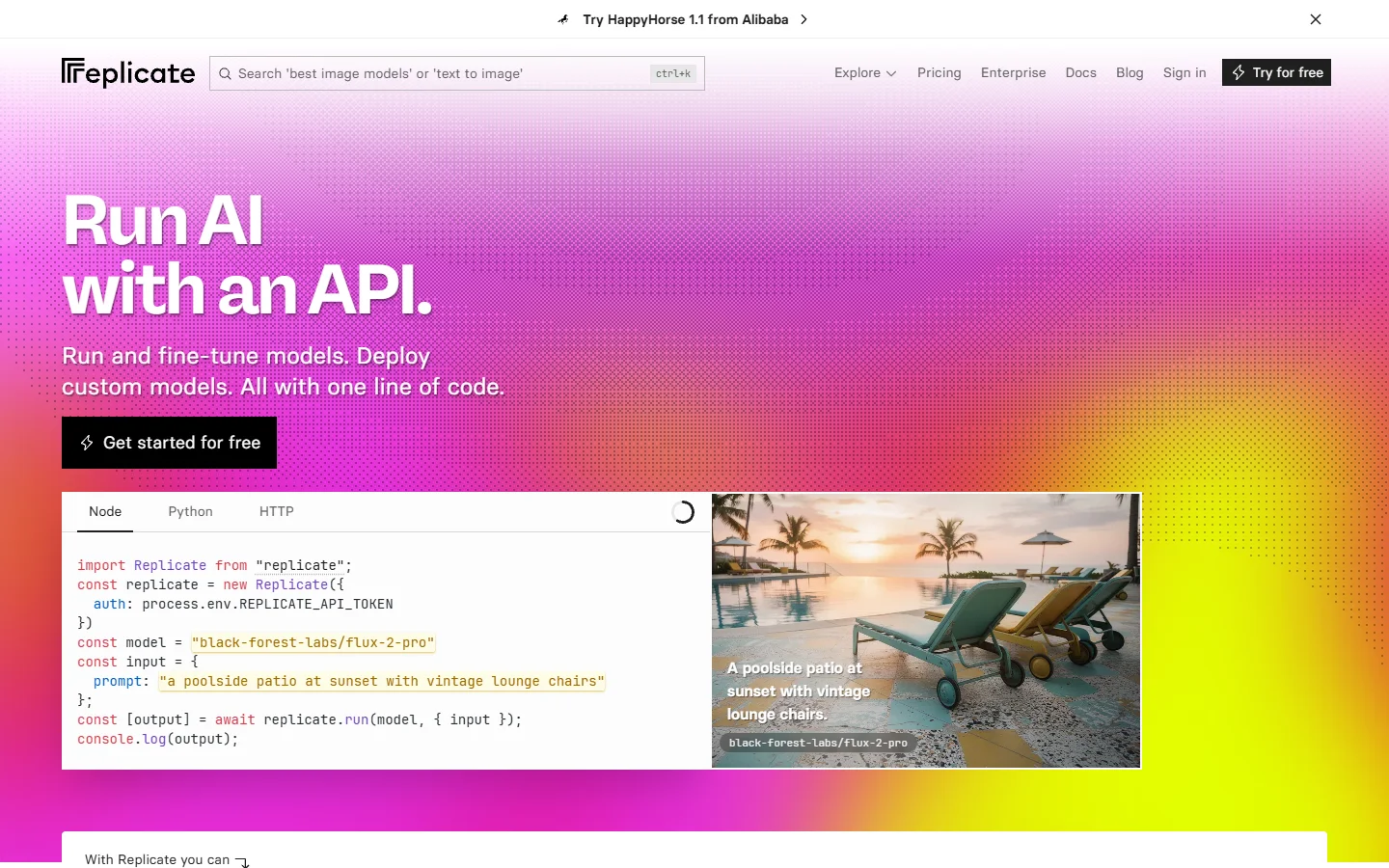
Replicate pioneered the "run any model with one line of code" pattern and still has the broadest community catalog. Anyone can push a model with Cog, which means you find niche fine-tunes here that exist nowhere else, from style LoRAs to specialist tools like the ones in our guide to upscaling images with ClarityAI via API. Cold starts remain the main complaint; popular models stay warm, long-tail ones do not.
- Strength: huge community model library, excellent docs, simple pay-per-second billing
- Weakness: cold-start latency on less popular models; output consistency depends on who packaged the model
- Best for: prototyping and products built on community fine-tunes rather than flagship models
Replicate is also the reference point most teams use when they compare hosted options, as we found while researching programmatic image generation platforms.
Runway
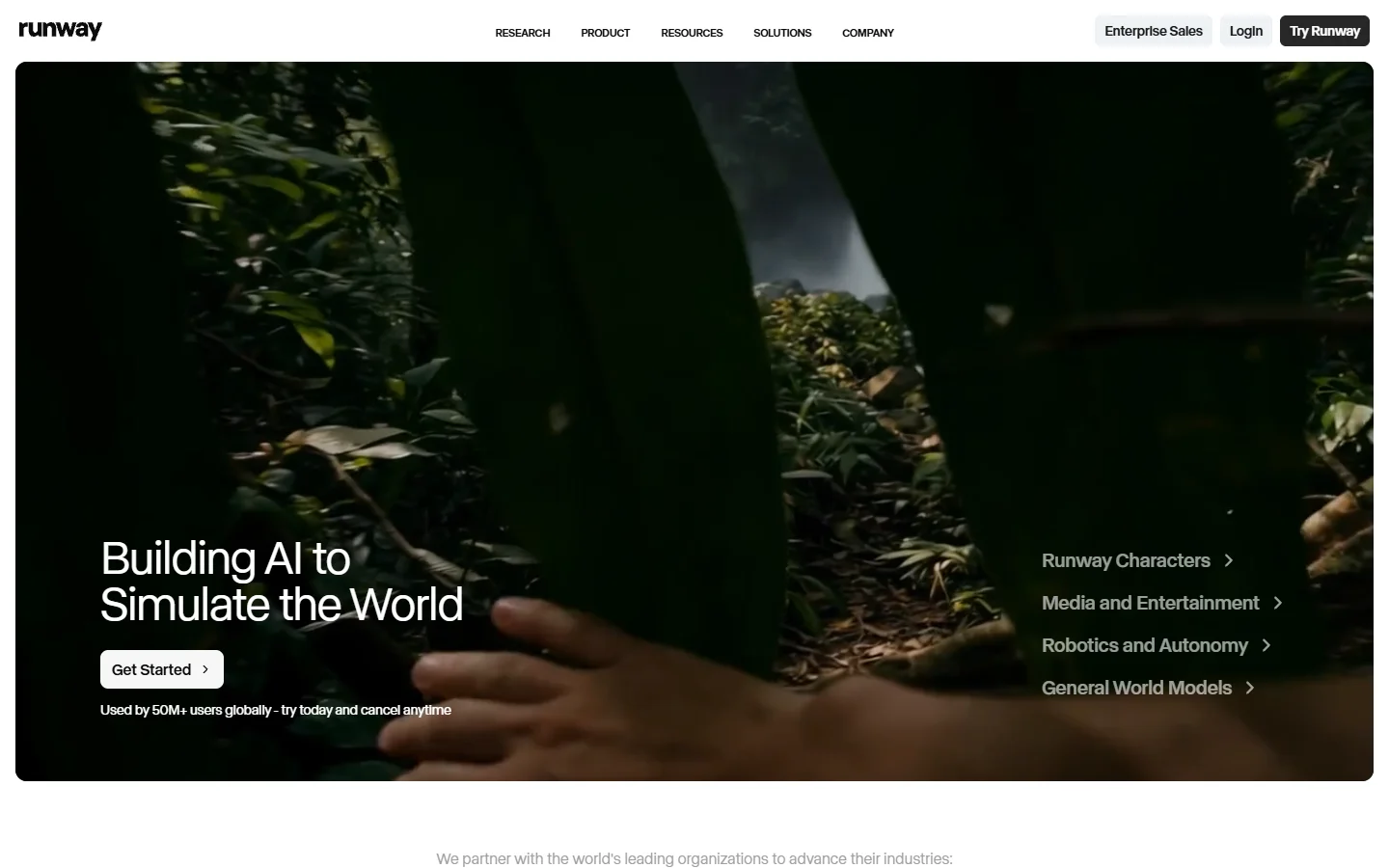
Runway is the odd one out here: a creative suite first, an API second. But the Gen-4 API matured a lot this year, and if you specifically need Runway's video models, which hold their own in our comparison of the best AI video generators, the developer experience is now solid, with proper async jobs and organization-level usage controls.
- Strength: access to Runway's own video models with strong motion consistency; credits map cleanly to API usage
- Weakness: single-vendor catalog, so no model switching; costs are high for long clips
- Best for: teams committed to Runway's model family for video features
If you want the same capability without vendor lock-in, we maintain a separate list of Runway API alternatives for developer teams that covers the multi-model routes.
Hugging Face
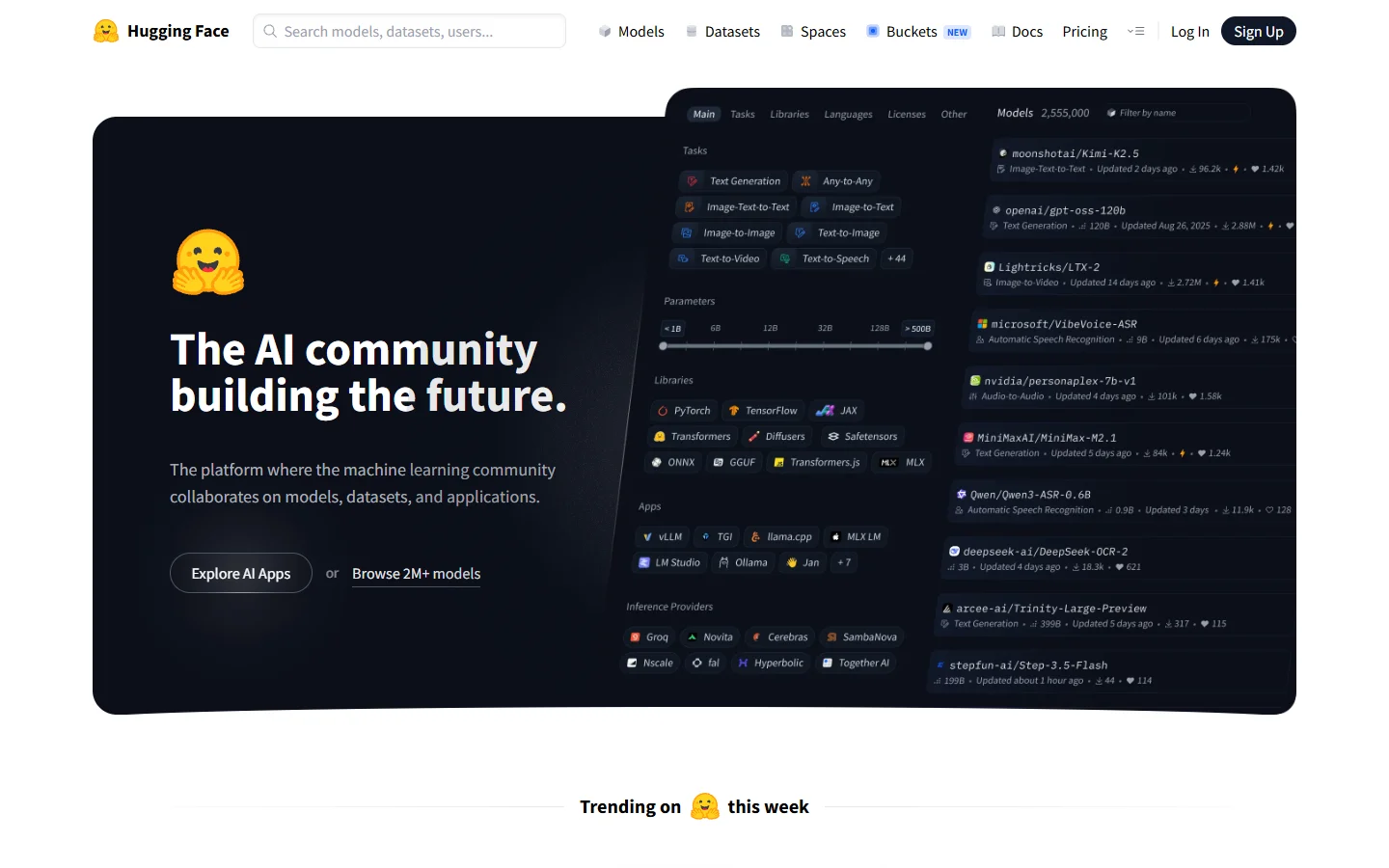
Hugging Face remains the center of gravity for open-source models, and Inference Endpoints turn any of them into a private, autoscaling API. It demands more configuration than fal or Replicate, but you get control the managed catalogs cannot offer: pick your hardware, pin your model revision, keep weights private. That control level matters most in the setups we described in our piece on AI canvas REST APIs for production pipelines.
- Strength: total control over model versions and hardware; the largest open model ecosystem
- Weakness: you own more of the ops burden; per-hour endpoint billing punishes spiky traffic
- Best for: teams with ML experience that need reproducibility or custom fine-tuned weights
Version pinning matters more than people expect; we covered why silent model updates break production outputs in our piece on Flux Pro API pricing and code examples.
Together AI
Together AI built its reputation on fast open-model inference for text, then expanded into image generation with FLUX and other open checkpoints. Pricing is aggressive and the OpenAI-compatible API surface means most teams can integrate it in an afternoon; the same convention powers many of the services in our complete guide to programmatic video generation platforms.
- Strength: low per-image pricing on open models, familiar API conventions, good rate limits on entry tiers
- Weakness: image and video catalog is thinner than fal or Replicate; strongest on text-adjacent workloads
- Best for: teams already using Together for LLMs that want image generation from the same account
For video-heavy workloads it is worth checking model-specific access first; our guide to accessing Google Veo via API shows how availability differs across providers for the same model.
The workflow layer: where single APIs stop being enough
Once your product chains more than two generation steps, raw API calls turn into a mess of retry logic, temp storage, and prompt plumbing. This is why the workflow layer became its own category in 2026. Instead of orchestrating six endpoints by hand, you design the pipeline visually and run it as one unit; a workflow-based AI image platform like Wireflow lets you compose multi-model chains on a canvas and then trigger the whole graph programmatically.
The pattern shows up across the ecosystem in different forms, from node editors to headless pipeline services. If you want to survey that landscape separately, our roundup of headless AI workflow platforms compares the main options, and our tutorial on building AI workflows with an API walks through a concrete build.
How to choose
The decision usually collapses to three questions, similar to the decision tree we laid out in our comparison of AI canvas platforms with APIs. Answer them honestly and the shortlist picks itself.
- Do you need frontier models the week they launch? Go with fal.ai, or Replicate if you lean on community fine-tunes.
- Do you need reproducibility and private weights? Hugging Face Inference Endpoints, and accept the ops cost.
- Are you chaining multiple models into one output? Add a workflow layer on top of whichever provider wins, rather than hand-rolling orchestration.
Budget guardrails deserve a final mention: whatever you pick, set hard spend caps per API key before launch, not after the first surprise invoice. We keep a running comparison of provider-side spend controls in our piece on node-based AI platforms with APIs.
FAQ
Which platform is cheapest for AI image generation at scale? Together AI and Replicate are usually cheapest for open models, while fal.ai wins on price-performance for the newest checkpoints. Real costs depend on resolution and steps, so benchmark with your actual prompts; our batch image generation guide includes a simple cost harness.
Do any of these platforms offer free tiers for developers? Most offer trial credits rather than permanent free tiers. Replicate and fal.ai give small starter credits, Hugging Face has a limited free Inference API, and Together includes trial credit on signup. Expect to add a card before doing anything serious.
Can I switch models without rewriting my integration? On fal.ai, Replicate, and Together, yes: models are addressed by identifier, so switching is usually a one-line change. Single-vendor APIs like Runway lock you to their catalog, which is the trade-off we flagged in our programmatic video generation platform overview.
What about video generation specifically? Which API is most mature? Runway's API is the most polished single-vendor option, while fal.ai offers the widest multi-model video catalog including Kling, Veo, and open checkpoints. Pricing per clip varies wildly; our breakdown of Veo 3.1 API examples and pricing shows how to estimate before committing.
Is a no-code platform ever the right choice for a developer team? Sometimes. If the pipeline is stable and non-engineers need to modify it, a visual builder with API access gives you both interfaces over one system. We compared the credible options in our review of no-code AI with API access.
How do I keep generation costs from blowing up in production? Set per-key spend limits at the provider level, cache aggressively (identical prompts should never generate twice), and route drafts to cheaper models while reserving premium models for final outputs. Queue-based async processing also prevents runaway parallel spend.
Conclusion
The 2026 field is genuinely strong: fal.ai for frontier access, Replicate for the community catalog, Hugging Face for control, Together for price, Runway for its own video models. The bigger shift is architectural. Teams are pairing one of these providers with an AI workflow automation platform so that model choice becomes a swappable detail rather than a structural commitment.
Pick the provider that matches your workload today, keep your integration thin enough to switch tomorrow, and put spend controls in place before your first production deploy. The platforms will keep changing; a loosely coupled setup is the only durable decision on this list.