The gap between prototyping an AI workflow and shipping it to production has been one of the biggest friction points for developer teams. Building image generation, video synthesis, or audio pipelines from raw API calls means writing brittle glue code, managing model versions manually, and debugging invisible state. Node-based AI platforms solve this by letting you assemble pipelines visually, then expose the entire graph as a single API endpoint you can call from any stack.
Each AI model or processing step becomes a node on a canvas. You connect nodes with wires, configure parameters, and the platform handles orchestration, queuing, and error recovery. Publish the workflow and you receive a REST endpoint that accepts inputs and returns outputs. No container management, no GPU provisioning, no infrastructure overhead.
This article looks at five platforms that combine a visual node editor with a production-grade API. If you are evaluating headless AI workflow options, this roundup should save you a few weekends of trial accounts.
What Makes a Node-Based AI Platform Useful
Three things matter most when evaluating these platforms: the breadth of available nodes (how many models and utilities you can wire together), the quality of the API layer (authentication, webhooks, rate limits, error responses), and the pricing model (per-run billing versus seat-based plans that punish experimentation).
A good platform should also version your workflows automatically, so rolling back a broken change takes seconds rather than hours. For a deeper look at orchestration API patterns, we covered the architectural side in a separate piece.
ComfyUI
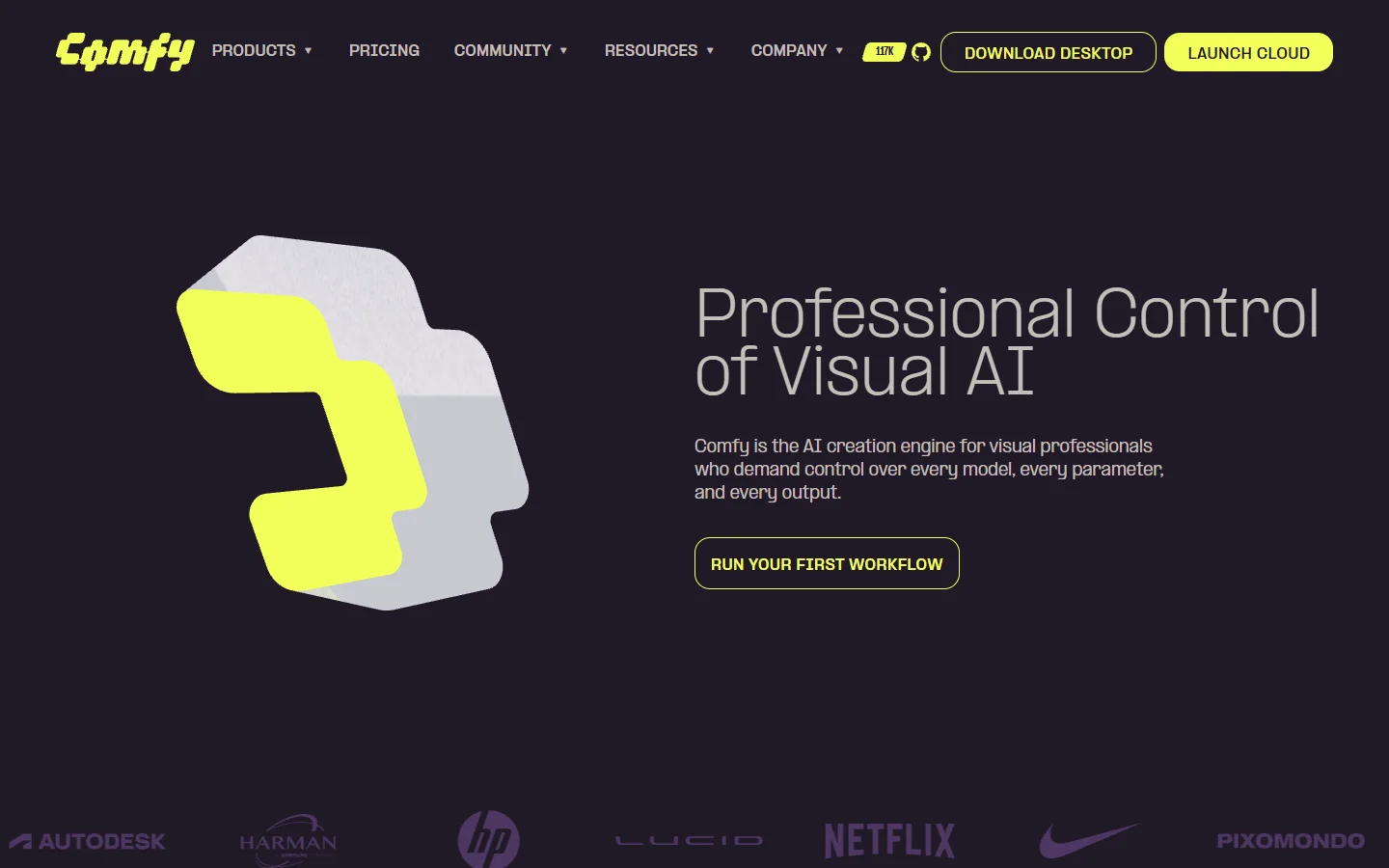
ComfyUI is the open-source standard for node-based image generation. Originally built as a Stable Diffusion frontend, it now supports Flux, SDXL, and dozens of community models through its extensible node system. The canvas is powerful but dense, with hundreds of node types and a steep learning curve.
The API story depends on how you deploy it. Running locally gives you a WebSocket-based API that accepts workflow JSON. Cloud-hosted versions from RunComfy or ComfyDeploy wrap this in a REST interface with content generation API conventions, adding authentication and queue management. GPU hosting runs $0.50 to $2.00 per hour whether or not workflows are executing, making it best suited for teams with ML engineers who want maximum control over inference.
n8n

n8n approaches AI from the automation side. Its node editor was originally designed for business process automation (think Zapier with code access), and it added AI capabilities through dedicated LangChain nodes, an AI Agent node, and native connectors for OpenAI, Anthropic, and local models.
What n8n does well is connecting AI steps to real-world triggers: a form submission fires a workflow that generates images, resizes them, uploads to S3, and notifies a Slack channel. With 400+ integration nodes, self-hosting support, and mature webhook handling, n8n fits backend teams building AI workflows with an API backbone where AI is one step in a larger business process.

Krea
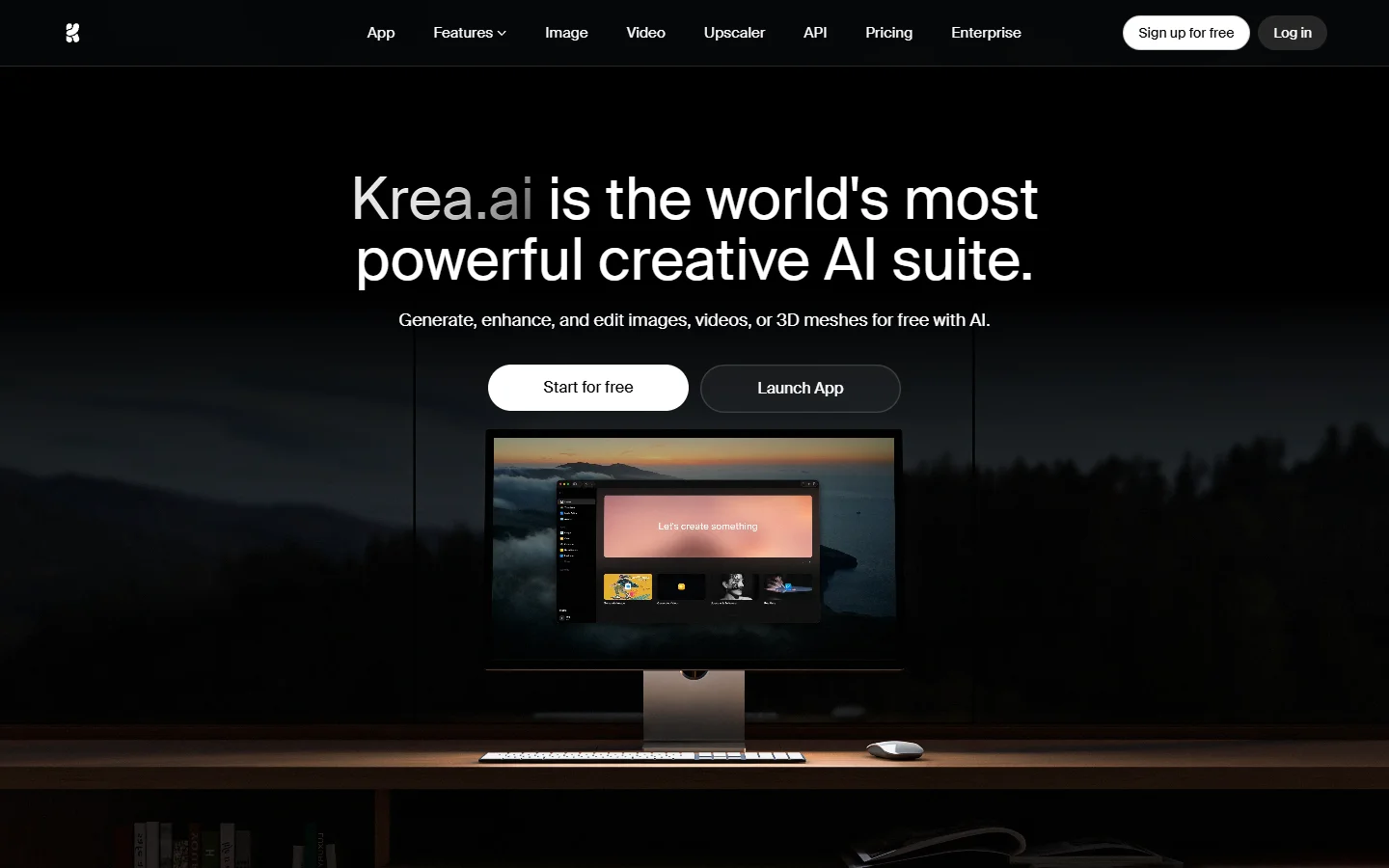
Krea sits between a creative tool and a developer platform. Its canvas lets you chain image generation, upscaling, and style transfer nodes with a clean drag-and-drop interface. The visual design is polished compared to ComfyUI's utilitarian look, making it more approachable for designers who need to collaborate with engineers.
Krea recently added API access for its workflows, allowing external applications to trigger generation jobs programmatically. The pricing is usage-based, which aligns well with variable workloads. However, the node library is smaller than ComfyUI's, and custom model support is limited. Tools like Wireflow's creative tools offer a broader node catalog with 150+ types, including video and audio models alongside image generation. If your pipeline needs to span multiple media types, verify Krea's current node set covers your requirements before committing.
Fal.ai
Fal.ai takes a developer-first approach. Rather than building a visual canvas, Fal provides a fast inference API with a growing library of pre-built model endpoints. You define workflows as compositions of model calls, each exposed as a REST endpoint with automatic scaling and batch generation support.
The platform's strength is speed: cold-start times are measured in seconds, and the pricing is strictly per-inference with no idle compute costs. Fal supports Flux, Stable Diffusion, and audio models. The tradeoff is that workflow composition is code-driven. If your team prefers drag-and-drop prototyping, Fal feels closer to calling APIs from code than to building in a visual editor.
Flora

Flora takes a collaborative canvas approach, letting multiple team members work on the same workflow simultaneously. It connects GPT-4, Flux Pro, and Runway on a shared workspace where you can branch, experiment, and merge workflow versions.
The Flora API supports triggering workflows externally, though the documentation is still evolving. Flora's collaboration features are useful for agencies where multiple people contribute to a pipeline. The tradeoff is that Flora optimizes for creative exploration over production reliability; high-volume teams may find the API less battle-tested than alternatives built with API-first architecture.
How to Choose the Right Platform

The decision comes down to where your team sits on the spectrum between "full control" and "just works." ComfyUI gives maximum control at the cost of operational overhead. n8n gives integration breadth at the cost of AI depth. Krea and Flora optimize for visual collaboration but are still maturing their API stories. Fal.ai gives raw speed but skips the visual canvas entirely.
For teams that need a node editor with a production API from day one, look for platforms that treat the canvas and the API as equal citizens. Wireflow's AI workflow platform is one example of this approach, designed around API-first delivery from the start.
The key questions during evaluation: Can you version workflows? Does the API support webhooks for async results? Is pricing per-run or per-seat? Our guide on no-code AI workflow builders covers several of these factors in more detail.
Frequently Asked Questions
What is a node-based AI platform?
A node-based AI platform lets you build generation pipelines by dragging model nodes onto a canvas, connecting them with wires, and configuring each step visually. The platform handles orchestration, queuing, and API exposure so you can trigger workflows from external applications.
Do I need coding skills to use one?
Most platforms let you build workflows visually without writing code. However, using the API to integrate workflows into your own applications requires basic programming knowledge (REST calls, JSON parsing, authentication headers).
How much does it cost to run AI workflows via API?
Pricing varies significantly. ComfyUI self-hosted costs $0.50 to $2.00 per GPU-hour. Cloud platforms typically charge per generation, ranging from $0.01 to $0.10 per image and $0.10 to $1.00 per video. Most offer free tiers for testing.
Can I use my own custom models?
ComfyUI supports any model in SafeTensors or GGUF format. n8n connects to any model with an HTTP endpoint. Krea and Flora currently limit you to their integrated catalog, though both are expanding custom model support.
What is the difference between a node-based platform and a traditional API?
A traditional API exposes a single model through one endpoint. A node-based platform lets you chain multiple models and processing steps into a pipeline and expose the entire pipeline as one API call. This reduces client-side orchestration code significantly.
Are these platforms suitable for production use?
Yes, if the platform provides proper API infrastructure: authentication, rate limiting, error handling, webhooks for async results, and uptime SLAs. Evaluate the platform's API maturity separately from its canvas features.
Can I migrate workflows between platforms?
Not easily. Each platform uses its own workflow format. ComfyUI workflows are JSON and exportable, but importing them into Krea or Flora is not supported. Plan for lock-in or choose a platform you intend to stay with. Our video generator comparison encountered the same portability challenge.
Conclusion
Node-based AI platforms are becoming the standard way to build and deploy multi-model generation pipelines. The visual canvas solves the prototyping problem; the API layer solves the production problem. The five platforms here represent different trade-offs, from ComfyUI's open-source maximalism to Flora's collaborative focus and Fal.ai's developer-first speed.
The most important factor is not which platform has the prettiest canvas but which one treats its API as a first-class product. Test the API before you fall in love with the editor. For more options, our AI content generation API comparison covers additional platforms.