
Weavy and Flora sell the same headline idea. Drop a few AI models onto an infinite canvas, wire them together as nodes, and build a repeatable visual pipeline instead of babysitting one prompt box at a time. Most head to head posts stop at the surface: nicer templates, faster editing, better feel for concept art. Those comparisons are fine if you plan to click around by hand, and there is a wide field of node based AI workflow platforms that all compete on those terms.
The moment you want to trigger one of these canvases from your own code, the comparison changes. A tool that is wonderful to click is not automatically a tool you can call from a cron job or an AI agent. This piece ignores the taste questions and asks one narrow thing: if you need API access, which of these two actually gives it to you, and what do you get when they do. It is worth reading alongside a broader survey of AI workflow platforms with API access, because the honest answer is more nuanced than a checkmark in a feature grid.
One housekeeping note before the details, because it trips up almost every current comparison. The canvas tool is weavy.ai, not weavy.com or weavy.io. Those last two are an unrelated chat and collaboration SDK, and search results blend them constantly. When you read that "Weavy has a REST API," check which Weavy the source meant, because a lot of that claim traces back to the messaging product.
The two tools in one paragraph each
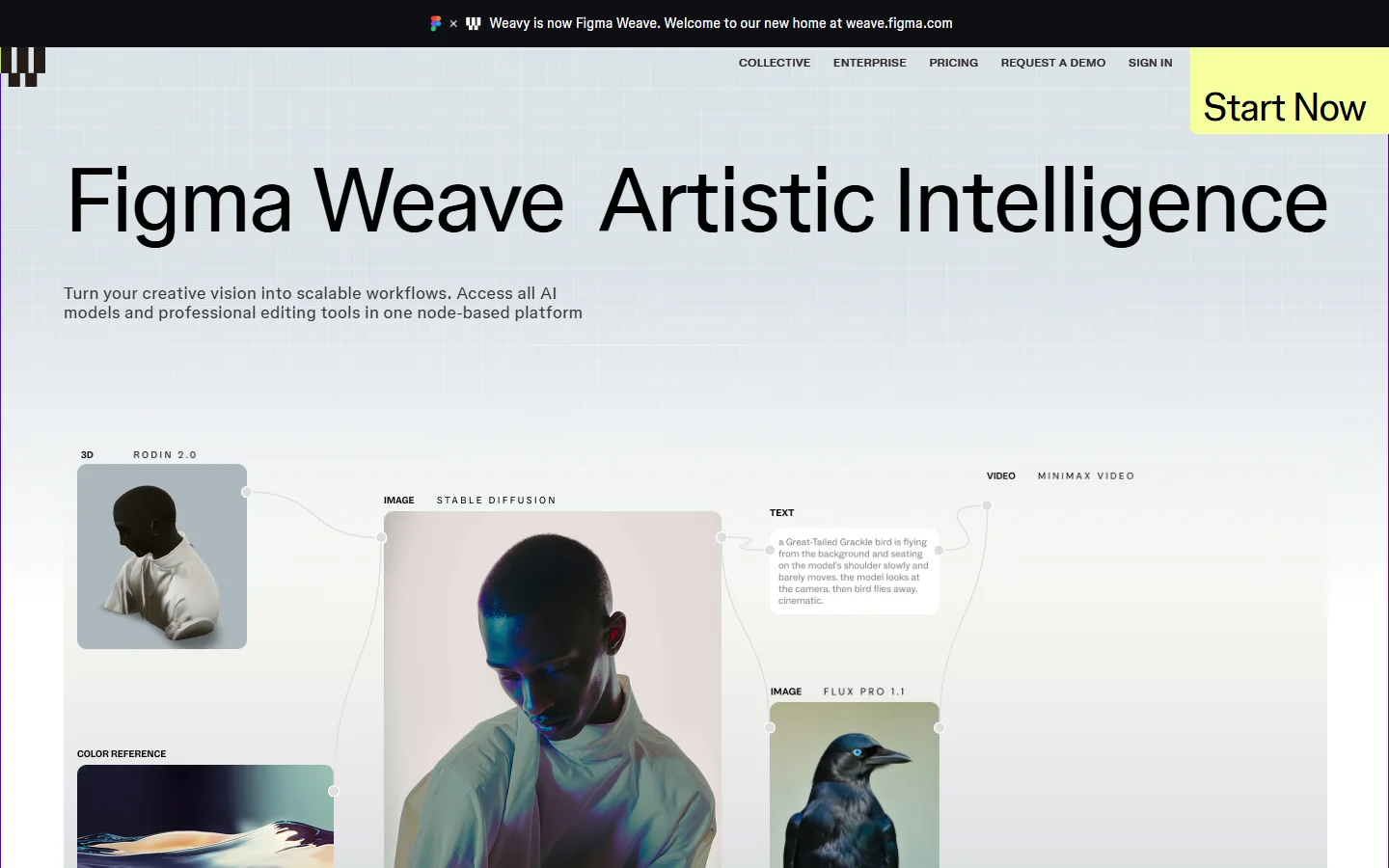
Weavy is the precision option. It pairs a node canvas with deterministic editing steps like inpainting, masking, relighting, and compositing, and it wraps a wide model roster including Flux, Runway, Kling, and Veo. The important 2026 update: Weavy was acquired by Figma in late 2025 and now operates as Figma Weave, with its tools also folding into Figma itself. So "Weavy" today is a Figma product, not an independent startup, and that shapes everything about its roadmap. If Weave feels too locked into the Figma world for your stack, the field of Weavy alternatives with an API is where most developers go looking next.
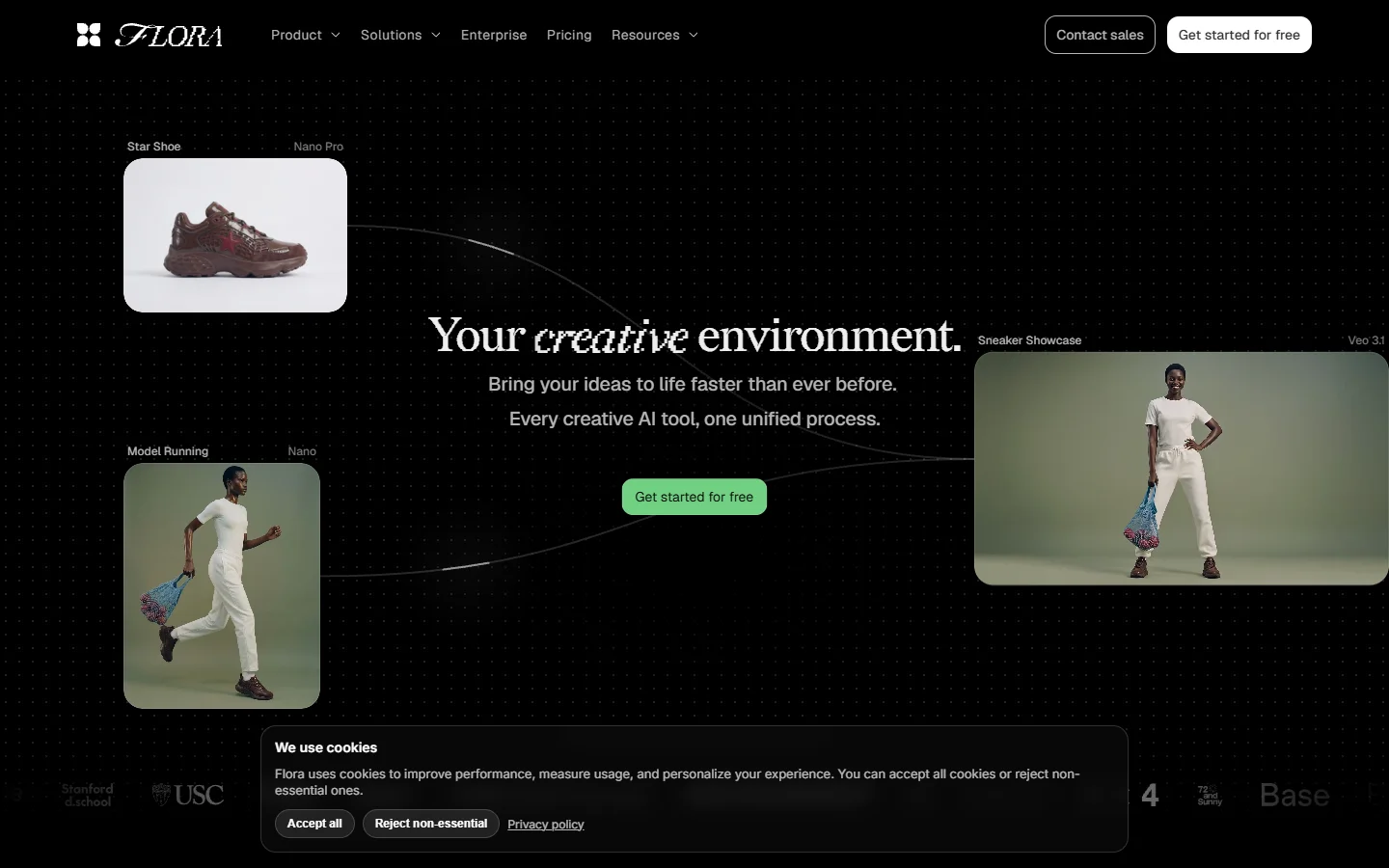
Flora, at florafauna.ai, positions itself as a creative operating system. It leans less on mathematical editing controls and more on fast visual exploration: storyboards, concept frames, campaign variations. It is the tool you reach for when you want to generate and remix many directions quickly rather than dial in one exact composite. Flora also happens to be the one that took developer access seriously, which we will get to, and it turns up in most roundups of developer friendly AI generation platforms.
What "API access" actually means for a canvas tool
There are two very different things people mean by an API on a node canvas, and conflating them is where buyers get burned. The first is programmatic authoring: creating, editing, and chaining nodes from code. The second is programmatic execution: running a workflow you already built by hand, passing in parameters, and collecting the output. Most canvas products that advertise an API mean the second one. Authoring APIs are rare because they are hard to keep stable as the editor evolves, while execution APIs are simpler: the workflow is frozen and you just feed it inputs. Keep that split in mind, because both Weavy and Flora sit firmly on the execution side when they offer anything at all, and it is worth understanding how AI node editors expose their API before you commit to either.
Where Weavy stands on API access
Here is the uncomfortable part for Weavy fans. There is no credible, first party evidence of a public developer API for Weavy or Figma Weave as of mid 2026. The claims that one exists mostly come from review farm pages, and several of them are describing the unrelated messaging SDK mentioned earlier. If you have been comparing options based on those pages, it is worth re-reading them against a more careful look at which no code AI platforms actually offer API access.
The one thread of truth is the enterprise tier, which reportedly lets you bring your own API keys. Read carefully, that almost certainly means you can plug in your own Flux or Runway credentials so model usage bills to your accounts, not that Weave exposes an endpoint you can call to run a canvas. Those are completely different capabilities, and the marketing language blurs them. Until Figma publishes real Weave API documentation, treat Weavy as a click to use product, full stop.
Where Flora stands on API access
Flora is the one that shipped. It offers a documented API plus an MCP server, and access unlocks on its paid tiers rather than the free plan. The MCP piece is the genuinely interesting part: because Flora exposes a Model Context Protocol server, agent frameworks and AI coding assistants can call Flora techniques directly as tools, and the integration is real enough to appear in third party MCP directories. For anyone wiring generation into an agent, that alone is a meaningful edge, and it fits the pattern described in most guides to building AI workflows with an API.
Now the limits, because they are significant. Flora's API is execution only. You run a saved "technique" by submitting parameters and polling for the result, but you cannot create or edit nodes through the API, so the workflow has to be designed by hand on the canvas first. There are no webhooks as of mid 2026, so you own the polling, retries, and timeouts. There is one API key per account, which makes staging and production separation awkward, no batch endpoint, and no per node cost visibility, only account level credit burn. None of that is disqualifying for a simple integration, but you should design around it, the same way you would when wiring any AI canvas into a REST driven production pipeline.
Picking by what you are actually building
If your requirement is "trigger an existing saved workflow from code or an agent," Flora is the clear pick and Weavy is not really in the running. Flora's API and MCP support are documented and corroborated by outside sources, and the polling model is perfectly workable for a nightly batch, a CMS hook, or an agent tool call. It is the honest winner of this specific comparison, and it slots neatly into most REST based AI pipeline builds.
If your requirement is heavier than that, be honest with yourself that neither tool is API first. Full programmatic authoring, webhooks, batch endpoints, scoped keys, and per step cost data are simply not what canvas products are built to deliver. Teams that need those features usually end up on a dedicated, API first stack instead, and there are several credible options in that category. Among them, Wireflow's AI workflow platform is one worth a look for programmatic authoring, sitting alongside cloud ComfyUI runners and other orchestration focused tools rather than above them. The right call depends entirely on whether you need to run workflows or build them from code.

Frequently asked questions
Is Weavy the same as weavy.com or weavy.io? No. The AI creative canvas is weavy.ai, now operating as Figma Weave. The .com and .io addresses belong to an unrelated chat and collaboration SDK, and search engines mix them together constantly. This confusion is the single biggest source of bad "Weavy has an API" claims floating around, so always check which product a source is describing before you trust a spec sheet or a roundup of AI canvas platforms with API tools.
Is Weavy still called Weavy in 2026? Functionally, no. Figma acquired Weavy in late 2025, and it now runs as Figma Weave, with its capabilities also being pulled into the main Figma product over time.
Does Weavy or Figma Weave have a public API? There is no credible first party evidence of one as of mid 2026. The enterprise "bring your own API keys" option most likely refers to billing for the underlying model providers, not an endpoint you can call to run a canvas. If a documented developer API is a hard requirement, Weave should not be your default, and it is worth scanning the broader set of headless AI workflow platforms instead.
Does Flora have an API? Yes, and this is confirmed. Flora offers a documented API plus an MCP server, available on its paid tiers rather than the free plan. The MCP server is what lets agents and AI assistants call Flora techniques as tools.
Can I create or edit Flora workflows through the API? No. The API only executes techniques that were built manually on the canvas. You pass inputs and read outputs; you cannot author nodes programmatically, which is a common limit across canvas tools and a key reason some teams compare orchestration focused APIs for production apps.
Does Flora's API support webhooks? Not as of mid 2026. It is poll based, so you submit a job and check a status endpoint until it finishes, owning the retry and timeout logic yourself.
Which tool should a developer actually pick? Flora, if you need to trigger a saved workflow from code or an agent. Neither, if you need full programmatic authoring or production grade features like webhooks and batch, in which case a purpose built API platform, or one of the credible Runway API alternatives for developer teams, is the more honest answer.
The bottom line
Strip away the taste debate and this comparison gets simple. Weavy, now Figma Weave, is a click to use precision canvas with no public developer API to speak of. Flora is a fast creative canvas that did ship a real, if limited, execution API plus MCP support, which makes it the correct choice between these two for anyone who wants to call generation from their own code. Just go in clear eyed about the ceiling: both are canvas first products, and if your build genuinely needs programmatic authoring, a multi-model AI workflow tool designed as an API from day one will serve you far better than bolting a script onto a canvas that was never meant to be driven that way.