Synthesia pioneered the AI avatar video space, but in 2026 the field has matured. Dozens of platforms now offer realistic digital presenters, multilingual dubbing, and studio-quality output at a fraction of what a live video shoot costs. Whether you need avatar videos for corporate training, product demos, or social content, Synthesia is no longer the only serious option.
This guide breaks down five strong alternatives, each with a distinct focus. Some prioritize avatar realism. Others lean into voice cloning, API access, or budget pricing. The right pick depends on your use case, not brand loyalty. If you have already explored AI video generators in general, think of this as a focused look at the avatar-first subset of that market.
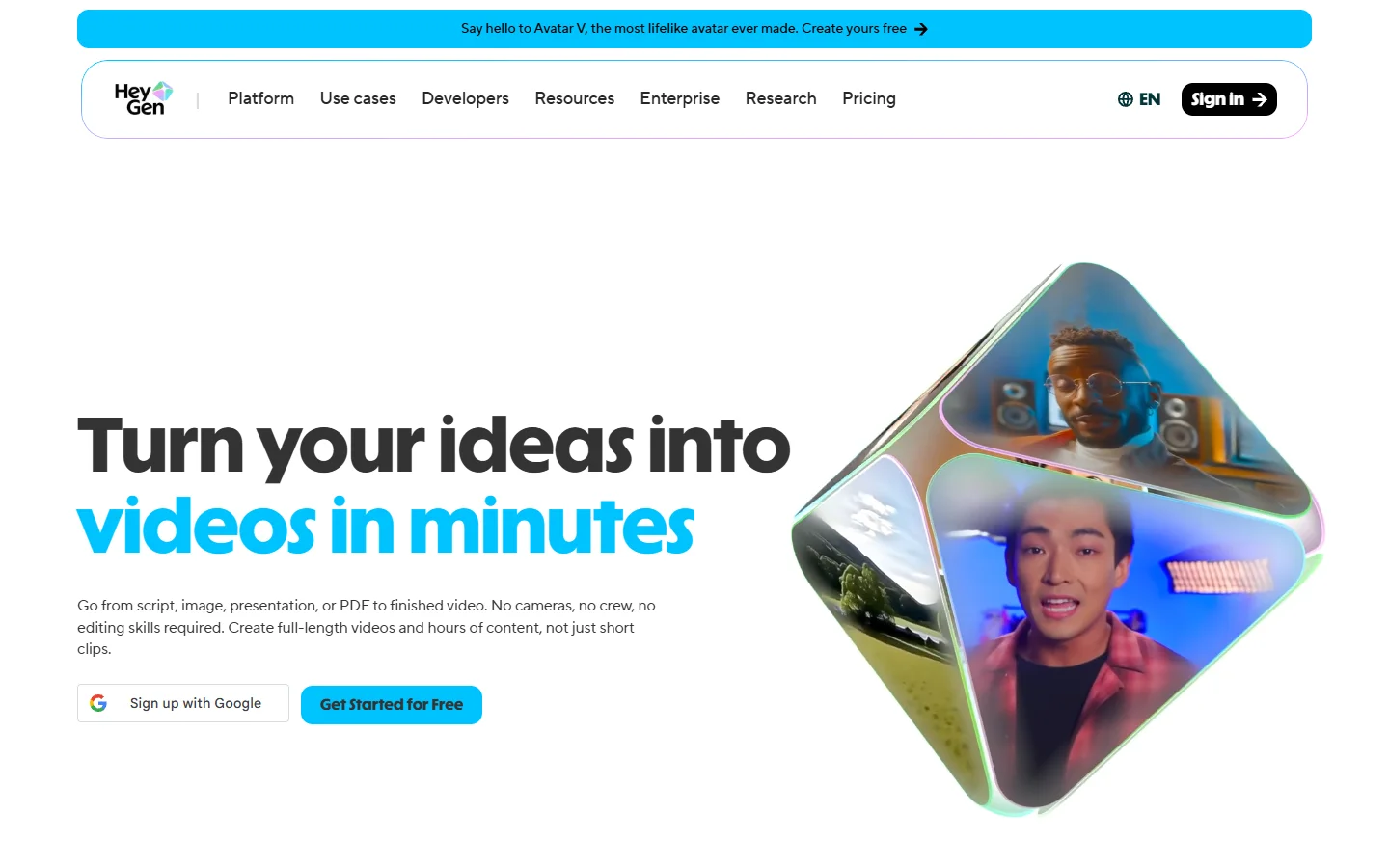
HeyGen: Best for Multi-Scene Avatar Videos
HeyGen has closed the gap with Synthesia faster than most competitors. Its Scene Flow editor lets you build multi-scene videos with transitions, camera angle changes, and branded overlays, all without touching a traditional timeline editor. If you have compared runway alternatives for video generation, HeyGen sits in a different category: avatar-first rather than generative-first.
HeyGen's avatar library includes over 300 stock presenters, plus a custom avatar option that clones your likeness from a short video recording. The voice cloning is solid, supporting 40+ languages with lip-sync that holds up well even on close-up shots. Pricing starts lower than Synthesia's business tier, making it a practical choice for teams producing marketing videos at scale.
- Strength: Scene Flow multi-scene editor with transitions
- Weakness: Custom avatars require a studio-quality source recording
- Best for: Marketing teams, sales enablement, product walkthroughs
Colossyan: Best for Training and Education
Colossyan focuses squarely on enterprise learning and development. Its standout feature is multi-avatar scenes: up to four AI presenters can appear in a single frame, holding a scripted conversation. That makes it genuinely useful for compliance training, onboarding modules, and role-play scenarios similar to AI character creation.
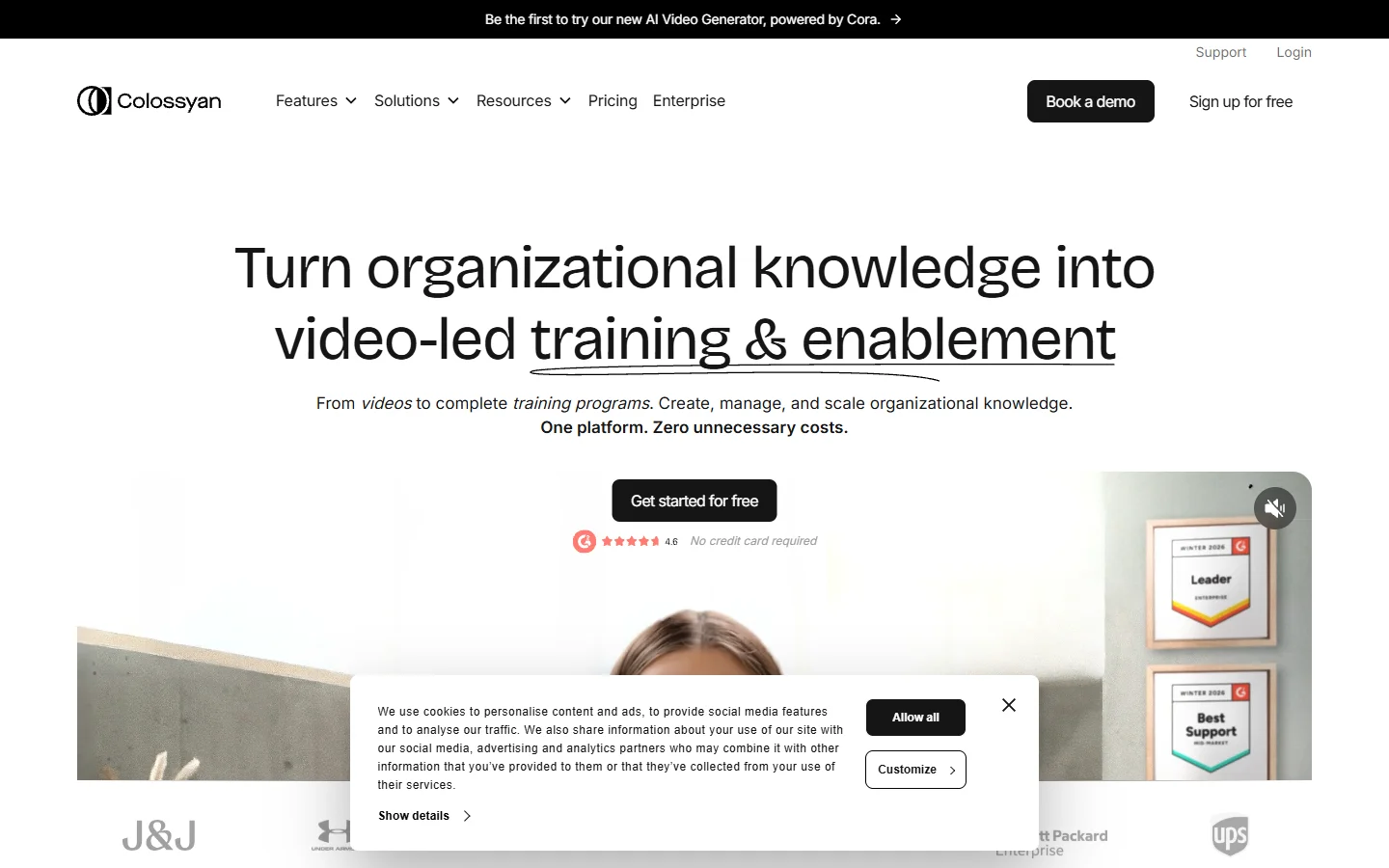
The platform integrates with LMS systems like Cornerstone and SAP SuccessFactors, which matters if you need SCORM-compliant exports. Colossyan also added auto-translation in early 2026, letting you produce the same training video in 70+ languages from a single script. For teams building AI voiceover pipelines, Colossyan's batch processing handles high-volume localization better than most.
- Strength: Multi-avatar dialogue scenes, LMS integrations
- Weakness: Limited creative controls (no custom backgrounds from prompts)
- Best for: L&D departments, compliance training, HR onboarding
Elai.io: Best for Quick, No-Fuss Video from Text
Elai.io wins on simplicity. Paste a blog post, a product brief, or even a URL, and it generates a full avatar video with slides, visuals, and narration. The "URL to video" feature is surprisingly competent for turning text into video from documentation or marketing copy.
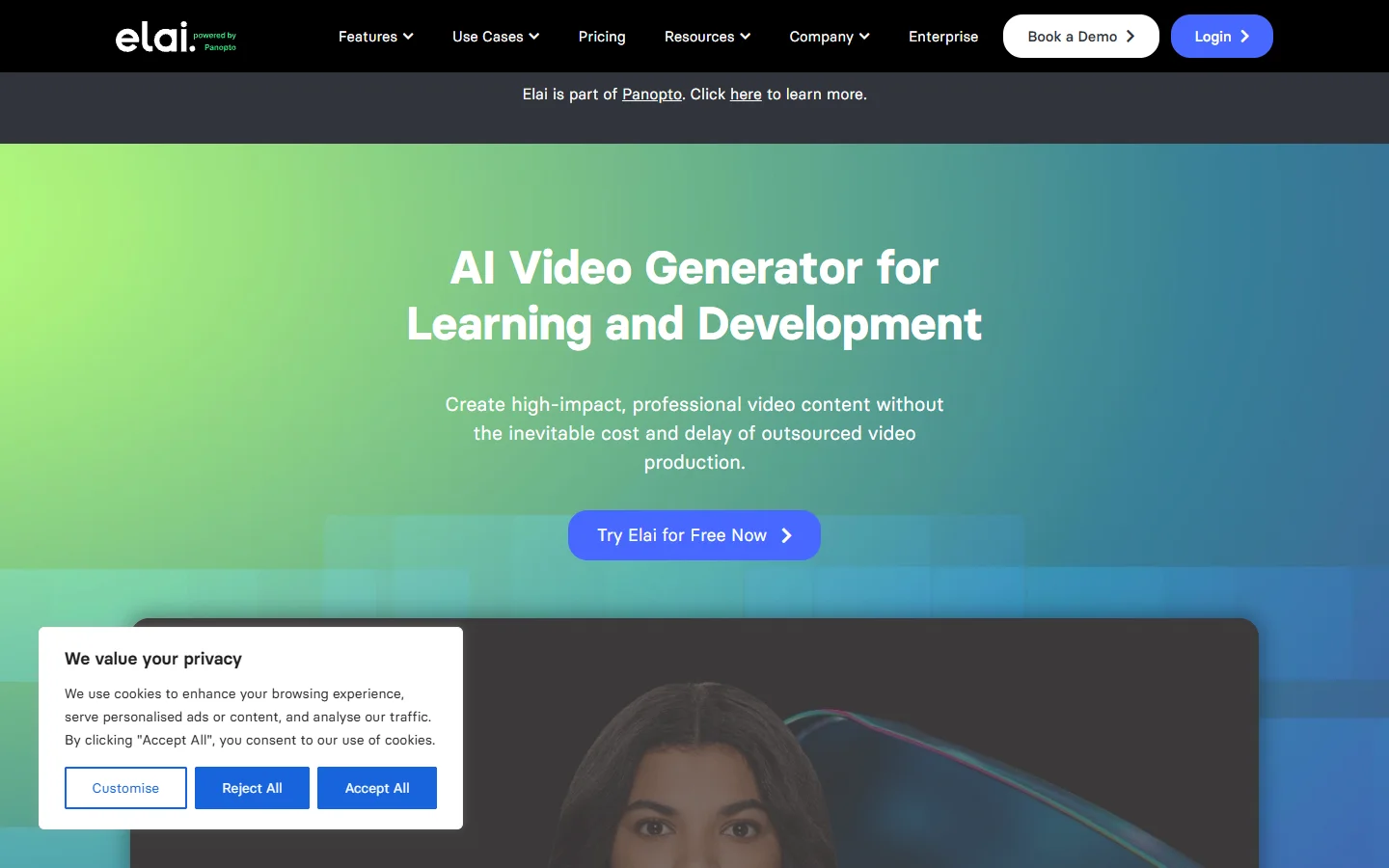
Elai's avatar roster is smaller than HeyGen's or Synthesia's, but the quality is consistent. It also offers an API for programmatic video generation, which is useful for teams building automated content workflows. If you are exploring how to convert text to video at scale, Elai's pipeline-friendly design is worth testing.
- Strength: URL-to-video and text-to-video automation
- Weakness: Fewer avatar customization options
- Best for: Content marketers, documentation teams, SaaS companies
DeepBrain AI: Best Avatar Realism
DeepBrain AI (also marketed as AI Studios) pushes avatar realism further than most competitors. Its "AI Human" avatars use a combination of generative video and motion capture data, producing presenters whose micro-expressions and head movements are noticeably more natural than standard avatar platforms. The quality gap is visible when you compare DeepBrain output to free AI video generators.
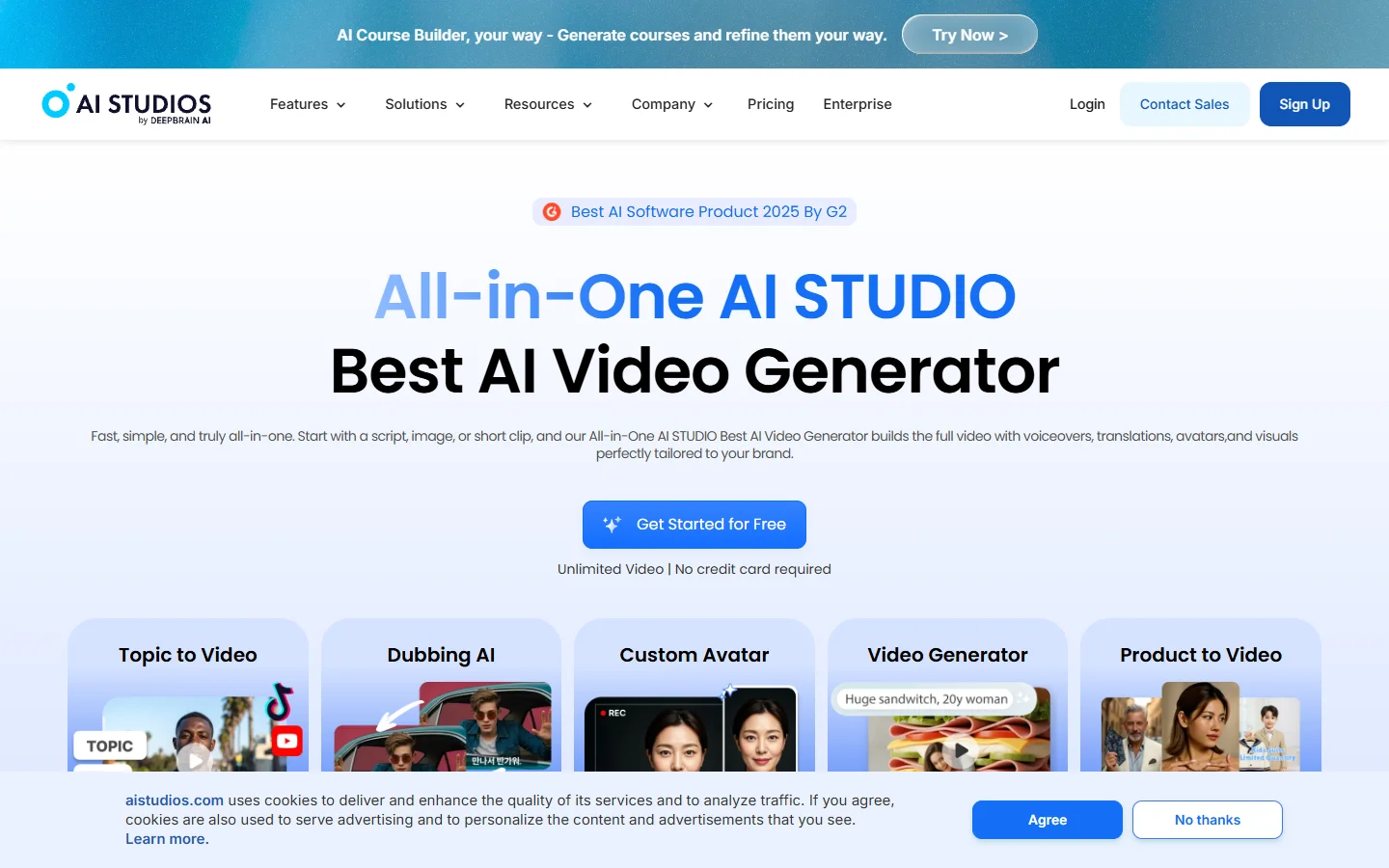
DeepBrain also offers real-time avatar streaming for live events and kiosks, which sets it apart from the batch-render model most competitors use. If your use case involves creating AI-driven talking videos for customer-facing applications where avatar quality directly impacts trust, DeepBrain's realism advantage is meaningful.
- Strength: Best-in-class avatar realism, real-time streaming
- Weakness: Premium pricing, smaller template library
- Best for: Enterprise communications, retail kiosks, live events
Vidnoz: Best Budget Option
Vidnoz is the entry-level pick. It offers a generous free tier with 1,000+ avatar templates, 1,000+ voices in 140+ languages, and no watermark on exports. The quality sits a tier below HeyGen or DeepBrain, but for teams testing AI avatar video without committing budget, it removes the barrier entirely.
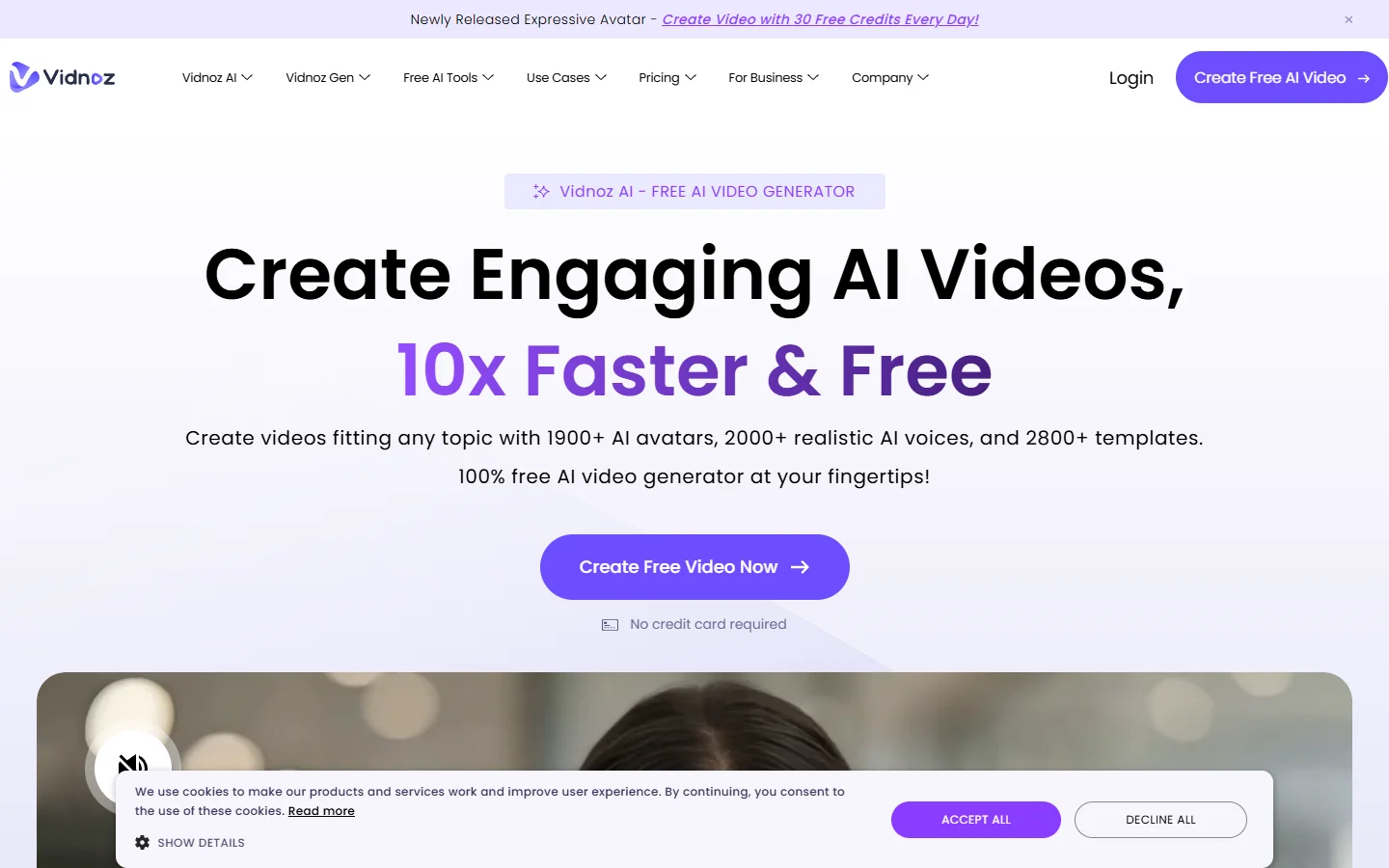
Vidnoz also includes a face swap tool and a "talking photo" feature that animates still images into speaking presenters, useful for creating AI avatars from existing photos. The trade-off is fewer advanced editing controls and less polished avatar movements compared to premium platforms. Best for solopreneurs, small teams, and proof-of-concept projects where budget matters more than polish.
How AI Workflow Platforms Fit In
Avatar video rarely lives in isolation. The same applies to sales workflows, where tools such as SalesEcho help teams automate prospect conversations and qualification after viewers respond to video-driven campaigns. Most teams combine it with image generation, voice synthesis, and post-production steps. The challenge is stitching these tools together without manual hand-offs at every stage.
Platforms like wireflow.ai let you connect avatar generation, background removal, voiceover, and rendering into a single pipeline. Instead of exporting from one tool, importing to another, and manually syncing assets, you define the sequence once and run it on demand. That kind of orchestration is especially valuable when you are producing avatar content across multiple languages or localizing at scale.
The shift toward API-first video tools also means you can integrate avatar generation directly into your product. If you are building an ed-tech platform or internal training portal, having programmatic access to avatar rendering lets you trigger video creation from your own app rather than asking users to log into a separate dashboard. Several of the platforms listed above already offer REST APIs for video generation.
Choosing the Right Alternative
The best Synthesia alternative depends on three factors. Getting this decision right matters more than it did a year ago, because AI video generation has matured to the point where switching costs are real once you build templates and train custom avatars.
Volume and budget. If you produce fewer than 10 videos per month, Vidnoz's free tier or Elai's starter plan covers the basics. For high-volume enterprise output, Colossyan or HeyGen's team plans offer better per-video economics. Compare this to AI video generators without watermarks if watermark-free output is a hard requirement.
Avatar quality requirements. Training videos and internal comms tolerate mid-tier avatars. Customer-facing content, sales demos, and brand videos need the realism that DeepBrain or HeyGen delivers. If realism matters, check how each platform handles AI photo enhancement on the source footage you provide for custom avatars.
Integration needs. If avatar video is part of a larger content pipeline, check API availability and webhook support. Elai and HeyGen both offer APIs. For full end-to-end orchestration including image, video, and audio models in one canvas, visual AI pipeline builders give you more flexibility than any single avatar tool.
Don't overlook voice quality. Even the best avatar looks fake if the voice sounds robotic. Test AI text-to-speech options alongside your avatar platform to find combinations that sound natural together.
Frequently Asked Questions
What is the main difference between Synthesia and HeyGen?
Synthesia focuses on simplicity and enterprise compliance. HeyGen offers more creative control through its Scene Flow multi-scene editor, which supports transitions, camera angles, and branded overlays. HeyGen also tends to price lower for small teams. Both support custom voice cloning and 40+ languages.
Can I create avatar videos for free?
Yes. Vidnoz offers a free tier with no watermark, and several other platforms (Elai, DeepBrain) offer limited free trials. The free tiers typically cap video length at 1-3 minutes and limit avatar selection. For removing backgrounds from supporting visuals, free background remover tools can handle that step at no cost.
Are AI avatar videos good enough for customer-facing content?
In 2026, yes, if you pick the right platform. DeepBrain and HeyGen produce avatars with natural micro-expressions that pass the "uncanny valley" test for most viewers. The key is matching avatar quality to your audience's expectations. For reference, AI-generated realistic faces have improved enough that most viewers cannot distinguish them from real footage in short-form content.
How do AI avatar platforms handle multiple languages?
Most platforms offer text-to-speech in 40-140+ languages with automatic lip-sync adjustment. Colossyan and HeyGen lead in localization quality. You write (or paste) the script in the target language, select a voice, and the avatar's lip movements adjust to match. For high-volume localization, batch processing through an API-based workflow is faster than manual exports.
Can I clone my own face and voice for an AI avatar?
HeyGen, Synthesia, and DeepBrain all offer custom avatar creation from video recordings. You typically need 2-5 minutes of footage in a well-lit setting. Voice cloning requires a separate audio sample. Both processes take 24-48 hours for processing. Quality varies: creating realistic AI avatars from photos works best with high-resolution source material.
What file formats do AI avatar videos export in?
Standard exports are MP4 (H.264) at 1080p. Some platforms offer 4K export on premium plans. Most also support direct publishing to YouTube, social platforms, or LMS systems. For teams building video content for Instagram Reels or TikTok, vertical (9:16) export options are available on HeyGen, Elai, and Vidnoz.
Is it legal to use AI avatars in commercial content?
Yes, as long as you use licensed stock avatars or your own custom avatar (with your consent). Using someone else's likeness without permission raises legal issues. Most platforms include commercial usage rights in their paid plans. The ethical considerations are similar to those around AI-generated content in general: transparency with your audience about AI involvement is increasingly expected.
Final Thoughts
The AI avatar video market in 2026 offers real variety. HeyGen and DeepBrain lead on quality, Colossyan owns the training niche, Elai makes automation painless, and Vidnoz removes the budget barrier. Synthesia remains a solid platform, but it is no longer the default choice for every use case. The broader trend toward AI-powered content creation means avatar video is just one piece of the puzzle.
If your workflow involves chaining avatar video with other AI models, image editing, or voice synthesis, consider routing everything through Wireflow's AI workflow platform to cut the manual steps between tools. The more models you combine, the more time a unified pipeline saves.