
The gap between synthetic speech and a real human voice has nearly closed. A year ago, most AI voices still had that tell: a flat cadence, a robotic pause, a vowel that didn't quite land. In 2026, the best text-to-speech engines produce output that listeners genuinely cannot distinguish from recordings of human speakers. That shift matters if you're building a product, narrating a video, or dubbing content across languages.
This guide covers the voice generators that consistently produce the most natural results, based on hands-on testing across narration, conversational dialogue, and multilingual output. If you're looking for broader TTS comparisons, we've covered that separately. Here, the focus is strictly on realism.
What Makes an AI Voice Sound Real
Before jumping into tools, it helps to understand what separates a convincing voice from an uncanny one. Three factors matter most:
- Prosody and pacing. Real speech speeds up in casual asides and slows for emphasis. Flat, metronomic pacing is the single biggest tell of synthetic audio. The best engines model sentence-level rhythm, not just word-level pronunciation.
- Emotional micro-expressions. Slight breath sounds, a rise in pitch when asking a question, warmth on certain words. These are difficult to model but critical for believability. Voice cloning tools have pushed this forward significantly.
- Consistency across long passages. Many engines sound great for a single sentence but drift over a full paragraph: the tone shifts, the character of the voice changes. Sustained realism over minutes of audio is the hardest benchmark.

ElevenLabs: The Current Benchmark
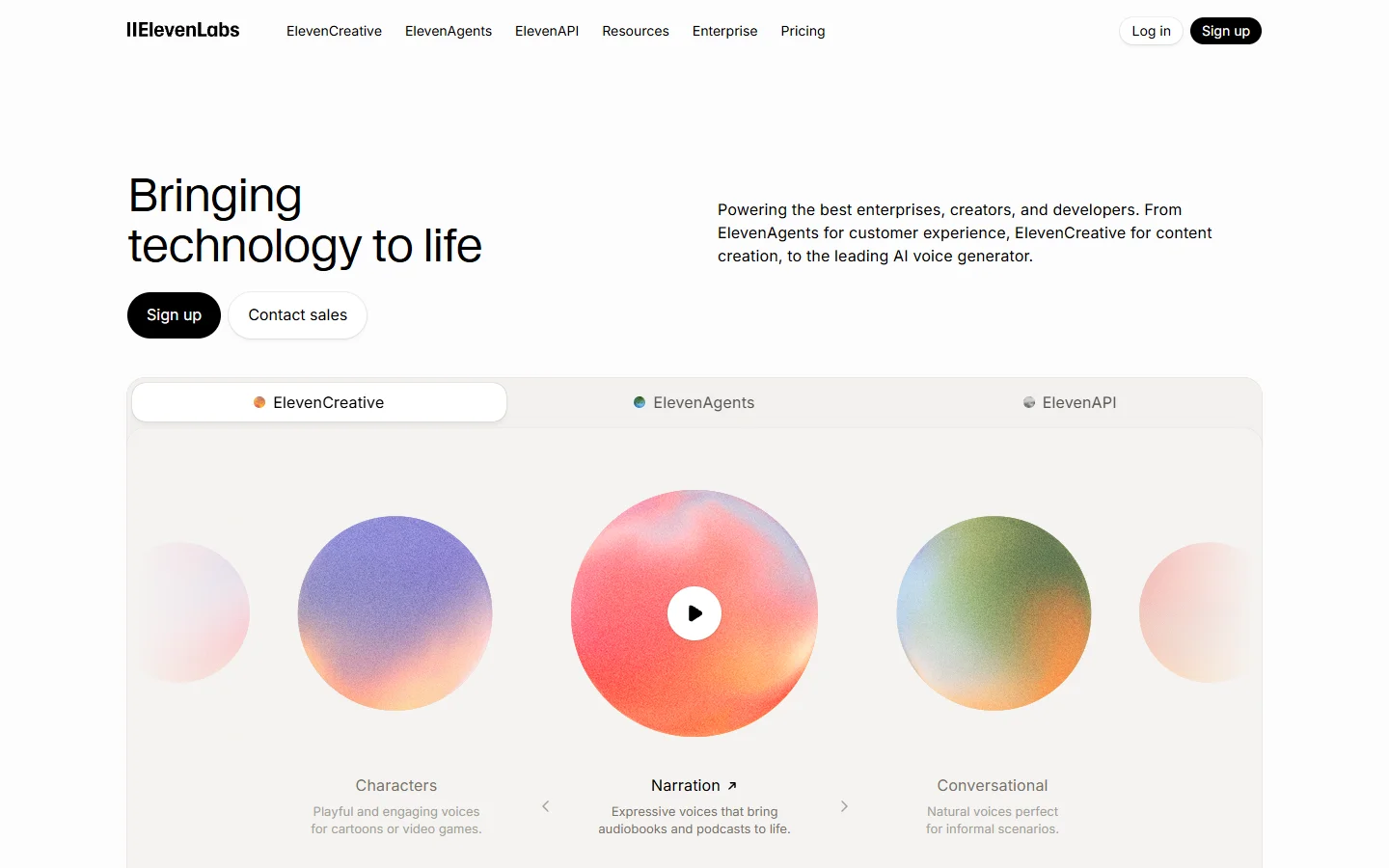
ElevenLabs remains the name most people reach for when realism is the priority. Their Turbo v2.5 model delivers near-instant generation with output that routinely passes blind listening tests. The voice library is extensive, and custom voice cloning from short samples (under 30 seconds of clean audio) produces usable results.
Where ElevenLabs stands out is emotional range. The same voice can shift from instructional to conversational without sounding like two different speakers. For YouTube voiceover work, this consistency matters more than raw audio quality.
Pricing scales with character count. The free tier is limited but enough to evaluate quality. Professional plans start at $22/month for 100,000 characters, which covers roughly 2-3 hours of finished audio. For a broader look at how AI-powered photo and enhancement tools compare on pricing, similar per-unit models apply across the generative AI space.
Fish Audio: Emotion That Feels Unscripted
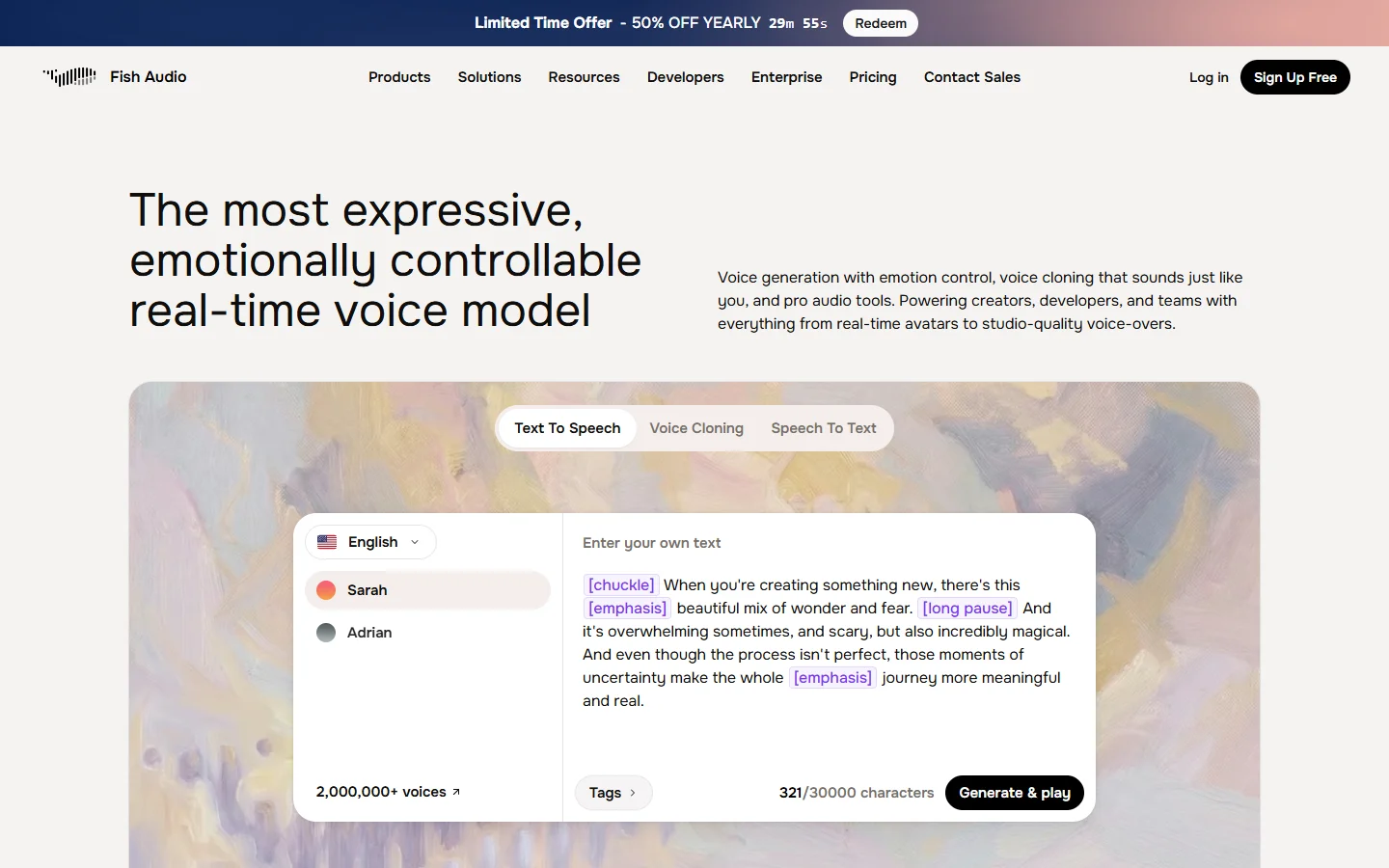
Fish Audio has emerged as a serious contender, particularly for content that needs to sound spontaneous rather than narrated. Their model handles conversational dialogue better than most competitors, similar to how free AI image generators have raised the bar in their own category. The phrasing feels organic, with natural timing shifts and subtle tonal variation that's difficult to achieve with prompt-based controls alone.
The platform supports over 30 languages with consistent quality, which makes it a strong pick for multilingual content teams. Fish Audio's open-source roots also mean the community has built a deep library of voice presets. If you're producing AI-generated video content, pairing Fish Audio with a video generation pipeline gives you end-to-end production without recording a single take.
PlayHT: Streaming and API-First
PlayHT targets developers and product teams who need realistic voice integrated directly into applications. Their PlayHT 2.0 model produces expressive, human-sounding output with real-time streaming, meaning audio starts playing before the full response is generated. Similar to how headless AI workflow platforms expose generation via API, PlayHT treats voice as an endpoint rather than a UI-first feature.
The API is clean and well-documented, which matters if you're embedding voice into a SaaS product or interactive experience. Latency sits under 300ms for most voices, making it viable for conversational AI interfaces. For teams building voice-driven products, platforms like Wireflow let you chain speech synthesis with other AI steps in a single pipeline, and PlayHT's API-first approach makes that integration straightforward.

Murf AI: Studio Polish Without the Studio
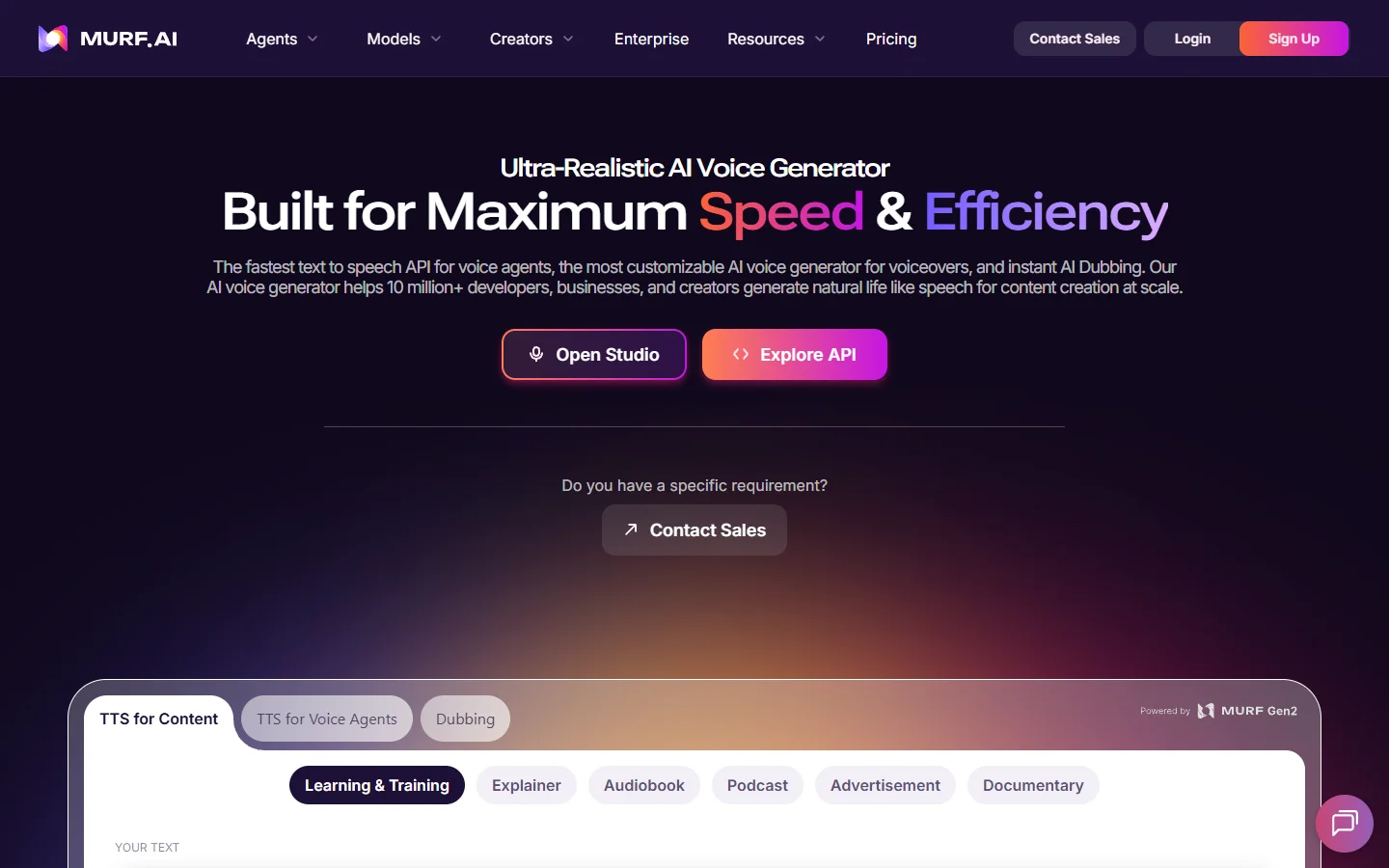
Murf AI positions itself as the voice generator for teams that need broadcast-quality output without audio engineering expertise. The interface is built around a timeline editor where you can adjust pace, pitch, and emphasis at the word level, an approach that parallels how visual AI canvas editors give non-technical users fine control over generation.
The result sounds polished. Murf voices have a studio-clean quality that works well for corporate training, product demos, and explainer content. What you trade for that polish is some of the raw naturalness that Fish Audio or ElevenLabs achieve. Murf sounds professional, but occasionally "too perfect," which can read as synthetic in casual contexts. For content creators building ad campaigns, that polished sound is exactly right.
Speechify and Resemble: Specialized Strengths
Not every use case needs the same kind of realism. Two tools worth noting for specific workflows:
- Speechify excels at long-form narration. If you're converting articles, documentation, or books into audio, Speechify handles pacing across thousands of words without the drift that plagues other engines. The reading voice stays consistent and clear, even across 30-minute passages. Their browser extension also makes it useful as a personal reading tool beyond content production.
- Resemble AI focuses on voice cloning and custom voice creation for enterprises. Their cross-lingual voice cloning lets you take a single English voice sample and generate speech in Spanish, Japanese, or Hindi that retains the speaker's identity. For brands that need a consistent voice across markets, Resemble's approach is more controlled than consumer-focused alternatives. If you're also exploring realistic AI face generation, pairing cloned voices with generated avatars creates a full synthetic presenter.
How to Choose the Right Voice Generator
The "most realistic" engine depends on what you're building. A few decision points:
- Narration and long-form audio: ElevenLabs or Speechify. Both handle extended passages without quality degradation.
- Conversational or dialogue-heavy content: Fish Audio. The phrasing and timing feel the most natural for back-and-forth speech.
- API integration and product embedding: PlayHT. Low-latency streaming with a developer-friendly SDK.
- Studio-quality corporate content: Murf AI. Word-level editing gives you fine control over delivery.
- Multilingual voice cloning: Resemble AI. Cross-lingual identity preservation is their core advantage.
If your workflow involves chaining voice generation with other AI steps (image generation, video synthesis, or content transformation), a multi-model AI workflow tool can connect these steps into a single automated pipeline. Several of the tools above offer APIs that plug into broader orchestration platforms, which saves time when you're producing at scale.
For teams exploring how to animate images with AI, combining voice output with visual generation opens up full video production without traditional recording setups.

Frequently Asked Questions
Which AI voice generator sounds the most human in 2026?
ElevenLabs consistently produces the most human-sounding output across blind listening tests. Fish Audio is a close second, particularly for conversational and emotionally varied content. Both engines handle prosody and breath modeling well enough that listeners often can't tell the output from a real recording. The best voice generators for creators are covered in more detail in our companion guide.
Can AI voice generators clone my own voice?
Yes. ElevenLabs, Resemble AI, and Fish Audio all support voice cloning from short audio samples. ElevenLabs needs about 30 seconds of clean speech. Resemble can work with as little as 3 minutes for high-quality cloning. The cloned voice can then be used for any text input, including languages the original sample wasn't recorded in.
Are AI-generated voices legal to use commercially?
In most jurisdictions, yes, as long as you're using your own voice or a licensed voice from the platform's library. Using someone else's voice without consent raises legal and ethical issues. Each platform has different terms around commercial use, so review their licensing before publishing. This is especially relevant if you're building marketing videos with AI tools.
How much do realistic AI voice generators cost?
Pricing varies widely. ElevenLabs starts at $22/month for 100,000 characters. PlayHT offers a free tier with limited features and paid plans from $29/month. Murf AI starts at $26/month. Fish Audio has generous free usage with pay-as-you-go scaling. Speechify's premium plan is $139/year for unlimited listening. For evaluating payment tools in other contexts, independent reviews of invoicing platforms can help compare value.
What's the difference between TTS and voice cloning?
Text-to-speech (TTS) converts written text into audio using a pre-built voice model. Voice cloning creates a custom model based on a specific person's voice, then uses that model for TTS. Cloning produces more personalized output, but requires a sample of the target voice. Standard TTS voices are faster to set up and don't need any audio input.
Can I use AI voices for podcast production?
Yes. Several creators already produce full podcasts using AI-generated hosts, particularly for news summaries and educational content. ElevenLabs and Fish Audio are the most common choices for this. The quality is high enough for public distribution, though most podcasters disclose the use of AI voices to maintain audience trust. For text-to-video workflows, the same voice output can serve as the audio track.
Do AI voice generators support real-time streaming?
PlayHT and ElevenLabs both support real-time audio streaming with latency under 500ms. This makes them suitable for interactive applications like AI assistants, customer support bots, and live translation systems. Fish Audio also supports streaming, though with slightly higher latency depending on voice complexity and language.
The Bottom Line
Realistic AI voice generation has moved from novelty to production-ready tooling. The tools covered here each solve a slightly different problem, from ElevenLabs' all-around quality to Fish Audio's conversational depth to PlayHT's developer-first API. The choice comes down to your specific use case, budget, and whether you need real-time capabilities or batch processing.
What's clear is that the quality floor has risen across the board. Even mid-tier engines produce output that would have been considered top-tier 18 months ago. The differentiator now is not whether a voice sounds human, but whether it sounds like the right human for your content.