

If you produce videos, podcasts, or social content regularly, you already know the pain of sourcing music. Stock libraries feel generic, licensing is confusing, and hiring composers does not scale. AI music generators have matured enough in 2026 that they can fill most of these gaps, but not all tools approach the problem the same way. Some generate full songs with vocals, others focus on customizable background tracks, and a few expose APIs for automated content pipelines.
This guide breaks down seven AI music generators based on how they fit into a content creation workflow. We tested each for output quality, licensing clarity, export flexibility, and integration with the tools creators already use.
The tools below cover vocal song generation (Suno, Udio, ElevenLabs), background music editing (Soundraw, Beatoven.ai), API-first automation (Mubert), and cinematic composition (AIVA). Pricing, licensing, and export options vary significantly between them.
Suno: Full Song Generation With Vocals
Suno remains the most capable option for generating complete songs with vocals from a text prompt. You describe a genre, mood, and lyrical theme, and Suno returns a two-to-four minute track with singing, instrumentation, and structure. The vocal quality improved noticeably since late 2025.
The free tier gives 50 credits per day (roughly 10 songs), and Pro plans start at $10/month with commercial licensing included. If you cancel Pro, you keep commercial rights for tracks generated while subscribed.
Udio: Production Quality and Creative Control
Udio offers more fine-grained control over arrangement, instrumentation, and mixing than Suno. The audio fidelity is noticeably higher on complex arrangements, particularly for electronic and orchestral genres. You can extend, remix, and layer sections rather than regenerating entire tracks. One significant caveat: Udio's current terms restrict sharing generated music outside their platform. You cannot distribute Udio tracks on Spotify or Apple Music through third-party distributors. For video background music this is not a blocker, but it limits distribution options.
Soundraw: Royalty-Free Phrase-Level Editing

Instead of generating from text prompts, Soundraw lets you select a genre, mood, and tempo, then edit the result at the phrase level. You can drag sections, adjust energy curves, and swap instruments without regenerating. All tracks come with a perpetual royalty-free license on paid plans ($16.99/month) that survives cancellation. Content ID registration is handled on their end, so your video content will not get flagged.
Mubert: API-First Background Music

Mubert is the most developer-friendly option. It offers a REST API that generates ambient and background music on demand, making it the natural choice for apps, games, or pipelines that produce music programmatically. API pricing is usage-based starting at $14/month for 500 tracks. The tradeoff is that Mubert focuses on ambient, electronic, and lo-fi styles with no vocals or complex song structures. For creators who generate content at scale, Mubert's API automates the music layer entirely.

AIVA: Cinematic and Orchestral Composition
AIVA specializes in orchestral and cinematic music with MIDI export, so you can import compositions into a DAW and edit individual instrument tracks. The free plan allows 3 compositions per day (non-commercial), and Pro ($15/month) unlocks commercial use. AIVA excels at classical and orchestral arrangements but falls short on modern pop, hip-hop, or electronic. For creators working on album art alongside music, AIVA's MIDI exports pair well with full production workflows.
Beatoven.ai: Mood-Based Music for Video
Beatoven.ai generates mood-based tracks for video and podcast backgrounds. Its "mood timeline" lets you mark sections as tense, uplifting, or calm, and the music adapts. Pricing starts at $6/month for 15 downloads with commercial licensing included. For podcast creators specifically, the generation avoids frequencies that compete with voice. The platform fits naturally into lo-fi and ambient content workflows.
ElevenLabs Music: The Vocal Realism Newcomer
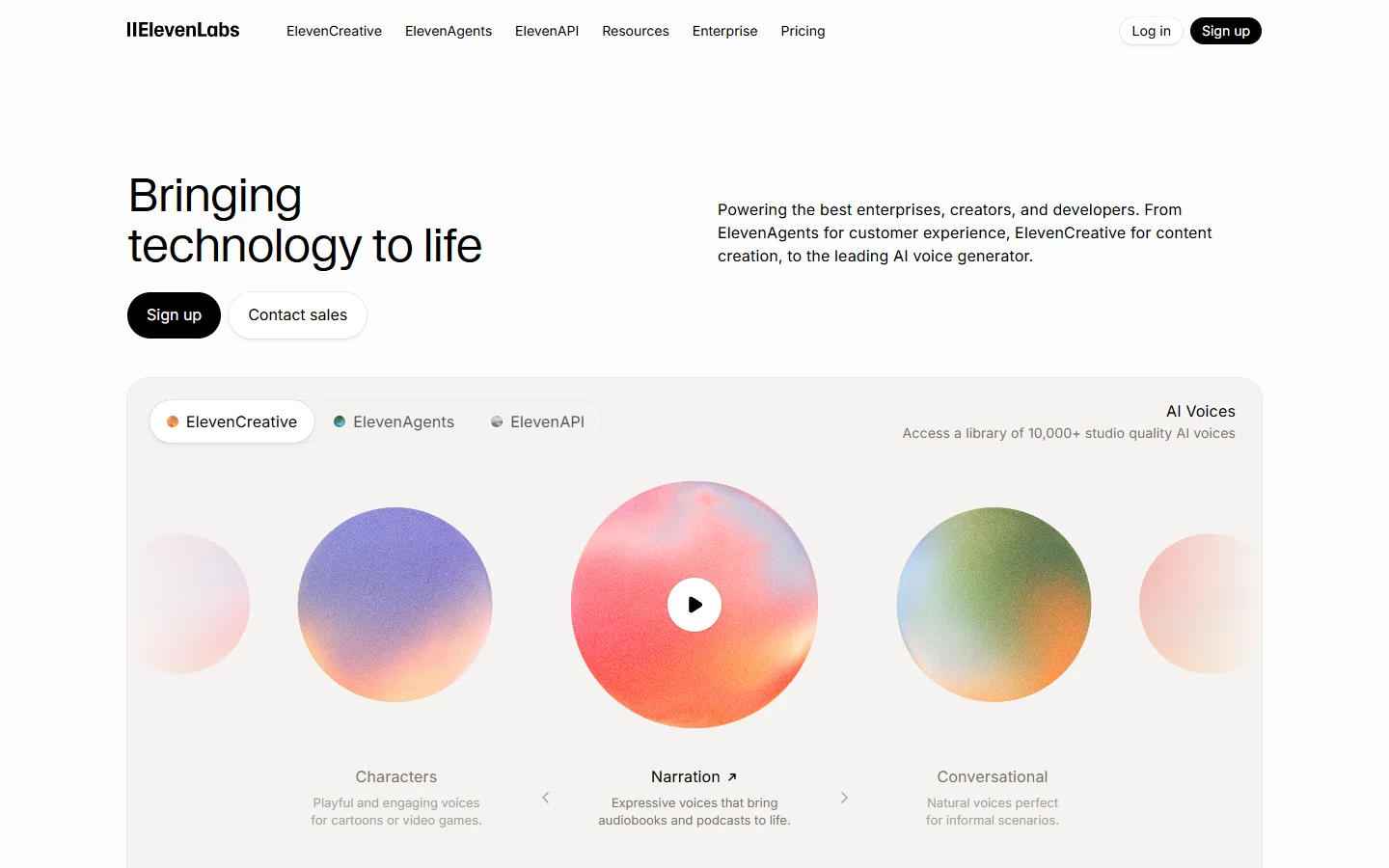
ElevenLabs launched Eleven Music in mid-2025, bringing their speech synthesis expertise to music. The vocal quality is more natural than competitors, particularly for acoustic, R&B, and singer-songwriter genres. The platform is newer than Suno or Udio, so genre range is still catching up. Pricing starts at $5/month bundled with ElevenLabs' broader voice and audio platform, with commercial licensing on paid plans.

How to Pick the Right Tool
For complete songs with vocals, start with Suno for volume and Udio for polish. For background music that fits video edits, Soundraw's phrase-level editing saves the most time. For automated pipelines, Mubert's API is the only serious option. For cinematic work, AIVA is unmatched. For podcasts, Beatoven.ai's mood timeline is purpose-built. Most creators end up using two tools at $20-30/month total, which is less than a single stock music license. For a broader look at AI tools for video creators, pairing the right music generator with a capable video tool is where real efficiency gains happen.
FAQ
Can I use AI-generated music in monetized YouTube videos?
Yes, on paid plans. Suno, Soundraw, Beatoven.ai, and ElevenLabs include commercial licensing with paid tiers. Check whether the license survives subscription cancellation, as policies vary.
Will AI-generated music trigger Content ID claims?
Soundraw registers tracks with Content ID on your behalf, so claims are unlikely. Suno and Udio generate unique tracks each time, reducing risk, but identical prompts can occasionally produce overlapping outputs.
Which AI music generator has the best free tier?
Suno offers 50 daily credits. AIVA provides 3 free compositions per day. Mubert and Beatoven have limited free trials. For free volume, Suno is the starting point.
Can I export stems or MIDI from AI music generators?
AIVA is strongest for MIDI export to edit individual instruments in a DAW. Suno added stem separation in early 2026. Soundraw allows phrase-level editing but does not export stems. Udio and Mubert export mixed audio only.
Are there copyright risks with AI-generated music?
The legal landscape is evolving. Most platforms claim models are trained on licensed data, but no major ruling has settled AI music copyright definitively. Using platforms with explicit commercial licenses (Soundraw, Beatoven, Suno Pro) is the safest approach.
How do AI music generators compare to stock libraries?
Stock libraries offer human-composed, mastered tracks but with complex licensing and per-track costs. AI generators offer unlimited output at flat monthly rates. Stock music still sounds more polished for high-end productions, while AI wins on speed and cost for everyday content.
Can I use AI-generated music for client work?
Most commercial licenses permit this. Soundraw and AIVA explicitly allow client-project usage on Pro/Enterprise plans. Suno's license covers "content you create," which generally includes client-facing creative work.
Conclusion
The AI music generation space has enough variety that picking the "best" tool without context is meaningless. Your choice should follow your workflow: vocal content points to Suno or ElevenLabs, precision editing to Soundraw, automation to Mubert, cinematic work to AIVA. Start with the free tiers, match a tool to your most frequent content type, and upgrade when you hit limits.