
If you are pricing your way out of Databricks Mosaic AI, the short answer is that seven platforms cover the ground it covers, and they split into two groups: infrastructure replacements that still expect you to run models, and API layers that hand you finished output with no serving stack at all. Mosaic AI bills at roughly $0.07 per DBU, with GPU model serving in the range of 10.48 to 628 DBU per hour and vector search at 4.00 or 18.29 DBU per hour depending on tier, so the cost question is usually about how much of that stack you actually use. Most small teams we talk to use maybe a third of it, which is why the orchestration API layer has become the more common landing spot.
Mosaic AI is not a bad product. It is a governed platform layer that ties Delta Lake data, Unity Catalog permissions, MLflow tracing, vector search and model serving into one place. If your company already lives inside Databricks and your compliance team cares about lineage on every inference call, leaving is probably the wrong move.
The teams that do leave tend to have one of three complaints. The DBU meter is hard to forecast before you commit. The platform assumes you are training or fine tuning models rather than composing existing ones. And for anyone generating images, video or audio rather than text, most of the governance machinery is overhead they never touch. That third group in particular usually wants a plain endpoint with a spending ceiling, which is a different problem than the one Mosaic solves, and it is worth reading how per key spend limits work before you pick a replacement.
How we ranked these
Our ranking criterion is time to a working production call, measured from signup to a job running on a schedule without a human watching it. Cheaper is better, but a platform that takes three weeks of infra work to reach first call loses to one that takes an afternoon, which is the same yardstick we used when comparing developer friendly generation platforms last quarter.
We weighted four things:
- Setup burden: how much cloud plumbing you own before the first successful call
- Cost legibility: whether you can predict the monthly bill from a request count
- Model breadth: how many models are reachable without a second vendor contract
- Governance: audit trails, key scoping, tenancy isolation
The 7 best Mosaic AI alternatives in 2026
1. Wireflow
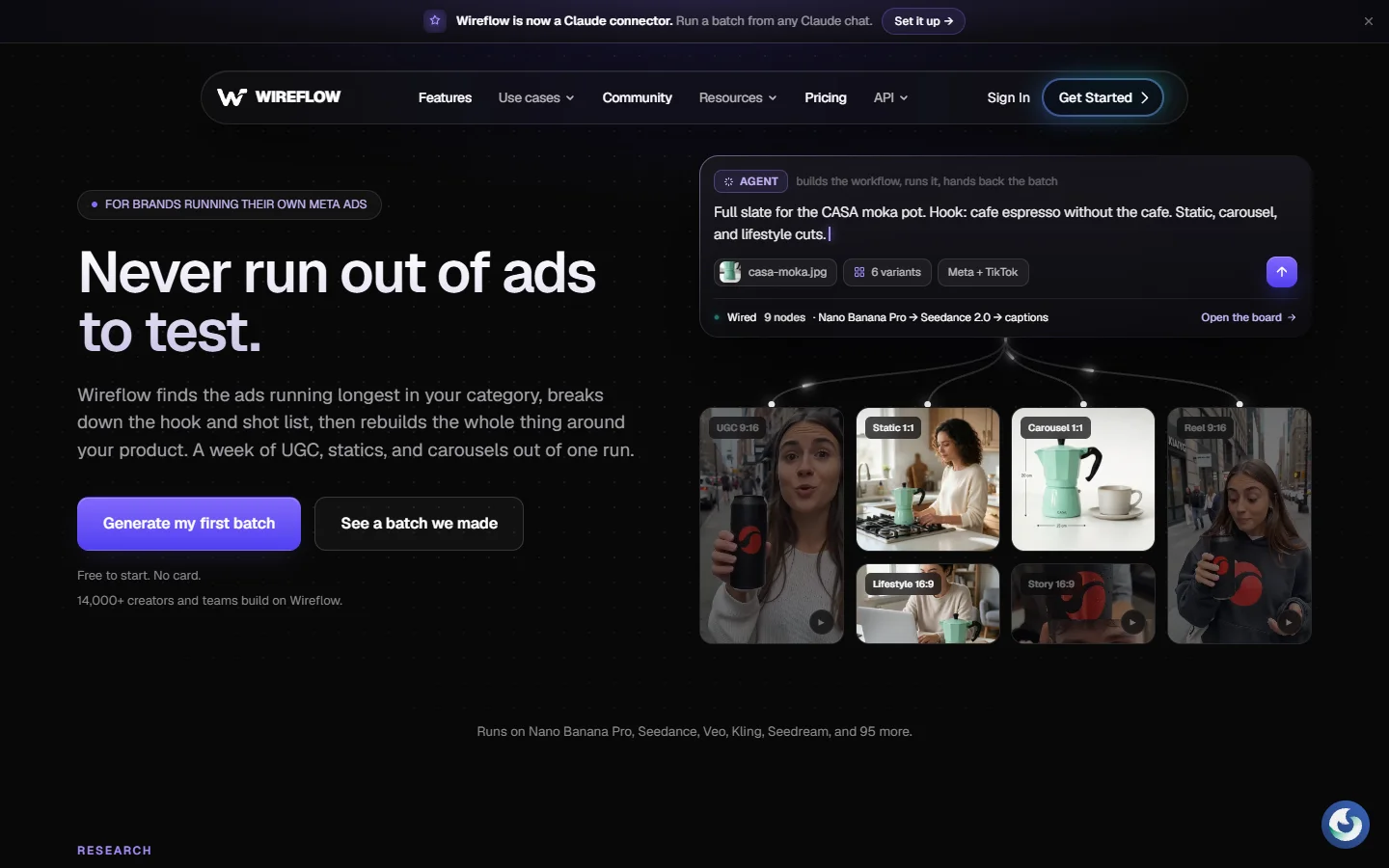
Wireflow builds AI media generation as a visual graph. You chain image, video, text and audio models on a canvas, then publish that graph as a single REST endpoint your code or an agent calls with a JSON body. There is no GPU to provision and no serving config to tune, which is why it takes the top slot on our specific criterion of time to first production call. The tradeoff is real: it is not a training platform, so if you need to fine tune a model on proprietary data, this is not your replacement. Verdict: best for teams composing existing models into a pipeline they call from code, and it slots naturally alongside other node based workflow platforms if you want to compare canvas approaches.
2. Amazon Bedrock
Bedrock is the obvious swap for anyone already on AWS. Models from Anthropic, Meta, Mistral, Amazon and others sit behind one API, IAM handles permissions, and billing lands on the invoice you already reconcile. Guardrails and Knowledge Bases cover a decent slice of what Mosaic AI's RAG and governance features do. The catch is that Bedrock is text and reasoning first; its image and video coverage is thinner than a dedicated media platform, and regional model availability still varies enough to bite you in production. Verdict: best for AWS native enterprise teams who want governance without a new vendor.
3. Fireworks AI
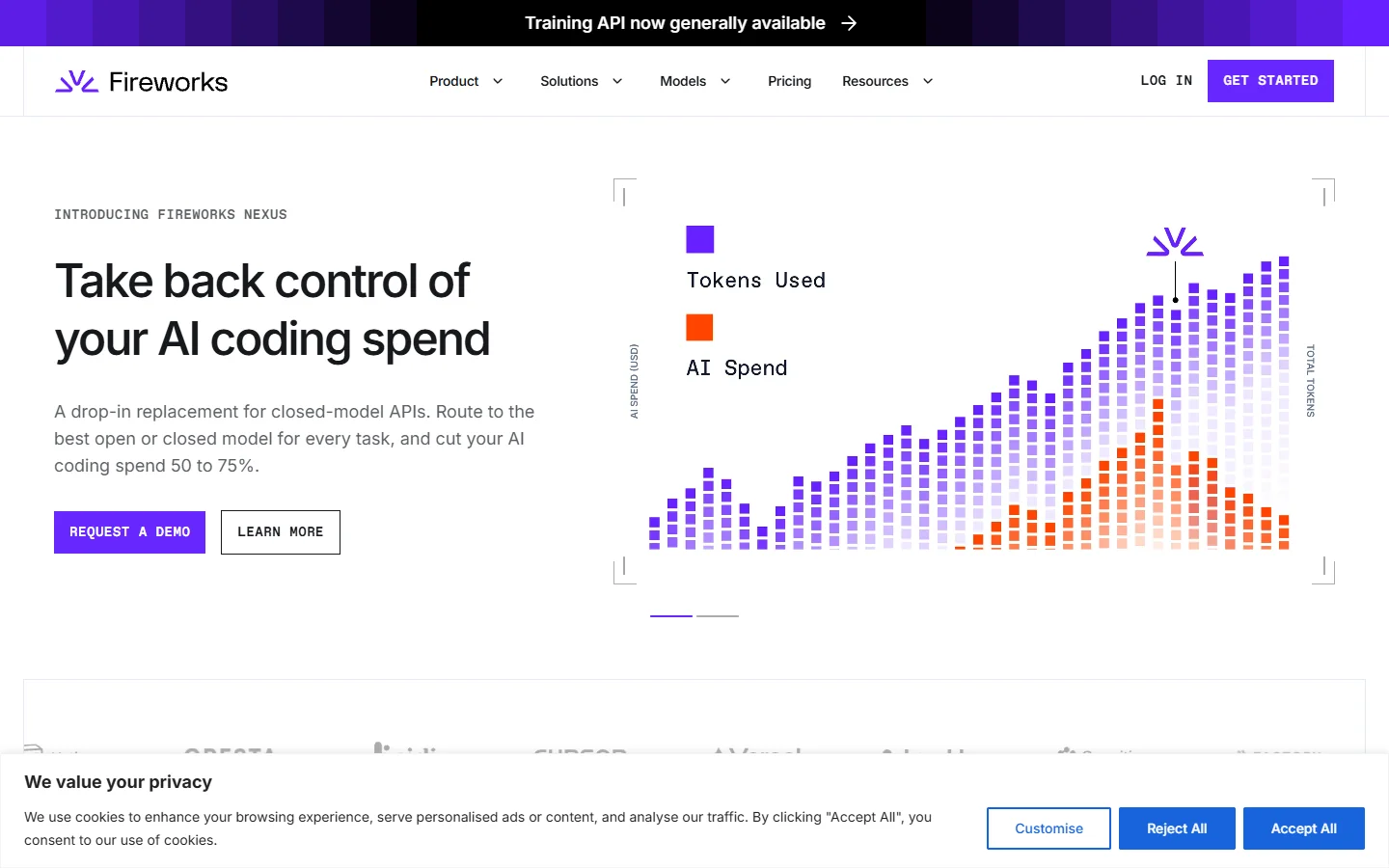
Fireworks runs a large catalog of open weight models with genuinely fast inference and per token pricing you can model on a spreadsheet. It also offers fine tuning, which puts it closer to Mosaic AI's actual job than most entries here. What it does not give you is orchestration: you get model calls, and the sequencing, retries and fan out are yours to write, which is fine if you are already comfortable building pipelines against REST APIs. Verdict: best for speed and unit cost on open and custom models.
4. TrueFoundry
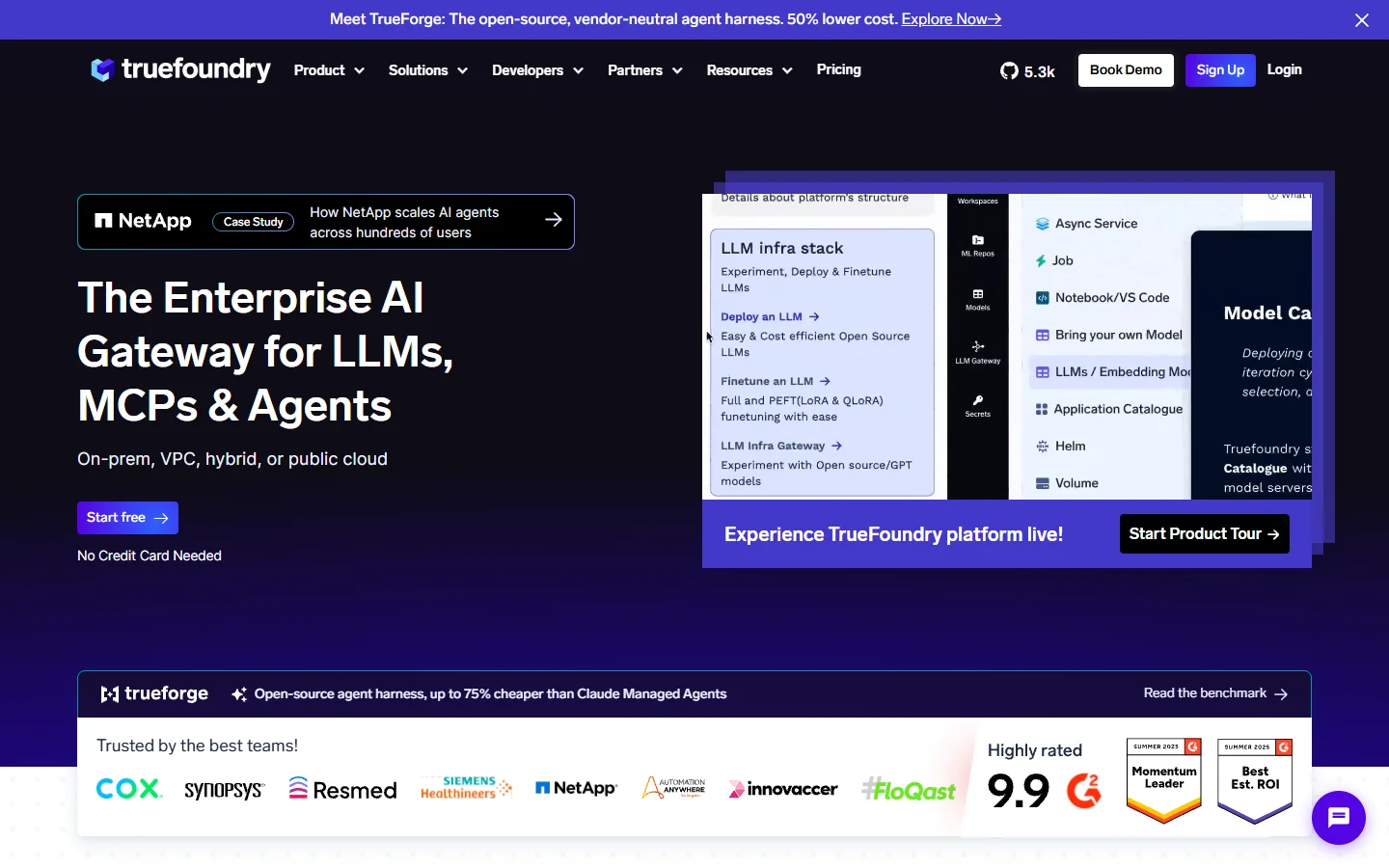
TrueFoundry is the closest like for like replacement in this list. It covers training, fine tuning, deployment, inference, observability and governance, and it runs inside your own cloud account or VPC rather than a vendor tenancy. That last point is the whole pitch for regulated teams who liked Mosaic AI's controls but not its bill. It also means you keep the Kubernetes and networking work that a hosted API abstracts away. Verdict: best for teams who want the full lifecycle in their own VPC.

5. Baseten
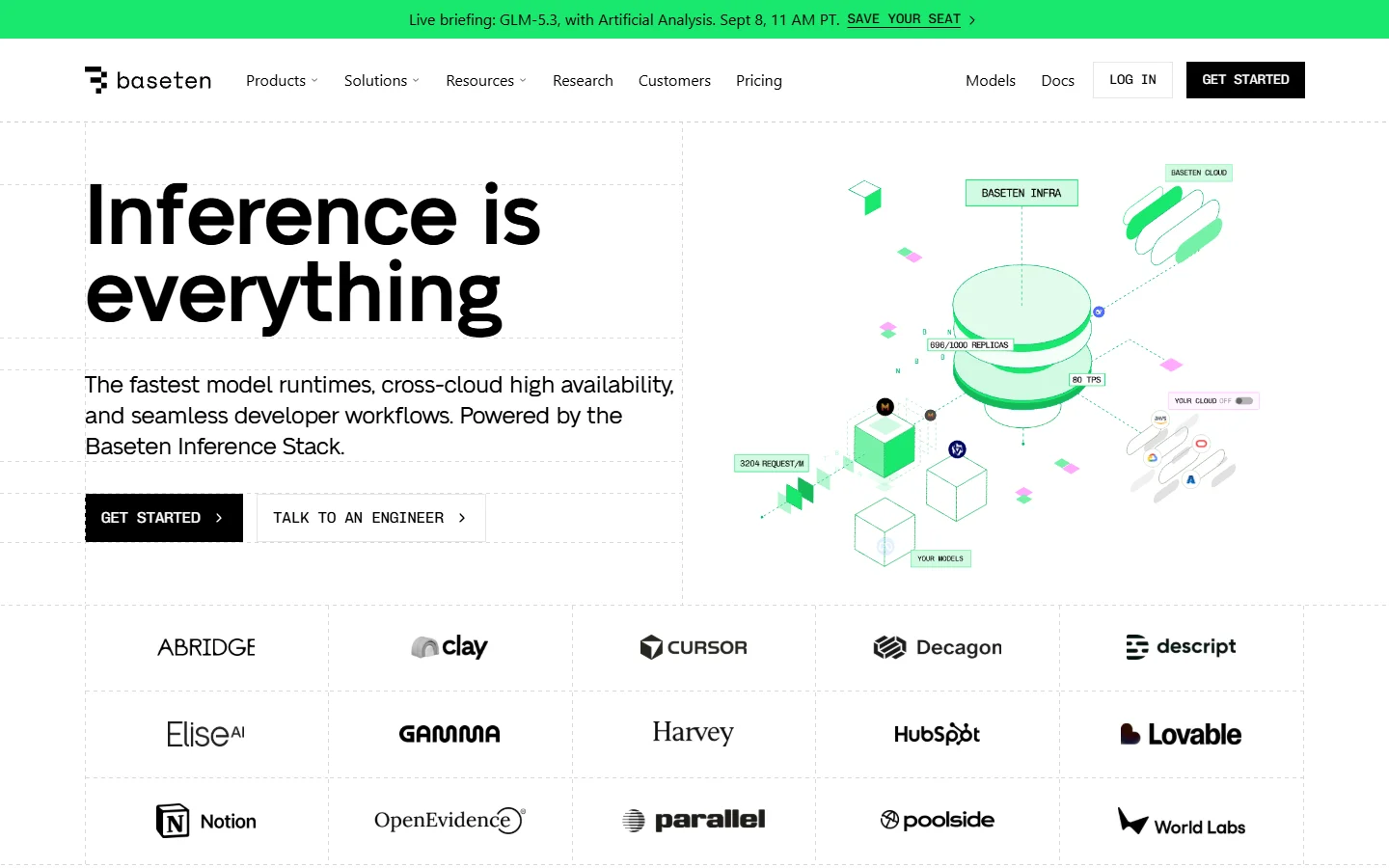
Baseten packages model deployment behind a developer experience that is unusually pleasant. You define a model as code, push it, and get an autoscaling endpoint with cold start behavior that is documented rather than mysterious. It is a serving layer, not a data platform, so the Unity Catalog side of Mosaic AI has no equivalent here. If your reason for leaving was serving cost and operational noise rather than governance, this is a strong pick, and it pairs well with the headless workflow platforms that call it. Verdict: best for custom model serving with predictable scaling.
6. Together AI
Together sits between Fireworks and a raw GPU cloud. You get a broad open model catalog on a serverless endpoint, dedicated endpoints when you need isolation, and GPU clusters when you need to train. The pricing page is honest and the docs are good. It is also, like Fireworks, a model access layer rather than an orchestration one, so the workflow logic stays in your codebase. Verdict: best for open model breadth with a path to dedicated capacity.
7. Modal
Modal is the most flexible and the least finished of the seven. You write Python, decorate a function, and it runs on serverless GPUs with per second billing. Batch jobs, fan out and scheduled runs are first class, which makes it very good for the kind of batch generation runs that get expensive on a per seat platform. You are writing more code than with anything above it. Verdict: best for engineering teams who want raw compute with none of the platform opinions.
What we found running the same brief three ways
We took one job we actually run, a product image variant pipeline that generates four images, upscales the best one and returns a URL, and rebuilt it on three of these. On Modal it took most of a day of Python plus a queue, and it was the cheapest per run once it worked. On Bedrock the model calls were quick to write and the image step forced a second vendor. On Wireflow's hosted canvas we had the graph wired and returning a URL in about forty minutes, and the endpoint it published was the same shape our agent already expected.
That gap is not a quality gap, it is a scope gap, and it is the honest way to read this list. A platform that only composes models will always be faster to stand up than one that also serves them, and it will hit a wall the moment you need a custom weight file. Where that wall sits depends on your workload, and it moves further out if you are building multi tenant generation for customers rather than internal tooling.
The other thing worth noting is that none of the three cost anything close to a Databricks commitment at our volume. That changes at scale, which is the argument for staying put if you have one.

Picking by what you actually run
If you strip out the marketing, the choice reduces to four questions about your workload, and the same logic shows up in most API workflow platform comparisons worth reading.
- Wireflow · Strength: canvas to REST endpoint with no infra · Weakness: no custom model training · Best for: media generation pipelines called from code or agents
- Amazon Bedrock · Strength: governance and IAM you already have · Weakness: thin media model coverage · Best for: AWS native enterprises
- Fireworks AI · Strength: inference speed and unit cost · Weakness: no orchestration layer · Best for: high volume open model calls
- TrueFoundry · Strength: full lifecycle in your own VPC · Weakness: you own the Kubernetes · Best for: regulated teams replacing Mosaic AI directly
- Baseten · Strength: clean custom model serving · Weakness: no data governance layer · Best for: shipping your own weights
- Together AI · Strength: open model breadth · Weakness: workflow logic stays in your code · Best for: teams that may need dedicated GPUs later
- Modal · Strength: per second serverless compute · Weakness: most code to write · Best for: batch and scheduled generation jobs
FAQ
Is Mosaic AI the same as Databricks? Mosaic AI is the AI and machine learning layer inside the Databricks platform, not a separate product you can buy alone. That matters when you shop for a replacement, because most of the tools in this list swap out one slice of it rather than all of it, which is also true of the broader content generation API field.
What is the cheapest Mosaic AI alternative? For per call cost on open models, Fireworks and Together are usually the cheapest, and Modal wins on batch jobs because you pay per second of actual compute. Cheapest total cost of ownership is a different answer, since a platform that needs two weeks of engineering time to stand up is rarely the cheap option.
Can I migrate a Mosaic AI agent to another platform? Partly. The prompts, tool definitions and evaluation datasets port fine. What does not port is anything bound to Unity Catalog governance or Delta Lake retrieval, which you rebuild against whatever the new platform offers, in the same way teams rebuild pipelines when moving off a hosted ComfyUI setup.
Do any of these handle image and video, not just text? Wireflow, Modal and Baseten all do, though only the first treats media as its primary case. Bedrock, Fireworks and Together are strongest on text and reasoning models, with media coverage that varies by region and catalog.
Which one is closest to a drop in replacement? TrueFoundry, because it covers the same lifecycle stages and runs in your own cloud. If your requirement is governance parity rather than feature parity, it is the shortest migration, and it is the one most often shortlisted in developer API roundups.
How long does a realistic migration take? For a single pipeline, a few days. For a portfolio of governed agents with lineage requirements, plan for a quarter. The variable is almost never the model calls, it is the data access and permissions layer you rebuilt around Databricks.
Bottom line
There is no single Mosaic AI replacement because Mosaic AI is not a single thing. If you need the governed lifecycle, TrueFoundry or Bedrock are the honest answers. If you were only ever using it to call models and stitch the results together, a hosted graph or a serverless function will do it faster and cheaper, the same pattern we found when Runway API alternatives got compared on the same criteria. Start by writing down which parts of the platform you actually invoked last month, and the shortlist picks itself.