
Ask ten developers which AI API is "best" and you will get ten different answers, because the question hides a more important one: what are you building? A chatbot, a code assistant, and a video-generation pipeline have almost nothing in common at the API layer. Most roundups treat "AI API" as shorthand for "LLM endpoint" and ignore the entire media side, which is where a lot of indie builders actually spend their money. We compared the major options in our breakdown of AI content generation APIs, and the gap between text and media platforms shaped this guide.
The split matters because the two worlds bill differently. Text APIs charge per token, so your costs scale with conversation length and context size. Media APIs charge per generation, so a single image or video render has a fixed price no matter how clever your prompt is. Budgeting, retry logic, and rate-limit handling all change depending on which side you are on.
This guide covers the strongest options in both camps as of mid-2026, plus the orchestration layer that connects them. If you want the hands-on version of that last part, we have a separate walkthrough on building AI pipelines with REST APIs that pairs well with this one.
How to judge an AI API before you commit
Benchmarks are the least useful signal here. Model quality converges fast; the things that actually hurt you six months into production are pricing structure, rate limits, and deprecation policy. Per-generation pricing on media APIs looks simple until you factor in failed renders and upscaling passes, something we dug into when we published FLUX Pro API pricing with code examples.
Before picking a provider, check four things:
- Pricing model: per token, per generation, or per second of compute. Each one punishes a different usage pattern.
- Rate limits and queues: requests per minute caps, concurrency limits, and whether heavy jobs sit in a queue with unpredictable wait times, something anyone accessing Google Veo through an API learns quickly.
- Model lifecycle: how much notice you get before a model is deprecated, and whether old versions stay pinned.
- Output ownership: what the terms say about commercial use of generated media, which varies more than most developers expect.

None of these show up in a benchmark chart, and all of them are the reason teams migrate providers within the first year.
Anthropic: the reasoning workhorse

Anthropic's Claude models have become the default for code generation and long-context work. The API is clean, the documentation is unusually good, and prompt caching cuts costs sharply on repeated context. The main trap is reasoning tokens: extended thinking modes bill for tokens you never see in the output, so cost estimates based on visible text run low. In multi-model setups, Claude usually sits at the planning step of the kind of chains we mapped in our visual AI pipeline builder guide.
- Strength: best-in-class code and multi-step reasoning · Weakness: hidden reasoning-token costs inflate bills · Best for: coding agents, document analysis, anything with long context
Replicate: open models without the infrastructure
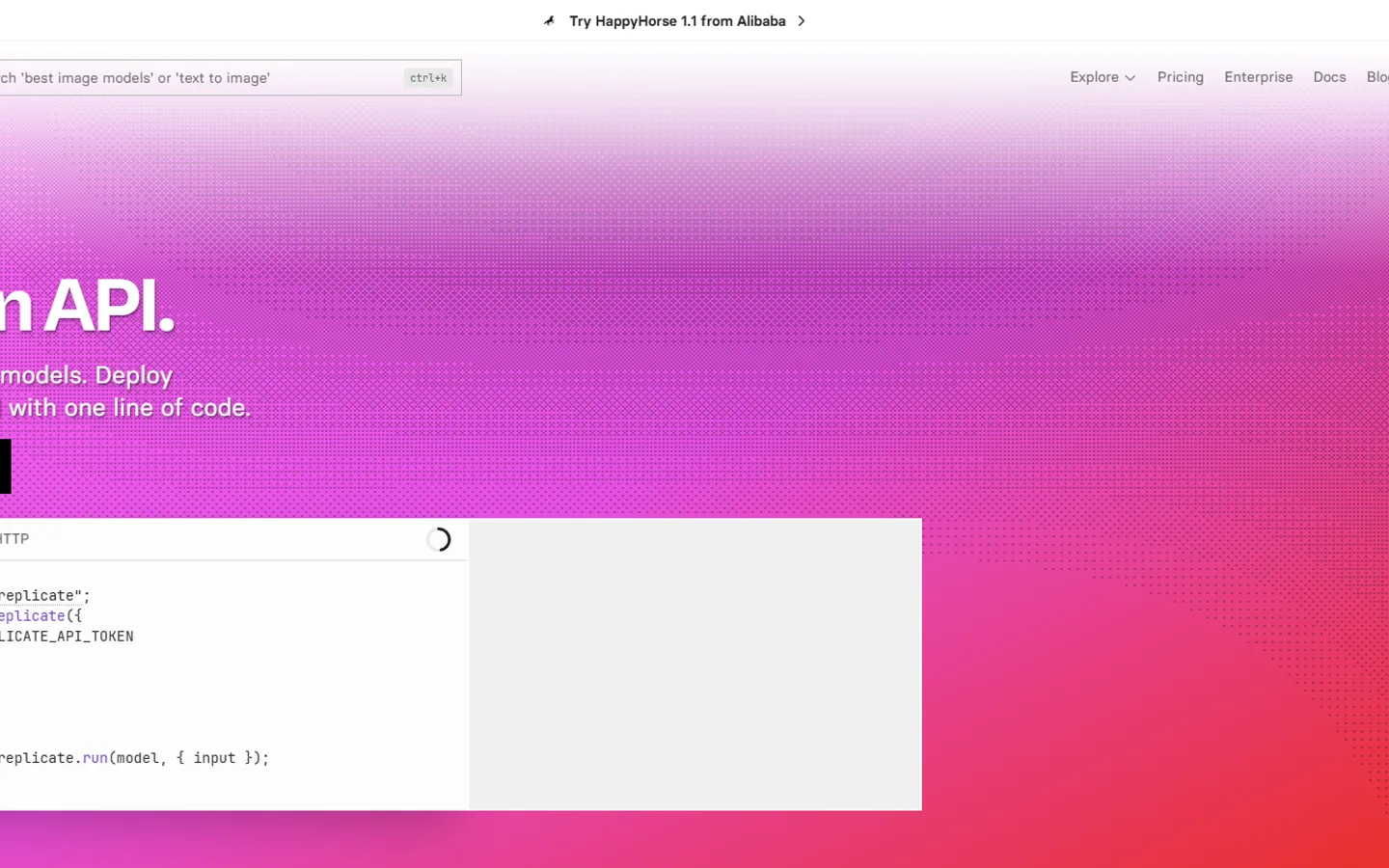
Replicate wraps thousands of open-source models, image, video, audio, and text, behind one consistent API. You pay per second of compute, which is great for occasional jobs and painful for high-volume ones. Cold starts are the known tax: a model that has not run recently can take 30 seconds or more to wake up. For batch work it is still one of the most flexible options, and the pattern is the same one we cover in our guide to batch image generation via API.
- Strength: enormous model catalog, zero infrastructure · Weakness: cold starts and per-second billing at volume · Best for: prototyping, niche open-source models, batch jobs
Together AI: cheap open-weight inference at scale
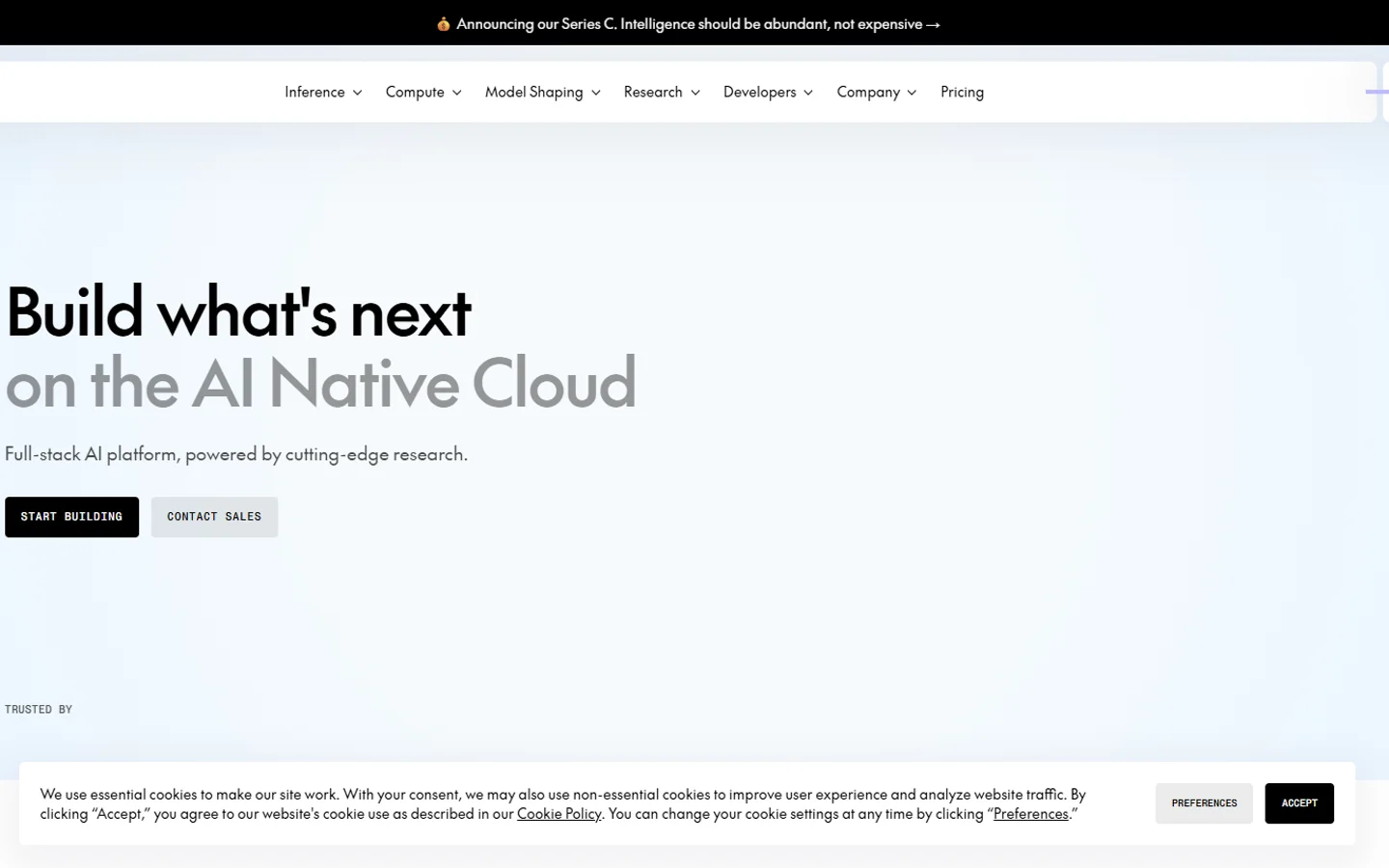
Together AI is the volume play: hosted Llama, DeepSeek, Qwen, and other open-weight models at per-token prices well below the closed labs. Latency is competitive and the OpenAI-compatible endpoint means switching costs are near zero. The tradeoff is that you are managing model choice yourself; there is no flagship model that is simply "the best," so evaluation burden shifts to you. Teams comparing hosts side by side can borrow the criteria from our node-based AI workflow platforms roundup.
- Strength: lowest per-token cost for open models · Weakness: you own model evaluation and quality drift · Best for: high-volume text workloads with fixed budgets
ElevenLabs: the default voice API
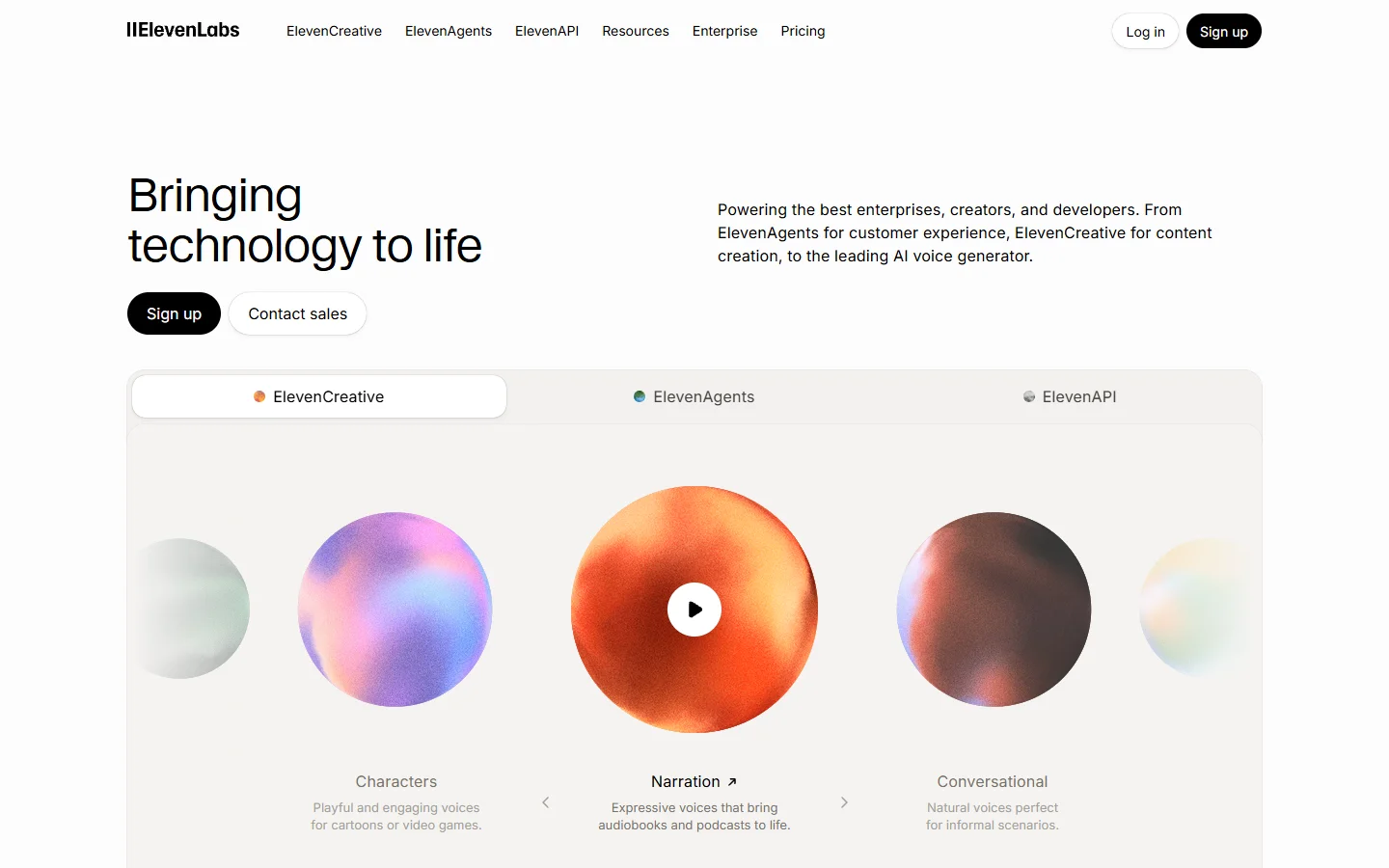
ElevenLabs is the rare case where one provider is the consensus answer for a whole category. Text-to-speech and voice cloning quality remain ahead of the field, and the API is straightforward: characters in, audio out. Pricing is character-based with monthly tiers, which is easy to model but means bursty projects can blow through a tier in days. For creator pipelines, voiceover is usually the cheapest stage; the video model calls around it, like the ones in our Veo 3.1 video API guide, dominate the budget.
- Strength: unmatched voice quality and cloning · Weakness: character-tier pricing punishes bursts · Best for: voiceovers, dubbing, conversational audio
Media generation APIs are a different game
The text-first roundups skip this entirely, but if you are building anything visual, providers like fal.ai matter more than any LLM. fal hosts fast image and video models (FLUX, Kling, and dozens of others) with per-generation pricing and a queue-based architecture built for heavy jobs. OpenAI competes here too with its image API, and its per-image pricing is predictable, though slower for batch workloads. For a concrete request-by-request example, see our walkthrough of Nano Banana image generation via API.
The mental model shift: media APIs are asynchronous by default. You submit a job, poll or receive a webhook, then download an artifact. Retry logic, timeout handling, and storage are your problem. If you are calling image models directly from code for the first time, our tutorial on calling FLUX from curl and Python shows the full request cycle, including the failure cases.

The glue: orchestrating multi-model pipelines
Real projects rarely use one API. A typical creator pipeline chains a text model for the script, an image model for frames, a video model for motion, and a voice model for narration. Each has its own auth, rate limits, and failure modes, and the chaining code ends up bigger than the product logic. We looked at the strongest options for this layer in our review of AI orchestration APIs for production apps.
For text-only routing, gateways like OpenRouter give you one endpoint across dozens of LLMs with automatic fallbacks. They solve provider redundancy well, but they stop at text; media models are out of scope.
For pipelines that mix text, image, video, and audio, a visual layer can replace most of the glue code. Wireflow AI takes that approach: you wire models together on a canvas and trigger the whole chain through a single API call, which turns a week of webhook plumbing into an afternoon of configuration. It sits alongside code-first options rather than replacing them; heavy custom logic still belongs in your own service.

FAQ
What is the best AI API for a solo developer on a budget? For text, Together AI's open-weight hosting is hard to beat on price. For media, per-generation pricing means your bill maps directly to output, so start with the platforms we compared in our developer-friendly AI generation platforms roundup and cap your spend at the provider level.
Are OpenAI-compatible endpoints worth prioritizing? Yes, as insurance. If a provider exposes the OpenAI request format, migrating away later is a one-line base-URL change instead of a rewrite. Most open-model hosts now offer this.
How do rate limits differ between text and media APIs? Text APIs cap requests and tokens per minute. Media APIs usually cap concurrent jobs and queue the rest, so latency, not errors, is the failure mode. Our guide to generating videos with Kling via API shows what queue-based flow looks like in practice.
Should I use one provider for everything? No single provider is best at text, images, video, and audio simultaneously. Multi-provider is the norm; the real question is whether you manage the integration sprawl yourself or push it into an orchestration layer.
What hidden costs catch developers most often? Reasoning tokens on thinking models, failed media generations that still bill, cold-start latency treated as an error and retried, and storage egress for generated media. All four show up only after launch, which is why headless AI workflow platforms that centralize logging have gotten popular.
How stable are these APIs year over year? Expect model deprecations every 6 to 12 months. Pin model versions explicitly, never rely on "latest" aliases in production, and read deprecation policies before committing to a provider.
Wrapping up
The best AI API in 2026 is a stack, not a single vendor: a strong reasoning model, a cheap open-weight host for volume, one media platform, and a voice API, connected by whatever glue fits your team. Developers who want that glue without maintaining it can sketch the whole chain on a node-based AI canvas and expose it as one endpoint, while teams with strict infra requirements will keep writing the plumbing themselves. Either way, pick providers for their pricing structure and lifecycle policy first. The model quality gap closes every quarter; a bad billing surprise does not.
Whichever stack you land on, keep evaluating as models ship. The platforms in our node-based AI platforms for developer teams piece looked very different a year ago, and next year will look different again.