
Most rankings of AI video software are written for one creator making one video. Agency work rarely looks like that. A mid-sized shop might run video for ten clients at once, and the hard part is never the first good clip. It is round three of revisions, when the client wants the same ad in three aspect ratios, two languages and a shorter cut. Our look at tools for automating video production covered the general case; this piece is about the agency version.
That changes what "best" means. The tools that keep a seat in an agency stack keep revision costs flat, hold brand elements steady between versions, and price predictably, because agencies resell production inside retainers and need to know what the fortieth variant costs before quoting the first.
So the tools below are sorted by where they sit in a production line: generation, presenter video and finishing, plus the gap between them. For a pure model shootout, our side-by-side of the leading AI video generators is a better starting point.
What agencies should measure before buying
Most top-ranking lists score tools on resolution and feature count. Those are table stakes in 2026, along with basics like watermark-free exports. These criteria decide whether a tool survives the trial month:
- Cost per approved deliverable: a tool that needs six attempts per on-brief clip costs six times its sticker price.
- Revision handling: change one script line, shot or voice without regenerating everything.
- Brand lock: fonts, colours, logos, voices and avatars saved once and reused.
- Format fan-out: one master into 9:16, 1:1 and 16:9 without a rebuild.
- Seat versus credit pricing: seats punish large teams, credits punish heavy testing.
Pricing is where agencies get surprised most often. Nearly every tool below mixes per-seat billing with metered credits, so a freelancer for a busy month costs a seat and a heavy test week costs credits. The same trap shows up in UGC ad tooling, covered in our guide to AI UGC ad tools for agencies.
Generation: Runway and Luma
Runway
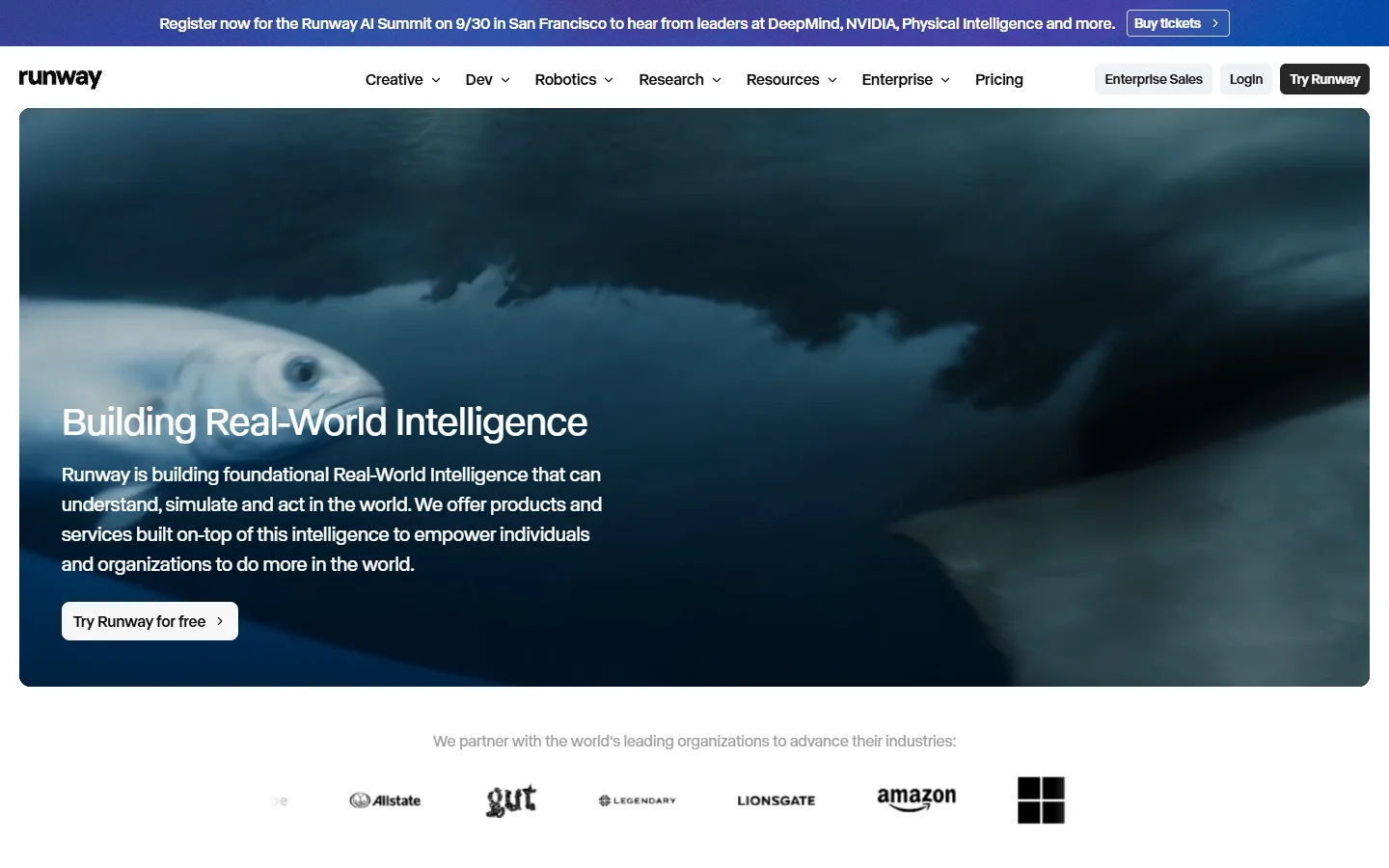
Runway remains the default generator for creative and brand-led agencies. Its Gen-4 family handles camera direction, reference images and character consistency well enough for mood films, product hero shots and social teasers, and its editor lets a team generate, trim and extend clips in one place.
The limitation is economics at volume. Runway bills per seat and meters generation in credits, and its top model works through an entry-tier monthly allowance in under a minute of footage. That is fine for a hero spot and painful for forty ad variants. Teams hitting that ceiling should see our roundup of Runway alternatives.
Verdict: best for hero creative and pitch visuals, not high-volume variant testing.
Luma
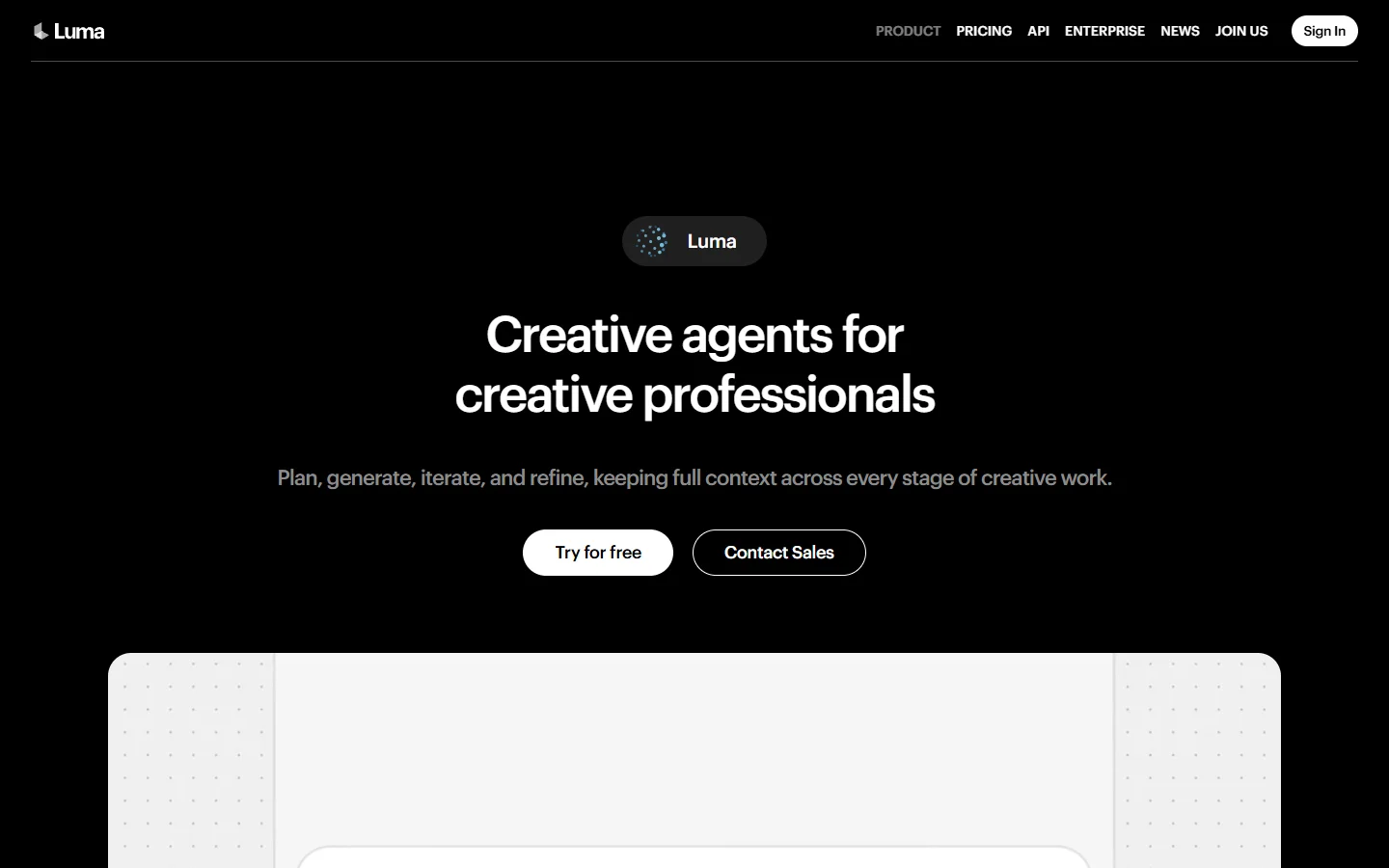
Luma built its name on Dream Machine and its Ray video models, which are strong on camera motion and physical realism, ideal for product reveals, architecture and anything that should feel filmed. Luma now pitches creative agents that carry context from planning through refinement, a nod to how agencies iterate on a brief.
It is thinner after the clip. There is no deep editing layer and no presenter tooling, so Luma output usually moves elsewhere for finishing. If motion quality decides it, our Sora 2 and Veo 3 comparison covers the two main rivals.
Verdict: best for cinematic b-roll and product motion.
Presenter video and localization: Synthesia and HeyGen
Synthesia
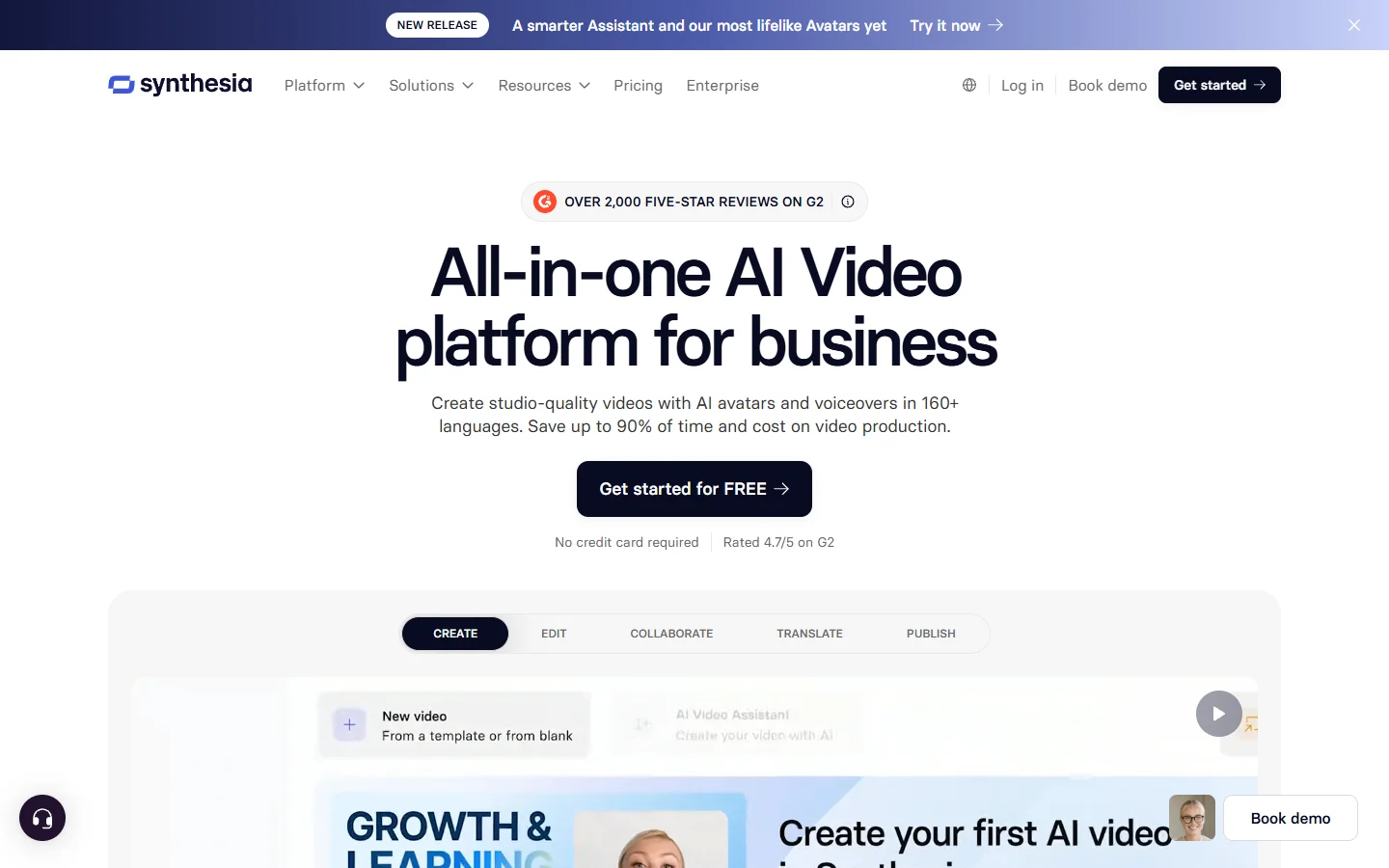
Synthesia is the established choice for presenter-led video: training modules, internal comms, product walkthroughs and explainers for corporate clients. Brand kits, templates and locked avatars let a junior producer make a module that looks like the last forty, and voiceovers cover more than 160 languages.
The tradeoff is range. Output reads as corporate by design, so it is the wrong tool for creator-style social ads, and minute-based pricing is easy to quote but caps experimentation. Our guide to Synthesia alternatives maps the rest of this lane.
Verdict: best for corporate and training clients who value consistency over flair.
HeyGen
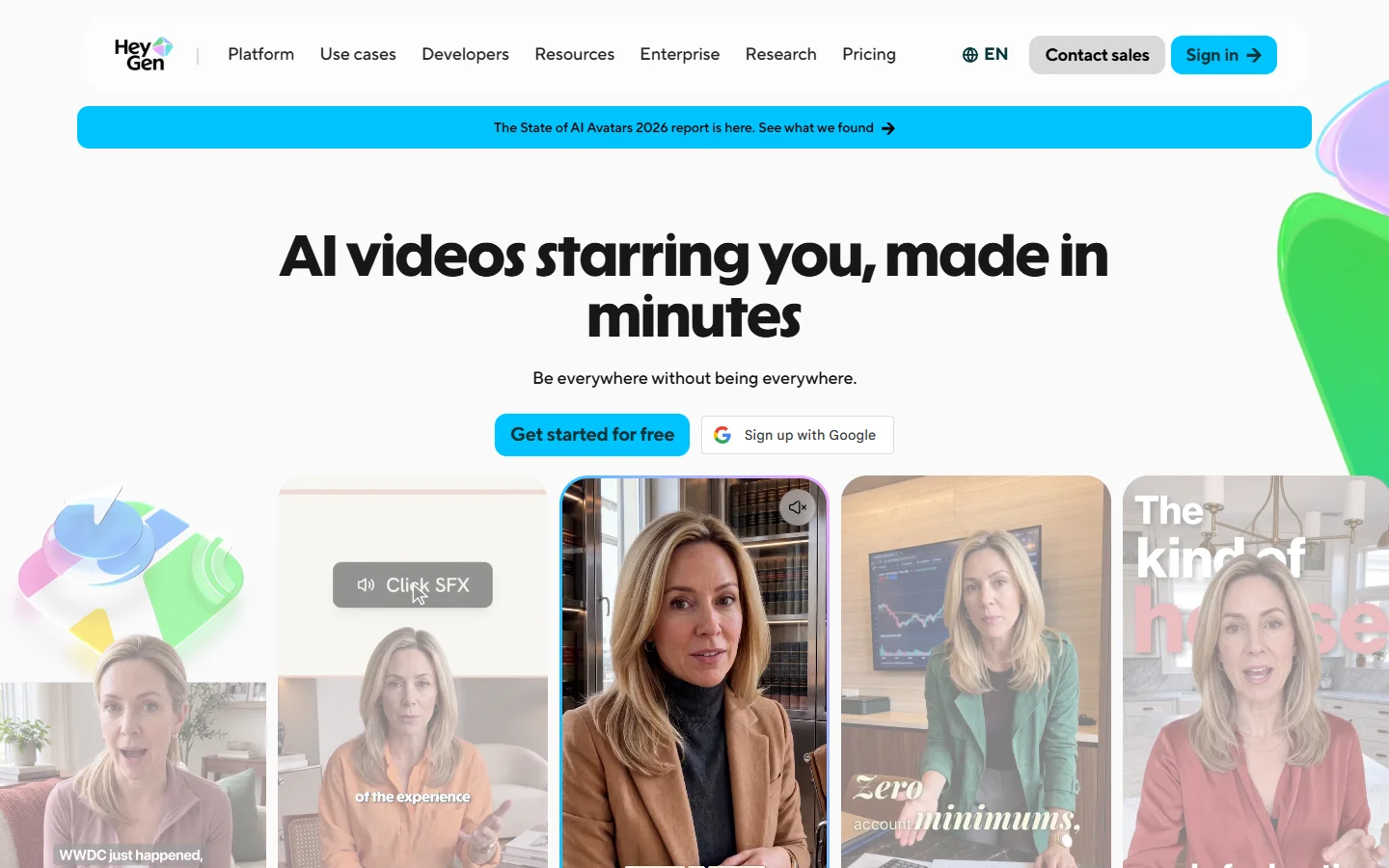
HeyGen overlaps with Synthesia but leans toward marketing. Translation and lip sync are why most agencies subscribe: one approved English spot can be localized for dozens of markets without a reshoot, across more than 175 languages and dialects.
Watch the credit math. Premium avatar renders consume credits several times faster than older models, so a multi-market localization push can burn a month's allowance in days. For the audio side, see our list of AI voice generators for content creators.
Verdict: best for localizing approved creative into many languages.
Where point tools stop scaling
Every tool above does one stage well, and that is exactly the limitation agencies run into. A Runway clip, a HeyGen presenter and a separate voiceover are three exports, and the brand rules tying them together live in a style guide or one producer's head. When the client asks for twelve cut-downs next week, the chain gets rebuilt by hand. Node-based platforms such as Wireflow take the opposite approach, keeping the models, prompts and edit steps in one saved graph that can be rerun per client or format, and their breakdown of picking video software that scales across client accounts makes that case in more detail.
The honest caveat is setup time. A pipeline is slower to build than a single generation, so it pays off on recurring formats such as weekly social cut-downs or always-on paid social testing, not one-off brand films. Agencies usually start with one repeatable format, the same logic behind a programmatic video generation platform.
Editing and finishing: Descript and VEED
Descript
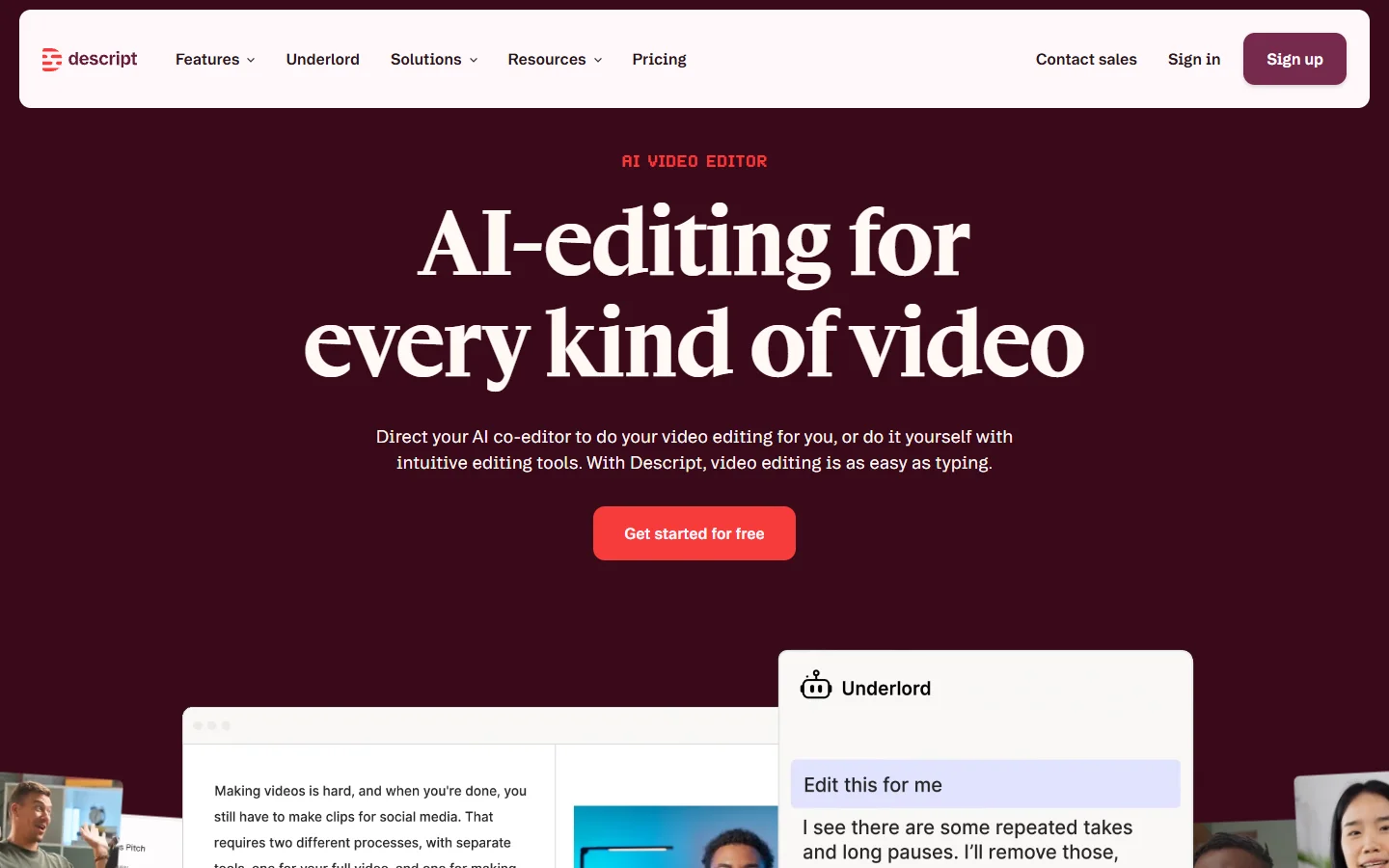
Descript edits video by editing the transcript, which makes it the fastest way to cut interviews, webinars and talking-head content into client deliverables. Its AI co-editor, Underlord, removes retakes, pauses and filler words on request, and voice cloning can patch a misspoken line without a reshoot.
It is billed per seat, and it is an editor rather than a generator, so it complements the tools above instead of replacing them. Teams that want AI to do more of the cutting should compare it with our video editing agent roundup.
Verdict: best for talk-driven content and executive video.
VEED
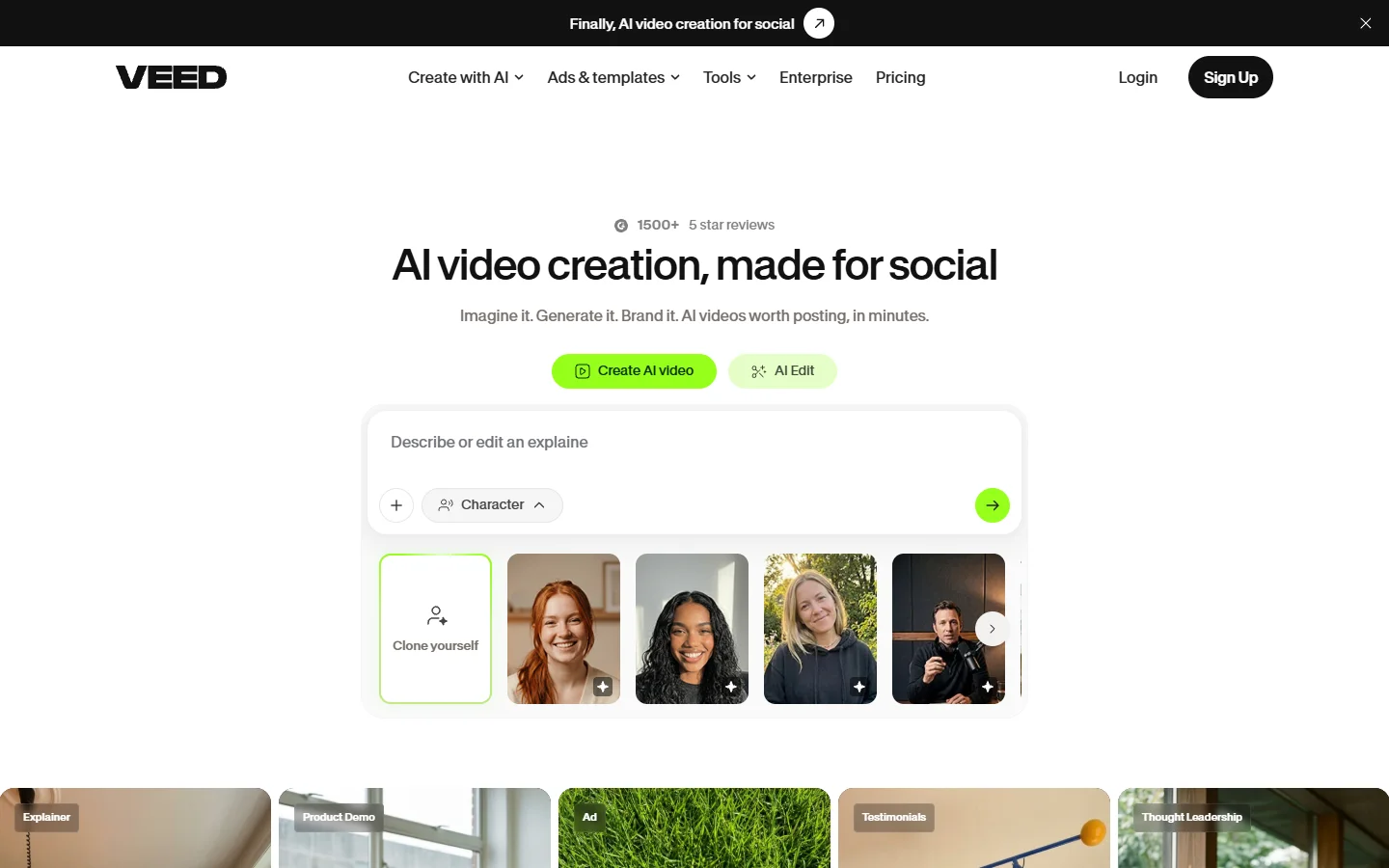
VEED now leads with AI video creation for social, but most agencies use it as the quick finisher: auto subtitles, resizing, brand kits and templates in a browser editor that account managers can use without training.
Its limits show on complex timelines, and per-user billing adds up for a large account team. Our walkthrough on making marketing videos with AI shows the kind of finishing pass it handles well.
Verdict: best for captioning, resizing and last-mile client edits.
How the stack fits together
- Runway - Strength: generation quality · Weakness: credit cost at volume · Best for: hero creative and pitches
- Luma - Strength: camera motion and realism · Weakness: little finishing tooling · Best for: cinematic b-roll
- Synthesia - Strength: consistency · Weakness: corporate look · Best for: training and internal comms
- HeyGen - Strength: translation and lip sync · Weakness: premium avatar credit burn · Best for: multi-market campaigns
- Descript - Strength: transcript-based editing · Weakness: not a generator · Best for: interviews and executive content
- VEED - Strength: fast captions and resizing · Weakness: shallow on complex edits · Best for: last-mile deliverables
A typical agency stack uses one generator, one presenter tool and one finisher, plus either a producer who moves files between them or a pipeline that does it automatically. That second choice affects margin more than the choice of generator. For consistency at the asset level, AI brand kit generators help.

FAQ
What is the best AI video production software for agencies in 2026?
There is no single winner, because agencies buy for different stages. Runway leads for generated hero creative, Synthesia for corporate presenter video, HeyGen for localization, and Descript or VEED for finishing.
Can AI video tools replace a production crew?
For social variants, explainers and localized versions, largely yes. For flagship brand films, AI mostly speeds up pre-production and b-roll. Prompting is still a craft, as our Kling 3 prompting guide shows.
Which tool is best for ad variant testing?
Credit-light generators and template tools beat premium models for early testing; save the expensive render for the winning concept. Our list of AI tools for TikTok UGC ads covers that end of the market.
How do agencies keep brand consistency across several AI tools?
Store brand kits, approved avatars and voice settings in every tool that supports them, and keep one reference frame per client for image-to-video work. Fewer handoffs mean fewer places for drift.
Do these tools offer APIs for automated production?
Runway, Luma, HeyGen and Synthesia all offer APIs, which matters when a client wants renders triggered from their own systems. Our walkthrough on generating Kling videos via API shows what that integration looks like.
Conclusion
The best AI video production software for an agency depends less on which model wins a demo and more on what happens at revision three, client six and format twelve. Pick one tool per stage, price by approved deliverable, and treat the connections between tools as part of the stack. For agencies that mainly turn long content into short clips, our Pictory alternatives list covers that narrower category.