
Agencies do not have a creative problem with UGC ads. They have a throughput problem. A single performance client burns through fifteen to thirty creator-style variants a month before a winner emerges, and the agency running eight clients is suddenly staffing a casting operation it never wanted. That is the pressure that pushed AI UGC tools from novelty to line item in about eighteen months, and it is why the buying criteria for an agency look almost nothing like the criteria for a solo brand owner. Most of the ranked lists floating around still test these tools the way a single founder would, which is how you end up recommending something that falls apart at client number three. If you want the consumer-grade version of this question, our roundup of AI tools for TikTok UGC ads covers it.
The agency version has three extra constraints. Output has to be traceable per client, so you can tell a brand exactly which avatar, script, and voice produced the ad that worked. Cost has to be predictable per video, because you are reselling it inside a retainer. And the whole thing has to be repeatable by a junior media buyer at 11pm, not just by the one person who understands the tool. Very few platforms score well on all three. Plenty of them, including several covered in our look at AI ad generators for social media, are excellent at producing one good video and mediocre at producing the hundredth.
So the tools below split along a useful line. Arcads and Creatify compete at the generator level, where the question is how convincing the actor looks. Captions competes at the finishing level, where the question is whether the ad survives a native TikTok feed. And workflow platforms like Wireflow compete at the pipeline level, where one build gets rerun across an entire client roster instead of being rebuilt by hand each time; here is a closer look at that approach if the repeatability layer is the part you are missing.
Arcads: the realism benchmark
Arcads has the strongest actor library of the group, and it is not close on the specific thing that matters most for UGC: micro-expression. The avatars blink irregularly, shift weight, and gesture with their hands while talking, which is the cluster of behaviours that stops a viewer from scrolling past on instinct. Feed it a script and it returns a take that reads as a person who was handed a phone, not a presenter reading a teleprompter.
The cost profile is the tradeoff. Arcads sits at the expensive end per video, which makes it a poor fit for the shotgun testing phase where an agency needs forty variants of a hook to find one that holds. The pattern that works is to test cheap and finish expensive: find the winning script and hook elsewhere, then re-render the winner in Arcads for the version that gets real spend behind it. Our comparison of UGCVideo.ai against Arcads goes deeper on where that quality gap actually shows up.
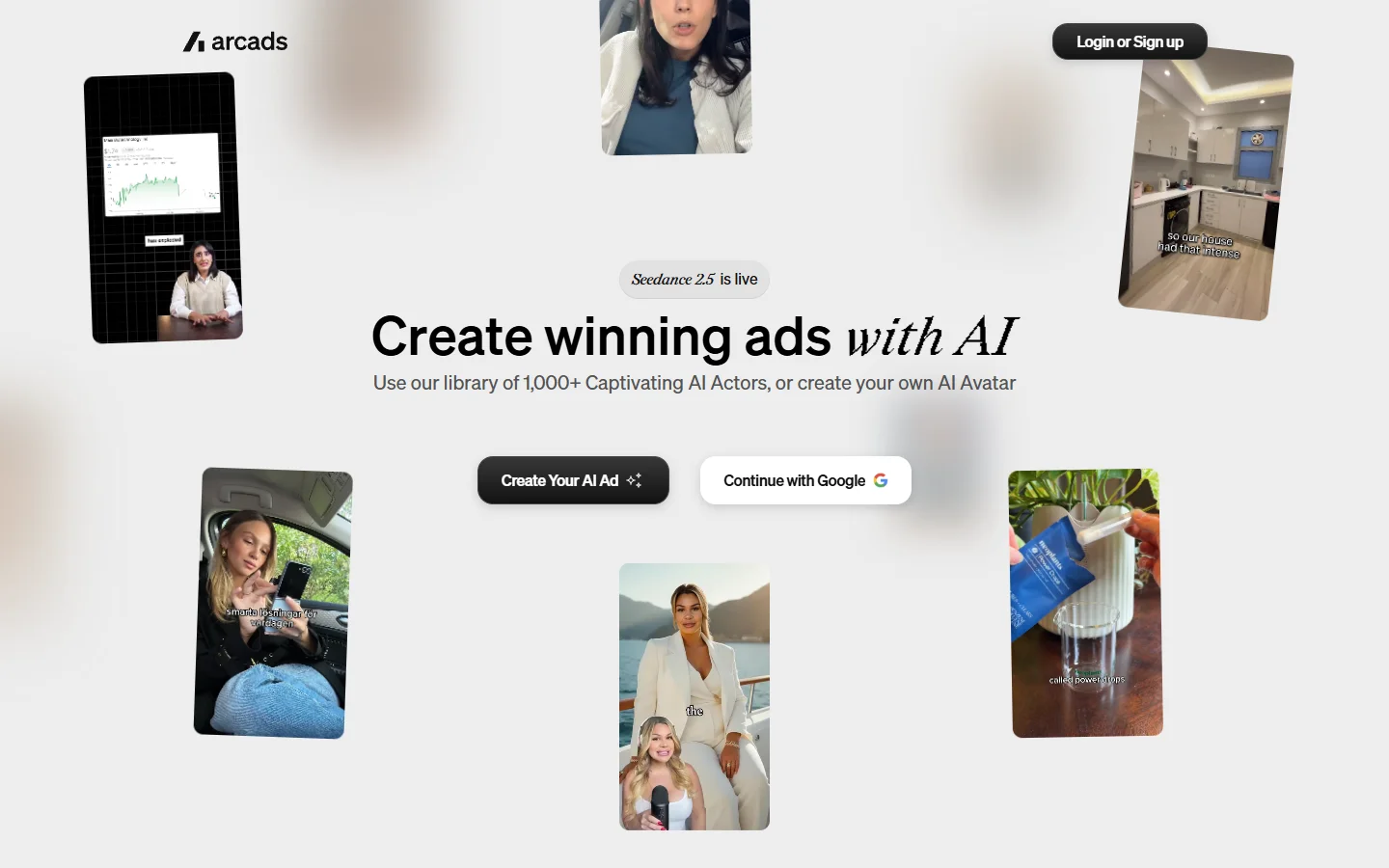
Verdict: best for the hero variant that carries budget, not for volume testing.
Creatify: volume at the lowest per-video cost
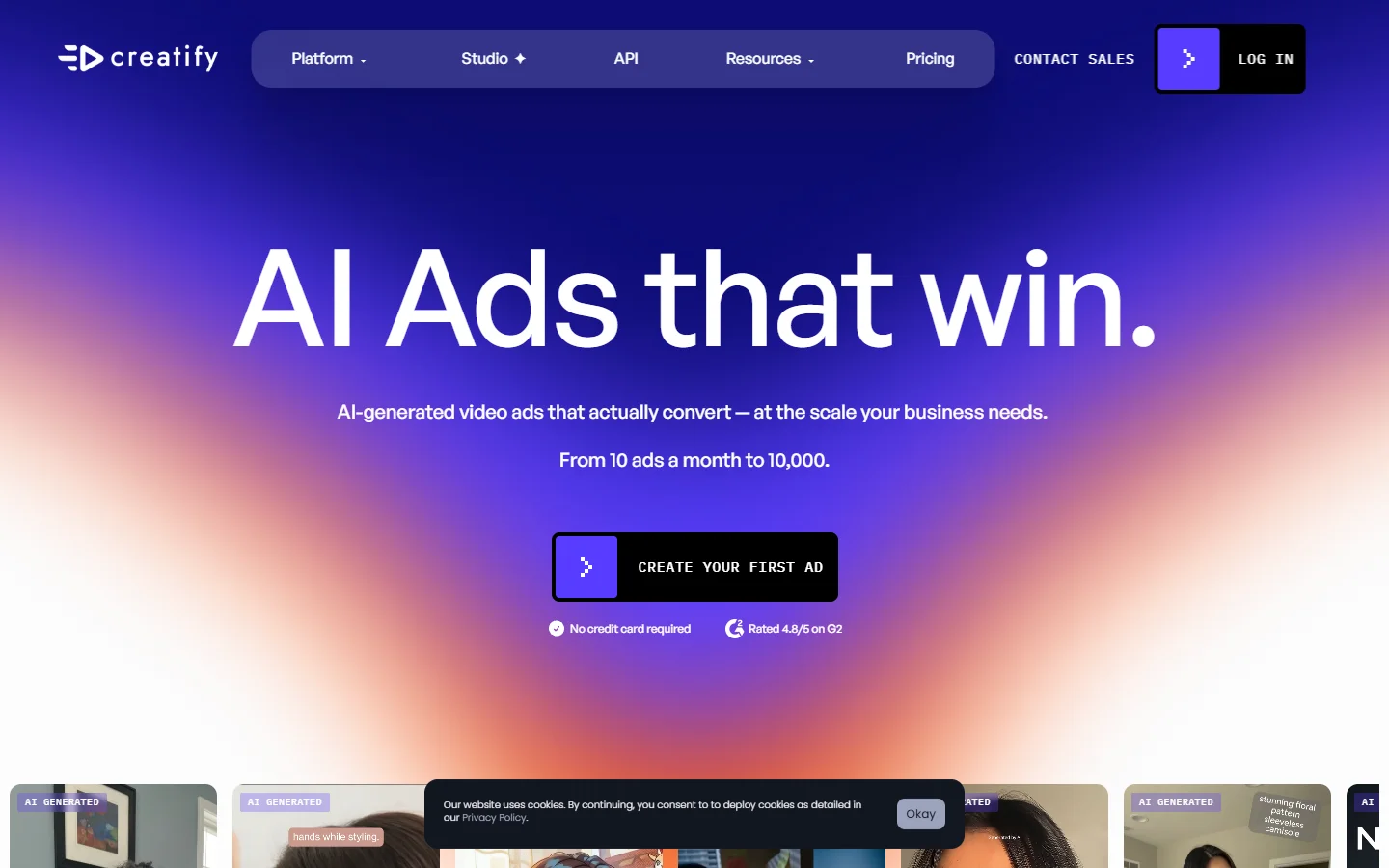
Creatify is the volume workhorse. Paste a product URL, get a batch of ad variants with different hooks, avatars, and pacing, and do it at a per-video cost that makes running forty tests a normal Tuesday rather than a budget conversation. For an agency in the discovery phase of a new client, that economics difference matters more than a two point bump in avatar realism.
Where it gets thin is control. The URL-to-ad pipeline that makes it fast also makes it opinionated, and pulling a specific creative direction out of it takes more fighting than it should. Treat the output as a hypothesis generator rather than a finished asset. The same logic applies to product-led categories generally, which we covered in our piece on AI tools for ecommerce product videos.
Verdict: best for the first forty variants, before you know what works.
HeyGen: the localization play
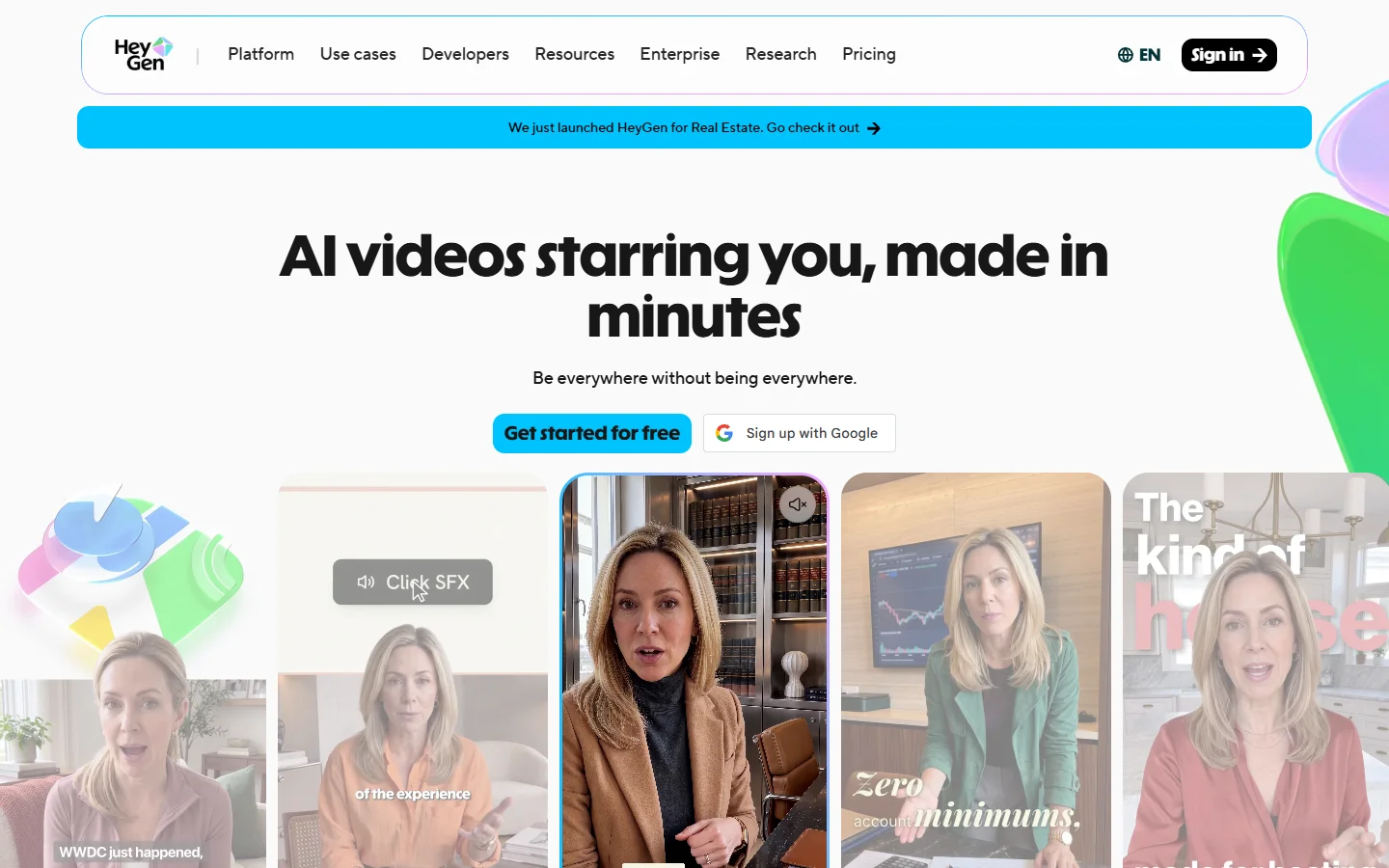
HeyGen is the most complete platform of the five, with the largest avatar library and by far the widest language support. For an agency whose clients run in more than one market, that single capability outweighs a lot of other shortcomings. Take a winning English creative, produce it in eleven languages with lip sync that actually tracks, and you have turned one successful test into eleven campaigns without a second casting cycle.
Its UGC output is a notch less native-feeling than Arcads, which shows up in the way avatars hold their upper body. HeyGen avatars read slightly presentational, closer to a spokesperson than a customer filming in a kitchen. For explainer and testimonial formats that is fine, and sometimes preferable. For raw creator-style content it is a small tax. If you are choosing between avatar platforms on this axis, the Synthesia alternatives roundup maps the field.
Verdict: best when one creative has to ship in several languages.
MakeUGC: built for the agency shape
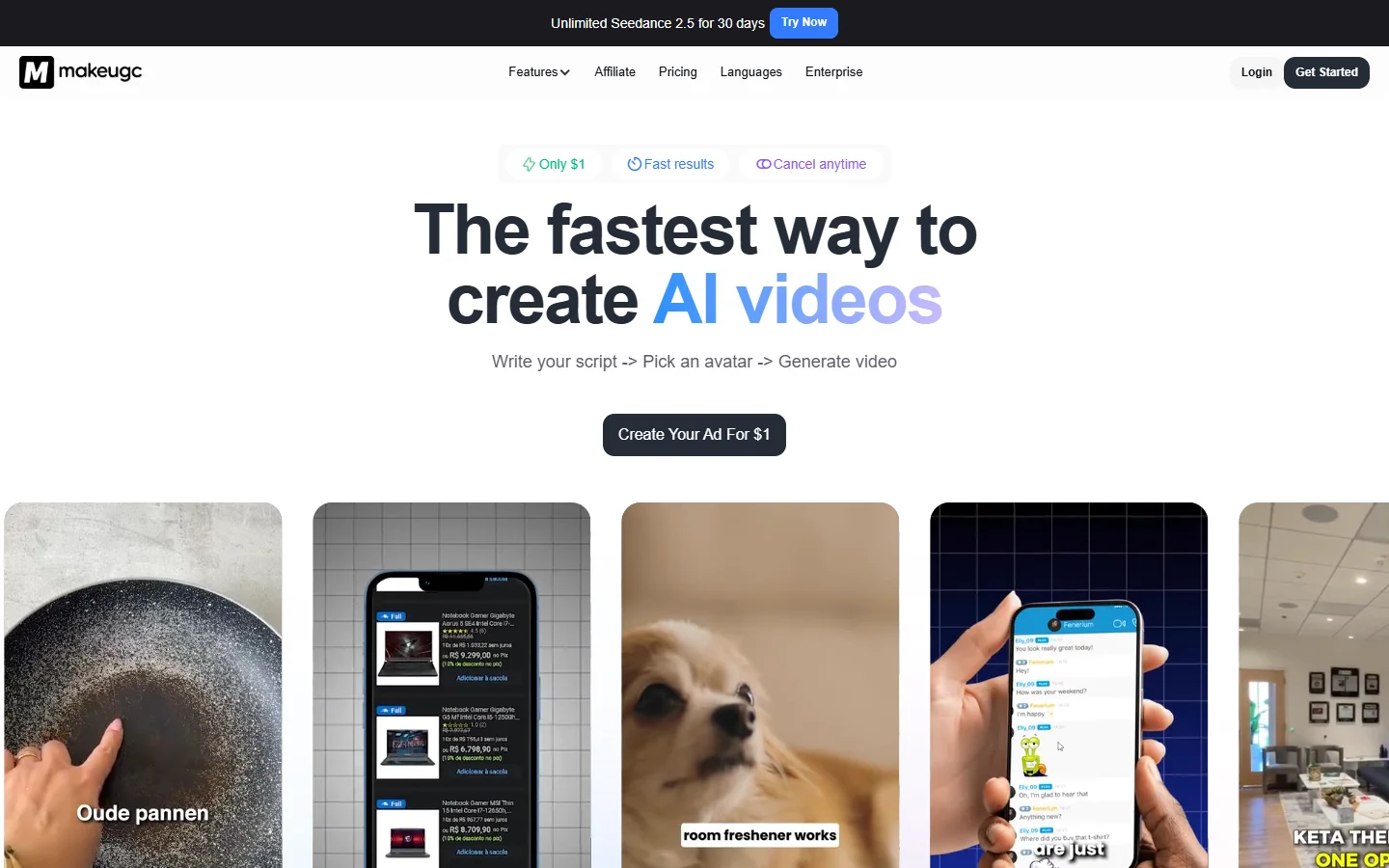
MakeUGC is the one on this list that was designed around the workload rather than around the model. Its avatar library is scoped specifically to UGC-style output, meaning fewer studio backdrops and more bedrooms, cars, and kitchens, and its bulk creation flow assumes you are producing for multiple brands at once rather than iterating on one.
That focus is also its ceiling. It is less useful the moment you need something that is not a creator-style ad, and the library, while well-targeted, is smaller than HeyGen's. For agencies that only produce UGC ads, that is a fair trade. For agencies that also produce explainers, brand films, and product demos, it becomes another subscription doing one job, and the broader avatar-from-photo tooling usually covers those cases better.
Verdict: best for agencies whose entire output is creator-style ads.

Captions: the finishing layer
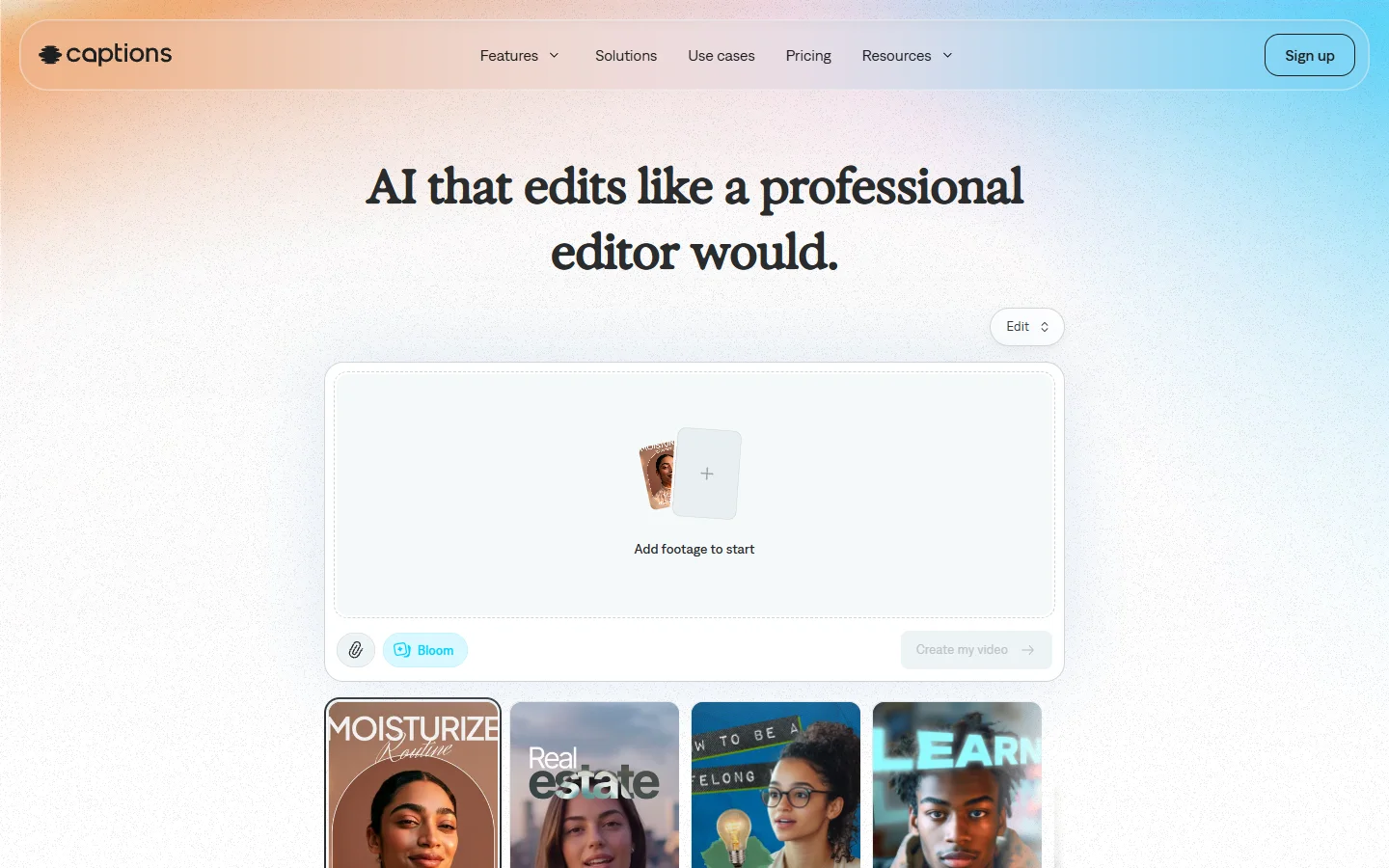
Captions is not really a generator, and treating it as one is the most common way agencies misuse it. Its value is in the last ten percent: subtitle styling that matches platform-native conventions, B-roll insertion, pacing cuts, and the small edits that separate an ad that looks generated from one that looks filmed. Raw AI avatar output almost always benefits from a pass through something like this before it goes live.
The reason this layer matters more than it sounds is that platform algorithms and human viewers both read finishing quality as a proxy for authenticity. An ad with generic centre-aligned subtitles gets clocked as an ad in about half a second. The same footage with platform-idiomatic captions and a hard cut at the two second mark does not. We covered the same principle from the organic side in our guide to making AI Instagram reels that perform.
Verdict: best as the final step on top of whatever generator you picked.
How to assemble the stack
The comparison in short form, since the useful question is not which tool wins but which combination you run, a framing we also used in our TikTok video tooling guide:
- Arcads · Strength: most convincing actor performance · Weakness: high per-video cost · Best for: the scaled winner
- Creatify · Strength: lowest per-video cost at volume · Weakness: limited creative control · Best for: hook and script discovery
- HeyGen · Strength: language and avatar breadth · Weakness: slightly presentational delivery · Best for: multi-market rollouts
- MakeUGC · Strength: agency-shaped bulk flow · Weakness: narrow beyond UGC · Best for: UGC-only shops
- Captions · Strength: native-feeling finishing · Weakness: not a generator · Best for: the final pass
The stack most agencies converge on after a quarter of testing looks like this: discovery in Creatify, winners re-rendered in Arcads, localization through HeyGen when the client has more than one market, and everything finished in Captions. The part that gets skipped, and the part that decides whether this scales past four clients, is the connective tissue. Someone has to define the naming convention, the folder structure, and the handoff, or you end up with three people producing the same variant twice. Our notes on creating marketing videos with AI cover the process side of that.

What these tools still cannot do
None of them will write a good script. Every platform on this list ships a script generator, and every one of them produces the same competent, forgettable copy, because they are all drawing from the same distribution of ad language. The agencies getting real results are still writing hooks by hand and using the tools purely as a production layer. That division of labour is the actual insight, and it is more durable than any specific tool ranking.
They also cannot do trust. An avatar cannot make a claim credible in a category where the buyer expects to see a real face, and regulated verticals in particular still need human creators. Knowing where the line sits for a given client is judgment, not tooling. For the categories where synthetic creators do work, the avatar video generator landscape is expanding fast enough that the line moves every few months.
FAQ
What is the cheapest AI UGC tool for agencies running high volume?
Creatify has the lowest effective per-video cost once you are producing at batch scale, which is why it tends to occupy the discovery slot in an agency stack rather than the finishing slot.
Do AI UGC ads actually perform against human creator content?
They perform well in top-of-funnel testing and less well in trust-heavy categories. The realistic framing is that AI covers the volume of variants you need to find a winner, and human creators still matter where credibility is the bottleneck. Our social media video tools roundup breaks down which formats hold up.
How many ad variants should an agency test per client?
Fifteen to thirty in the first month is a common baseline before a clear winner emerges, which is precisely the number that makes manual creator sourcing impractical and AI generation economically obvious.
Can these tools handle voice cloning for a client's spokesperson?
Several can, though quality varies more than the marketing suggests, and consent documentation matters more than the feature. The AI voice generator comparison covers where the current tools land on naturalness.
Is one platform enough, or do agencies need several?
Almost every agency past a handful of clients ends up running two or three, because the tool that is cheapest at volume is not the tool with the best actor performance, and neither of them finishes video well.
What breaks first when an agency scales this?
Organization, not output quality. Naming, versioning, and per-client traceability collapse well before the generators do, which is why the pipeline layer matters more than the model layer once you are past a few accounts. The same problem shows up in adjacent workflows we covered in AI ad tooling reviews.
Do AI UGC ads need disclosure?
Platform rules differ and are still moving, but the practical standard emerging in 2026 is disclosure whenever a synthetic person makes a first-person claim about using a product. Treat it as a client conversation rather than a legal afterthought, and apply the same caution to synthetic voice, which our text to speech comparison covers in more detail.
Wrap
The ranking matters less than the assembly. Arcads produces the most convincing single video, Creatify produces the most videos per dollar, HeyGen crosses the most borders, MakeUGC fits the agency shape best, and Captions makes any of them look native. An agency that picks one and commits will do worse than an agency that runs two in sequence with a clear handoff between them. The tooling is no longer the constraint in 2026. The process around it is, and that is the part nobody sells you.