
Almost every roundup of the best AI tools for TikTok UGC ads in 2026 is a ranked list, and ranked lists are the wrong shape for this problem. A TikTok UGC ad is not one artifact produced by one product. It is five separate jobs stapled together, and the tools that are excellent at one of them are usually mediocre at the other four. Ranking them against each other produces a winner that nobody can actually use end to end.
So this piece is organised the other way round. We walk the production chain in the order a real ad gets made, and at each stage we name the tools that are genuinely good at that stage. None of them wins overall, because "winning" is not a thing a hook writer and a lip-sync engine can do to each other. If you want the ranked version, plenty of sites have one, including a thorough comparison of UGC video generators that tests two of the bigger platforms head to head.
One caveat. Everything below assumes you are producing volume, ten to fifty variants a week rather than one hero spot a quarter. That changes which weaknesses matter: a tool that renders a beautiful clip in nine minutes is a problem at volume and a non-issue below it, and much of the advice about making TikTok videos with AI quietly assumes the low-volume case.
Job one: writing hooks that are worth testing
The first three seconds decide whether the other twenty-seven get watched, and this is the stage where AI tools are least differentiated. Any competent general model will produce forty hook variants from a product page. The differentiator is not generation quality, it is whether the tool keeps the hooks attached to the creative that gets rendered from them, so that when variant 14 outperforms, you know which line produced it.
That is a data plumbing problem, not a copywriting one. The platforms in this roundup of AI ad generators for social media all keep a script-to-render association internally, which is the main reason to use one instead of pasting chat output into a video tool by hand.

If you write hooks yourself, the rule that has held up through 2026 is to write for the visual, not the sentence. A hook that only works when read dies against a muted autoplay feed, and the AdsMaker review makes the same point from the platform side.
Job two: the face on camera
This is where the money and the disagreement live. Three approaches are worth knowing.
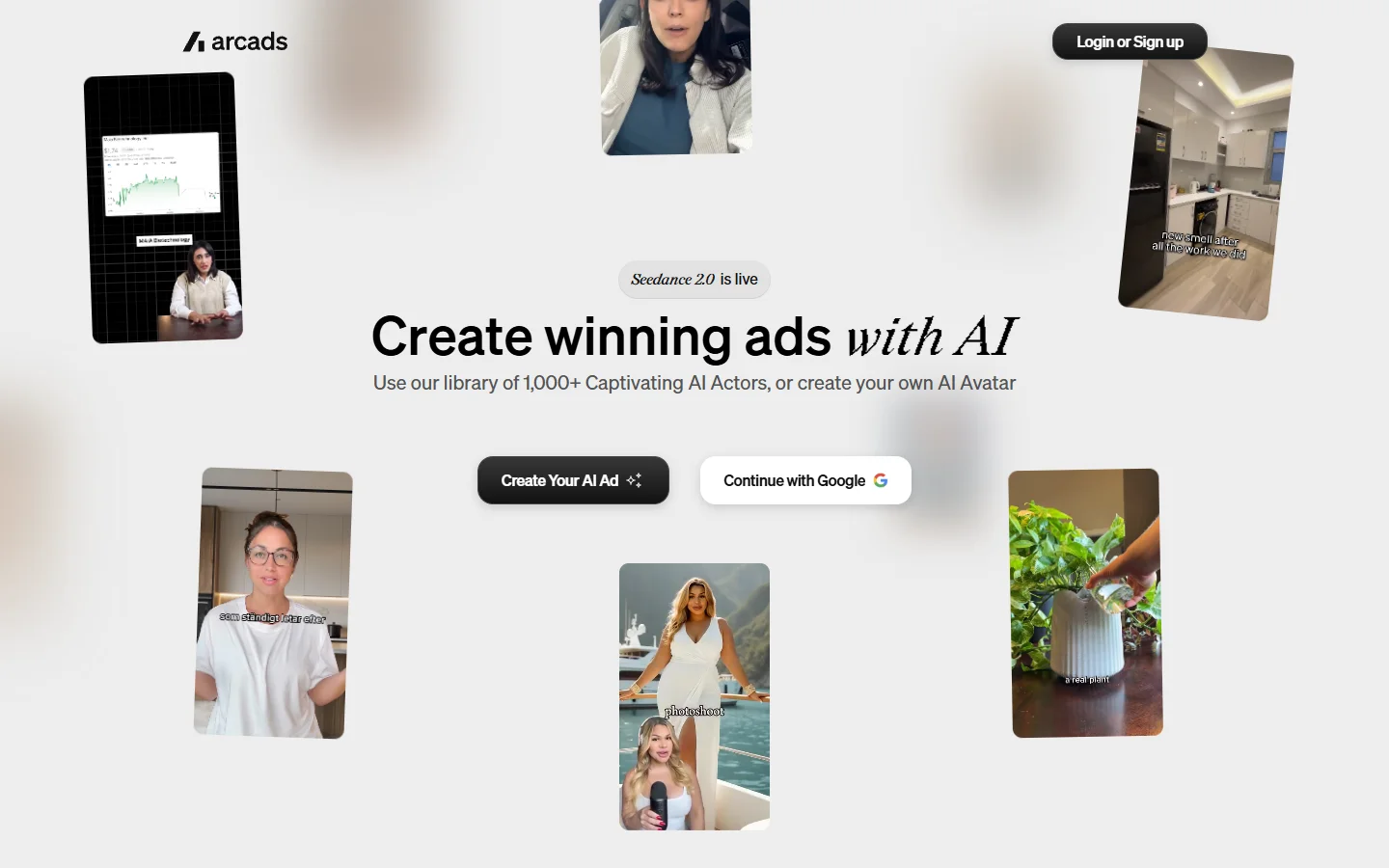
- Arcads - Strength: the most convincing licensed AI actors currently available, with delivery that reads as a person talking rather than a model performing. Weakness: per-render cost adds up fast at volume, and the actor roster is finite so heavy users start recognising faces. Best for: brands whose ads live or die on the performer.
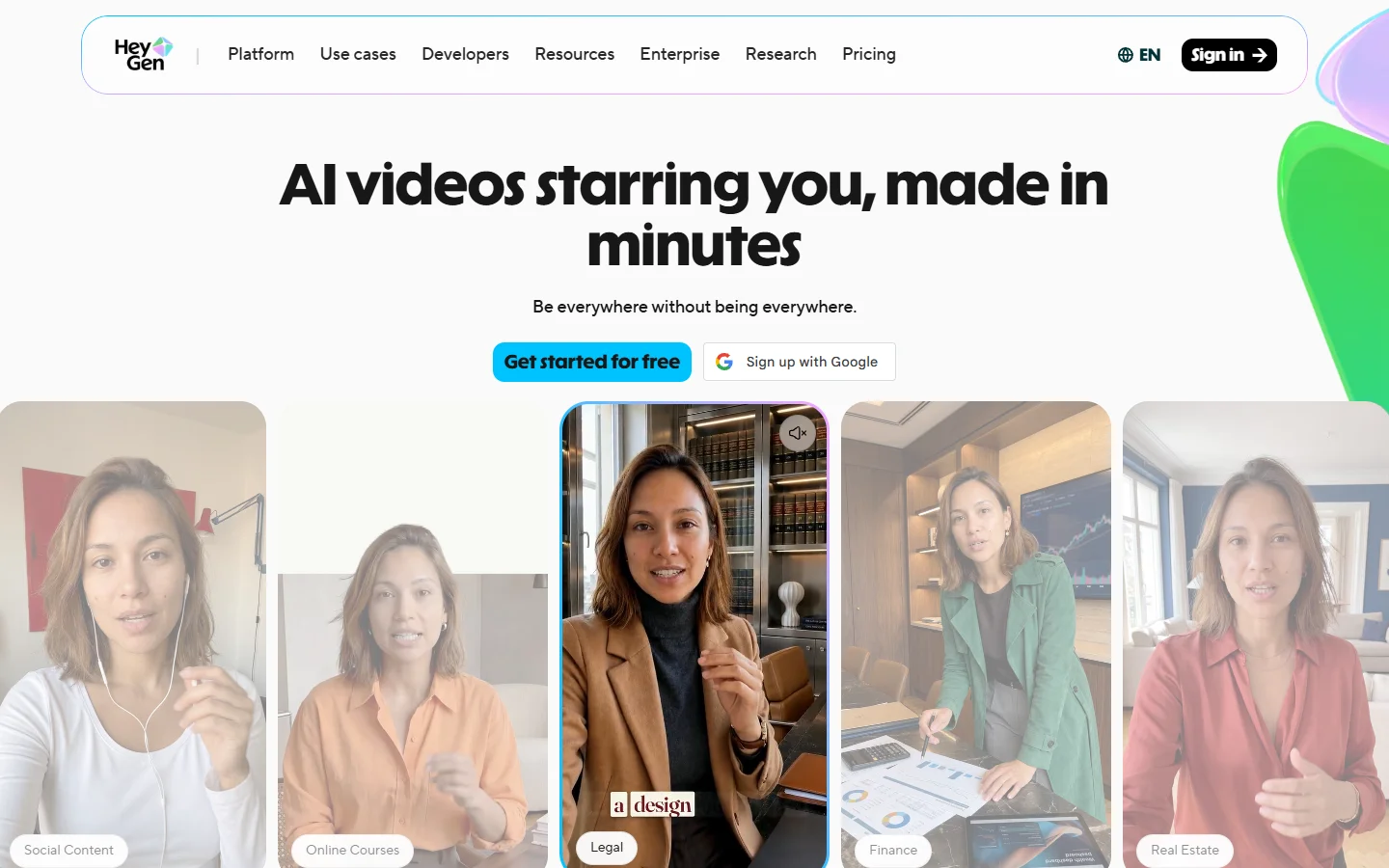
- HeyGen - Strength: the deepest avatar library plus solid custom avatar training from your own footage. Weakness: default output still reads corporate rather than casual, which is the wrong register for a UGC feed. Best for: teams that need one recognisable brand face across dozens of variants.
- MakeUGC - Strength: flat pricing and a large creator roster across many languages, which makes wide-net hook testing affordable. Weakness: quality variance between creators is real, so you end up curating a shortlist. Best for: high-variant testing on a fixed budget.
Arcads is the one most often called the realism leader, and in side-by-side viewing that holds up, particularly on micro-expression and pacing. What it does not solve is roster fatigue: ship thirty ads a month and the same eight faces start appearing in your own retargeting pool, which is the failure mode that AI avatar tools built around custom likeness training were designed to avoid.

HeyGen takes the opposite position: fewer stylistic risks, more control, and a custom avatar trained on a real person you have rights to. That trade is usually correct for brands that want continuity, and there is a useful survey of the same territory in this piece on avatar video generators and short-form content.
MakeUGC is the volume play. Flat pricing removes the per-render anxiety that makes teams under-test, and under-testing is the most common reason a UGC program stalls. If you are weighing this category more broadly, the Synthesia alternatives roundup covers the enterprise-leaning end of it.
Job three: voice, and the lip sync that betrays it
Voice is where cheap output announces itself. Viewers who cannot articulate why an ad feels synthetic are usually reacting to prosody: even stress, no breath, sentences ending on the wrong beat. Most avatar platforms bundle a voice engine, and most bundled engines are a generation behind the dedicated ones in this test of realistic AI voice generators.
ElevenLabs remains the default for anyone willing to run voice as a separate step and bring the audio back into the video tool. The cost is a slower pipeline and a repeated lip-sync pass. The benefit is delivery that survives a second viewing, which matters when the same person sees your ad four times. If you are cloning a real voice, read the legal and consent guidance first, because enforcement tightened noticeably over the last year.
Job four: footage that is not a talking head
An ad made entirely of a person talking to camera is a weak ad. The formats that hold retention alternate: face, product in hand, screen, result. That means you need product footage, and generating it is a different problem from generating a performer, closer to the AI product image workflow than to avatar work.
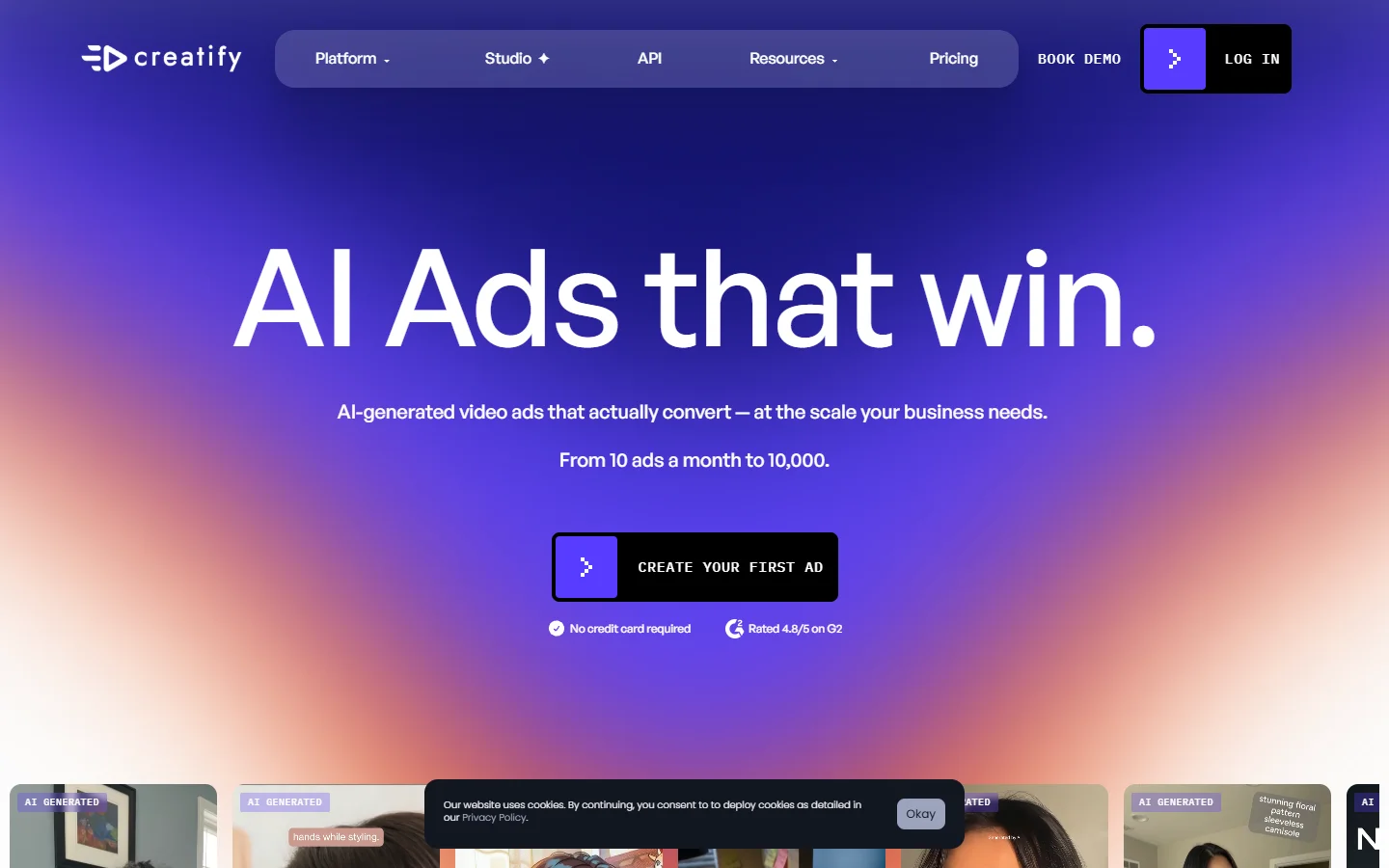
- Creatify - Strength: URL-to-video, meaning it scrapes a product page and assembles a fifteen to thirty second cut with b-roll already placed. Weakness: the automatic assembly is generic, so it is a strong first draft and a weak final. Best for: ecommerce catalogues where every SKU needs a baseline ad.
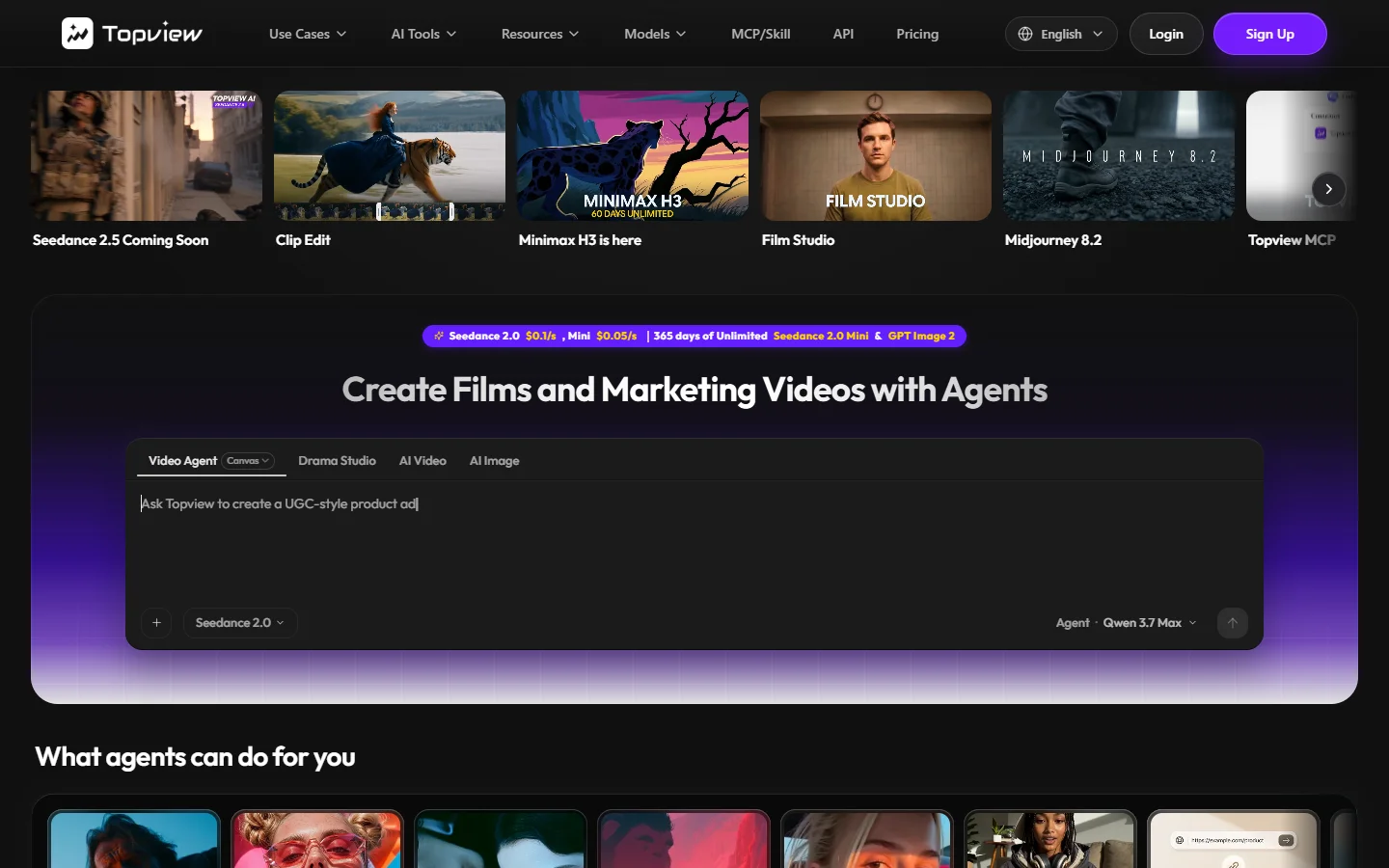
- TopView AI - Strength: the cheapest credible per-clip cost in this group, which makes brute-force variant testing viable. Weakness: quality ceiling is lower and the editing controls are shallow. Best for: early-stage testing before you know what works.
Creatify is genuinely useful for the catalogue case, where the alternative is not a better ad but no ad at all. Where it falls down is anything requiring a specific product beat, and for those you are usually better off generating stills separately using the approach in this guide to AI product photos for ecommerce and cutting them in yourself.
TopView AI earns its place on price rather than polish. Treat it as a testing instrument: run twenty hooks through it, find the two that hold retention past four seconds, then rebuild those two properly. The same logic applies to the model layer generally, and the Sora 2 versus Veo 3 comparison is a reasonable primer on where raw generation quality sits right now.
Job five: the cut, the captions, and the twenty variants
Last job, and the one teams underestimate. Captions are not decoration on TikTok, they are the primary read for a large share of the audience, and the timing of a caption word against a spoken word is a retention variable.
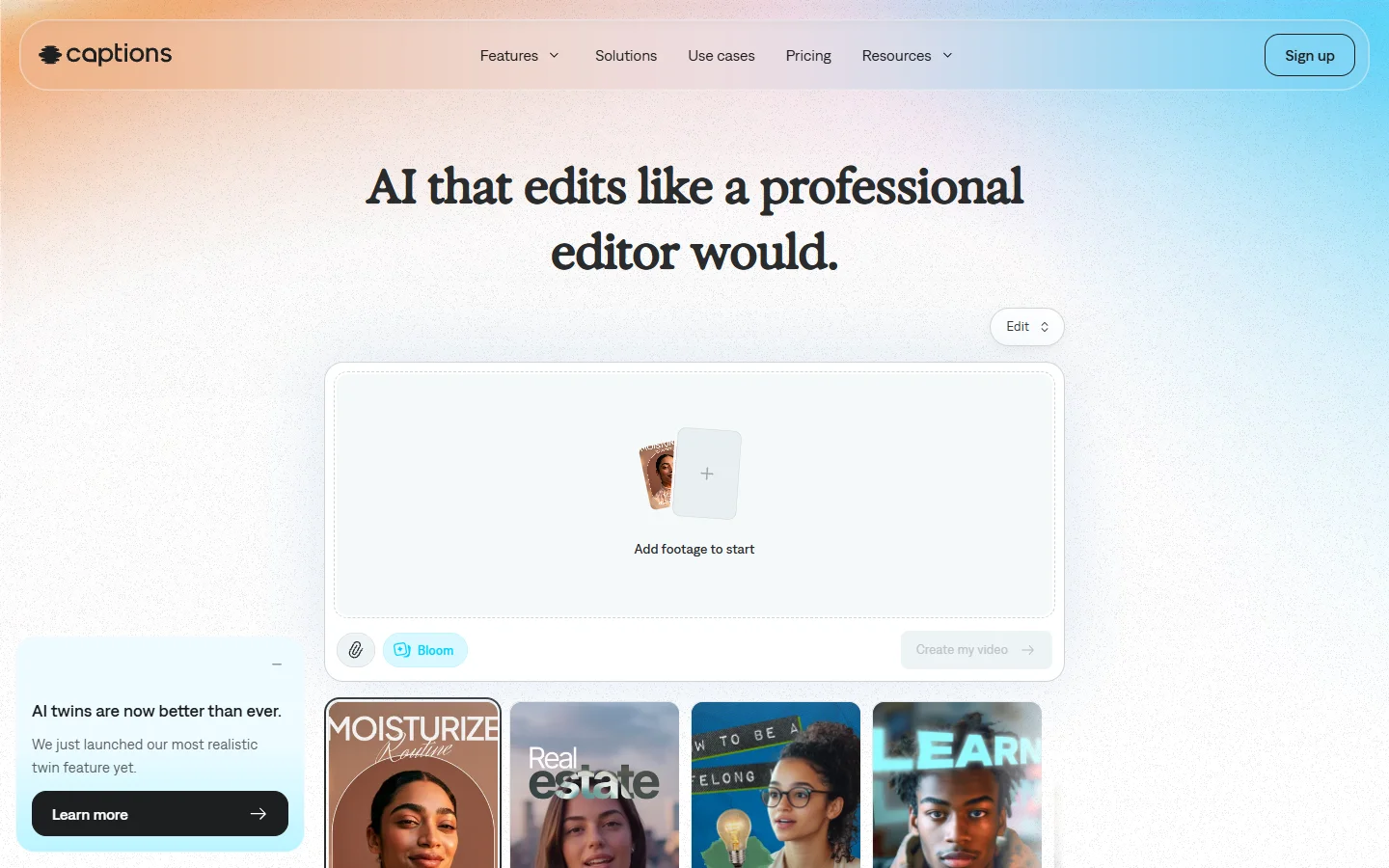
Captions handles this stage better than the general video tools do, with word-level timing, eye-contact correction and filler removal in one pass. It is a finishing tool rather than a generator, which is the correct way to use it, and the same finishing discipline shows up in the short-form workflow most creators converge on.
The variant question is separate. Twenty ads that differ only in hook line need twenty renders, and doing that by hand through five browser tabs is the actual bottleneck in most UGC programs, not any single tool's quality ceiling. Anyone shipping at that cadence eventually looks at the tooling covered in roundups of AI tools for social media video for the batching layer rather than the generation layer.
Wiring the five jobs into one pass
Once you accept that no single product covers all five jobs well, the interesting question becomes how you connect them. The manual answer is a shared drive and a naming convention, which works until it does not. The other answer is to build the chain once as a graph, with the script step feeding the actor step feeding the voice step feeding the edit, and then run the whole thing per variant. Wireflow is one such option, a multi-model AI workflow tool that lets you place different vendors' models at different nodes rather than committing to one provider's full stack, which fits this problem because the best actor model and the best voice model are rarely from the same company.
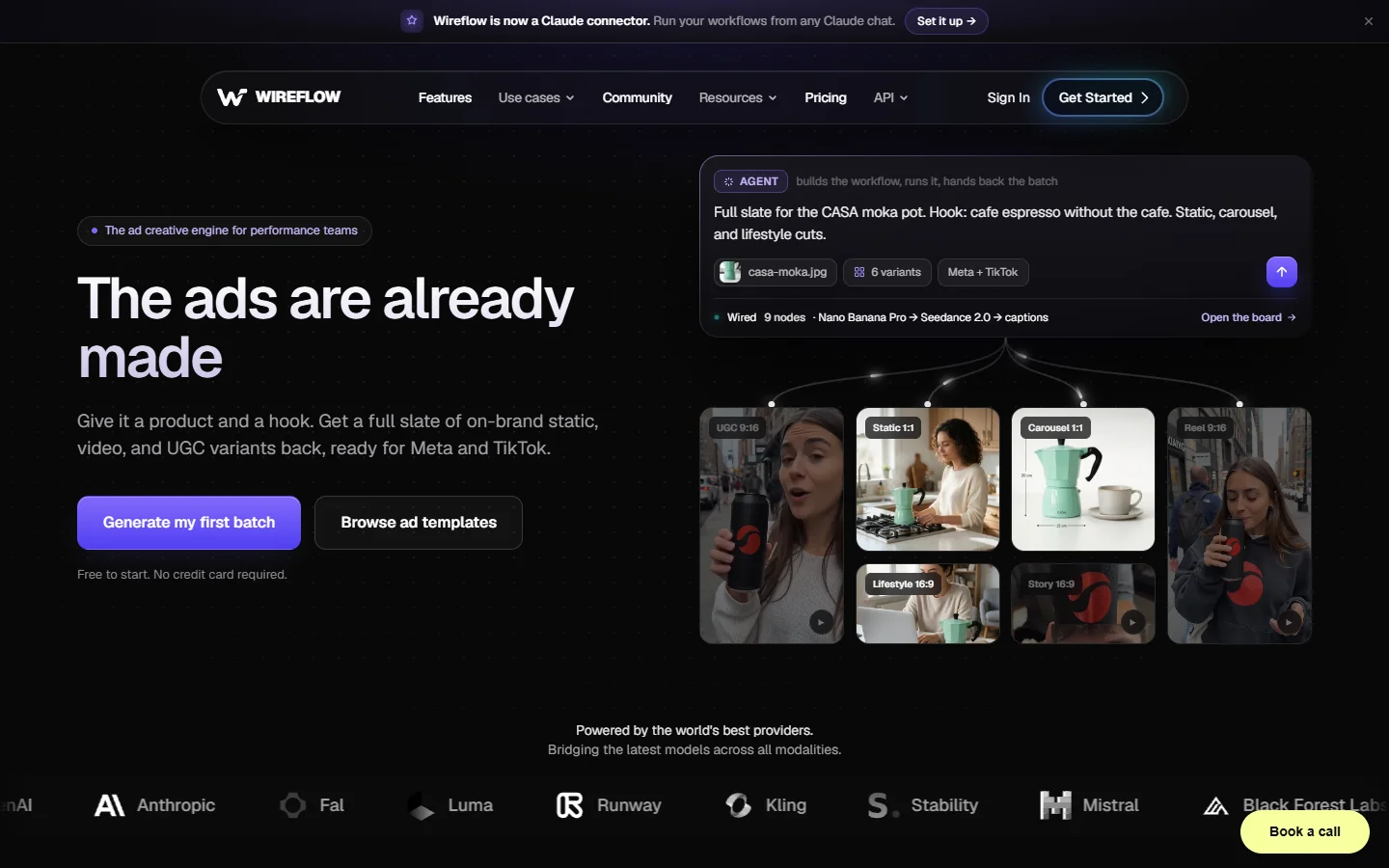
The pattern is not exotic and you do not need a specific product to do it, but the value is real: one change to the hook list produces the full batch again without a human re-running five tools in order. Teams building marketing videos with AI at any serious cadence end up at some version of this, whether they build it themselves or buy it.

What the tools still do not do
Three gaps, all unfixed in 2026. None of these tools know what your audience finds credible, so they will render a twenty-two year old actor delivering a script written for a forty year old buyer. Hands and products still fail together, and a performer holding your item is both the highest-failure shot in the category and the shot UGC most depends on. And none of them handle media buying, so a variant set still needs someone to structure the tests, with the organic reach playbook a useful counterweight if paid is not your only channel.
Compliance is the fourth thing, and it is moving. TikTok requires AI-generated content to be disclosed, the label sits in the upload flow and the ads manager, and enforcement has been getting stricter. Watermarking behaviour also differs by tool, which the no-watermark generator roundup covers in detail.
FAQ
Which AI tool should I start with if I only pick one? Start with whichever tool covers your worst bottleneck, not the highest-rated one. If your ads look fake, that is job two and you want an actor platform. If they look fine but you ship two a month, that is job five and you want batching, which the social video tooling roundup covers.
How much does one AI UGC ad cost in 2026? Roughly two to fifteen dollars per finished thirty second variant depending on tool and render count, against one hundred to five hundred for a human creator on a per-video brief. The gap is why testing volume went up, and the economics are laid out further in the AI ad generator comparison.
Do AI UGC ads actually perform as well as real creator content? On cold traffic and short hooks they are competitive. On anything requiring demonstrated expertise or a real before-and-after, human creators still win clearly, which is a point the UGC generator head-to-head also lands on.
Does TikTok allow AI-generated ads? Yes, with disclosure. Label AI-generated content in the upload flow or ads manager, avoid synthetic likenesses of real people you have no rights to, and keep the consent trail if you cloned a voice, per the voice cloning guidance.
Can I use my own face instead of a stock avatar? Yes. HeyGen, Captions and several others train a custom avatar from a few minutes of your own footage, and the process is covered step by step in this guide to creating AI avatars from photos.
What is the fastest way to test many hooks? Generate the hooks in bulk, render them through the cheapest acceptable tool, cut at four seconds of retention, and only rebuild the survivors at full quality. The bulk-render step is where TikTok-specific AI workflows pay for themselves.
Do these tools work in languages other than English? Most do, with wide variance. Voice quality outside English, Spanish, French and German drops noticeably, and lip sync drifts on languages with different syllable timing, so audition before you commit, ideally against the voice generator tests.
The short version
There is no best AI tool for TikTok UGC ads in 2026, because the question contains five questions. Pick an actor platform for realism, a dedicated voice engine if the bundled one embarrasses you, a cheap generator for hook testing, a finishing tool for captions, and something to run the chain repeatedly. Most teams get this backwards, buying the highest-rated single product and then discovering it is weak at three of the five jobs.
If you would rather assemble the chain than shop for a single winner, Wireflow's creative tools sit in that assembly category, and the broader pattern of composing several vendors' models into one repeatable run is where this category is heading regardless of which product you land on.