
Arcads starts at $110 a month for 10 finished videos, which works out to roughly $11 per clip, and there is no free plan or trial to test it first. That price is defensible if every render lands. It stops being defensible the moment you want ten script variants for the same product, because a small edit means regenerating the whole clip and spending another credit. The six tools below all produce AI actor ads, and every one of them either costs less per test or gives you something Arcads does not: a free tier, a real editing timeline, or control over the pipeline instead of a fixed template.
We ranked on cost per tested variant first, then avatar realism, then how much of the workflow you actually control. Media buyers rarely need one perfect ad. They need twenty that are good enough to find the one that works, which is a different problem from the one most avatar tools were built to solve. If you are still deciding whether AI actors belong in your ad account at all, the side-by-side test of UGC Video AI and Arcads is a useful reality check on where the output quality currently sits.
Prices below were checked in August 2026. Avatar tools reprice often, so treat them as the entry point rather than a fixed quote, and note that Arcads runs recurring discount promotions that bring its effective entry price closer to $77 a month.
1. Wireflow
Best for teams who want the whole pipeline, not a template.
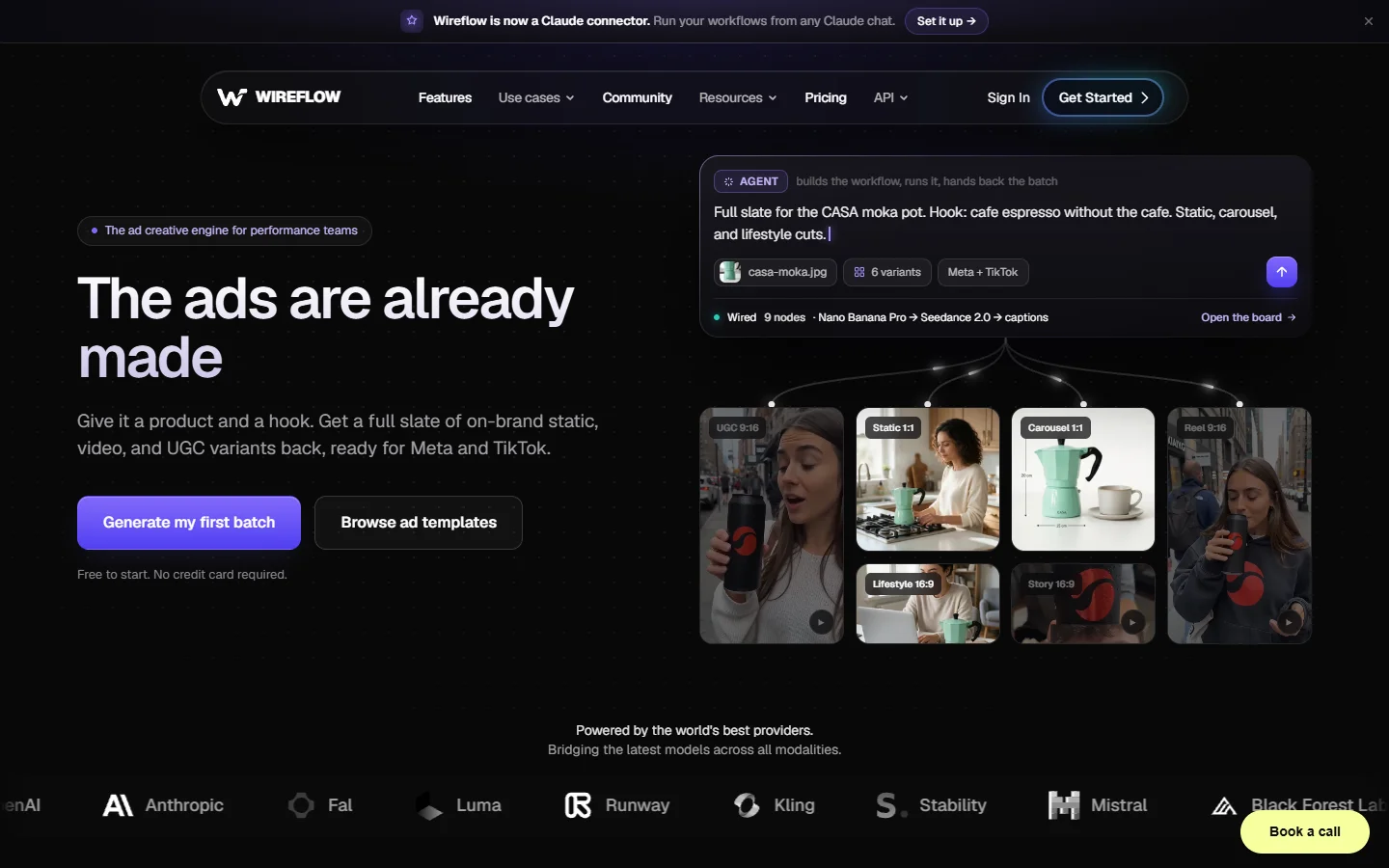
Wireflow is a node-based canvas rather than an ad generator. You connect models for image generation, video, voiceover and lip sync, then run the whole graph, which is also where native audio generation starts to change what a single pass can produce. The reason it tops this list is not avatar quality, which is model-dependent; it is that the actor-plus-script format is only one of the shapes you can build. Product b-roll, a talking-head hook cut against generated footage, or twelve script variants fanned out from one graph are all the same canvas.
The tradeoff is real. You are assembling a workflow instead of filling in a form, and the first hour is slower than Arcads. It pays back when you are running the same structure weekly and only swapping the script and the product shot. The multi-shot consistency techniques that keep a character stable across cuts matter more here than in single-clip tools, because you control the seeds and the reference images yourself.
2. Creatify
Best for product-URL ads.
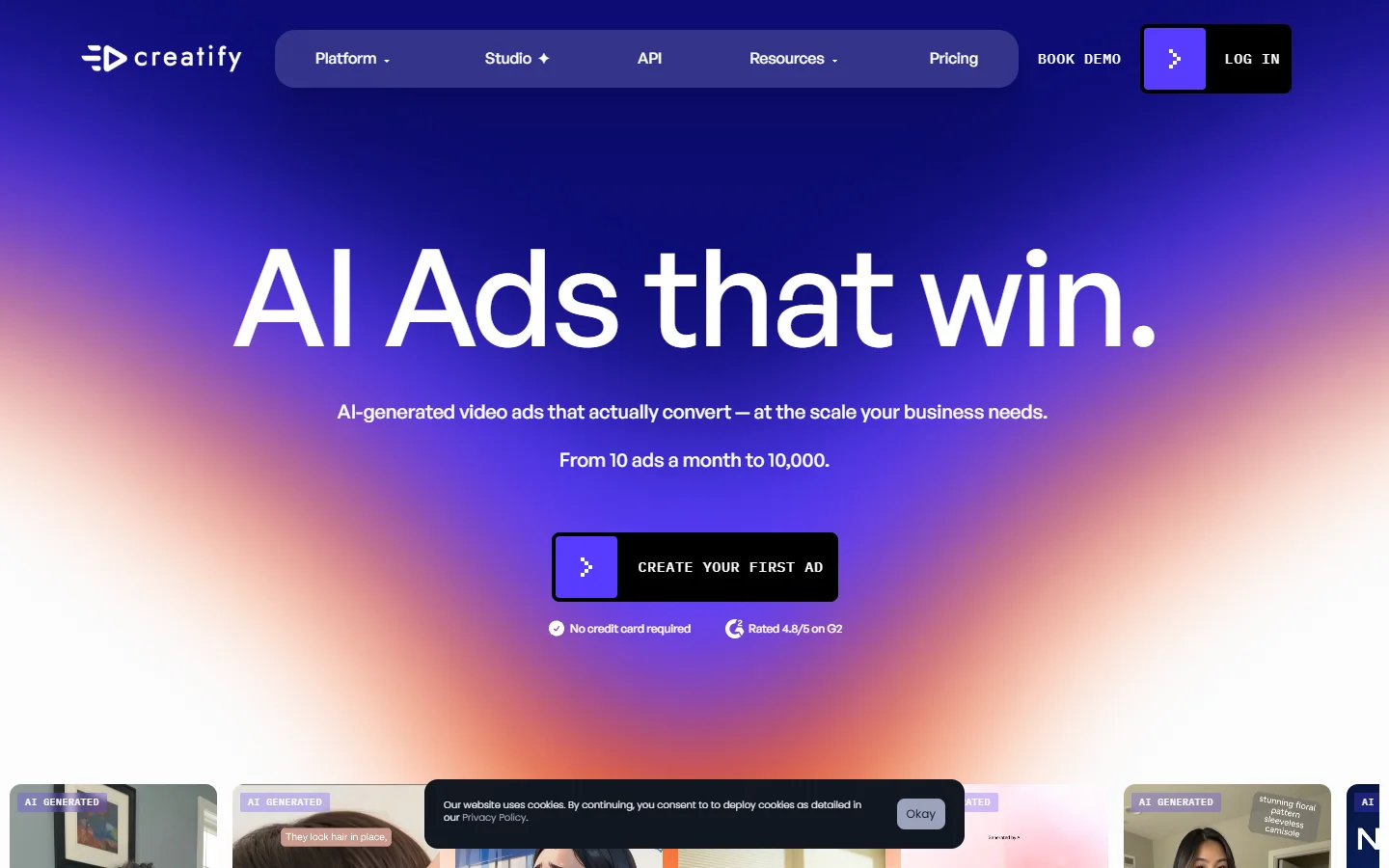
Creatify is the closest direct substitute for Arcads. Paste a product URL, it scrapes the page, writes a script, and renders an avatar reading it. Entry pricing sits around $39 a month with a free tier to test on, which is roughly a third of Arcads for the same job.
Batch variants are where it earns its slot. Generating six hooks against one product page is a single action rather than six separate spends, which is the workflow most performance teams actually run. Output leans generic if you accept the auto-written script, so treat the generated copy as a first draft. The same rule applies to any AI script tool, as the guide to customizing AI video output through prompting lays out in more detail.
3. HeyGen
Best avatar realism.
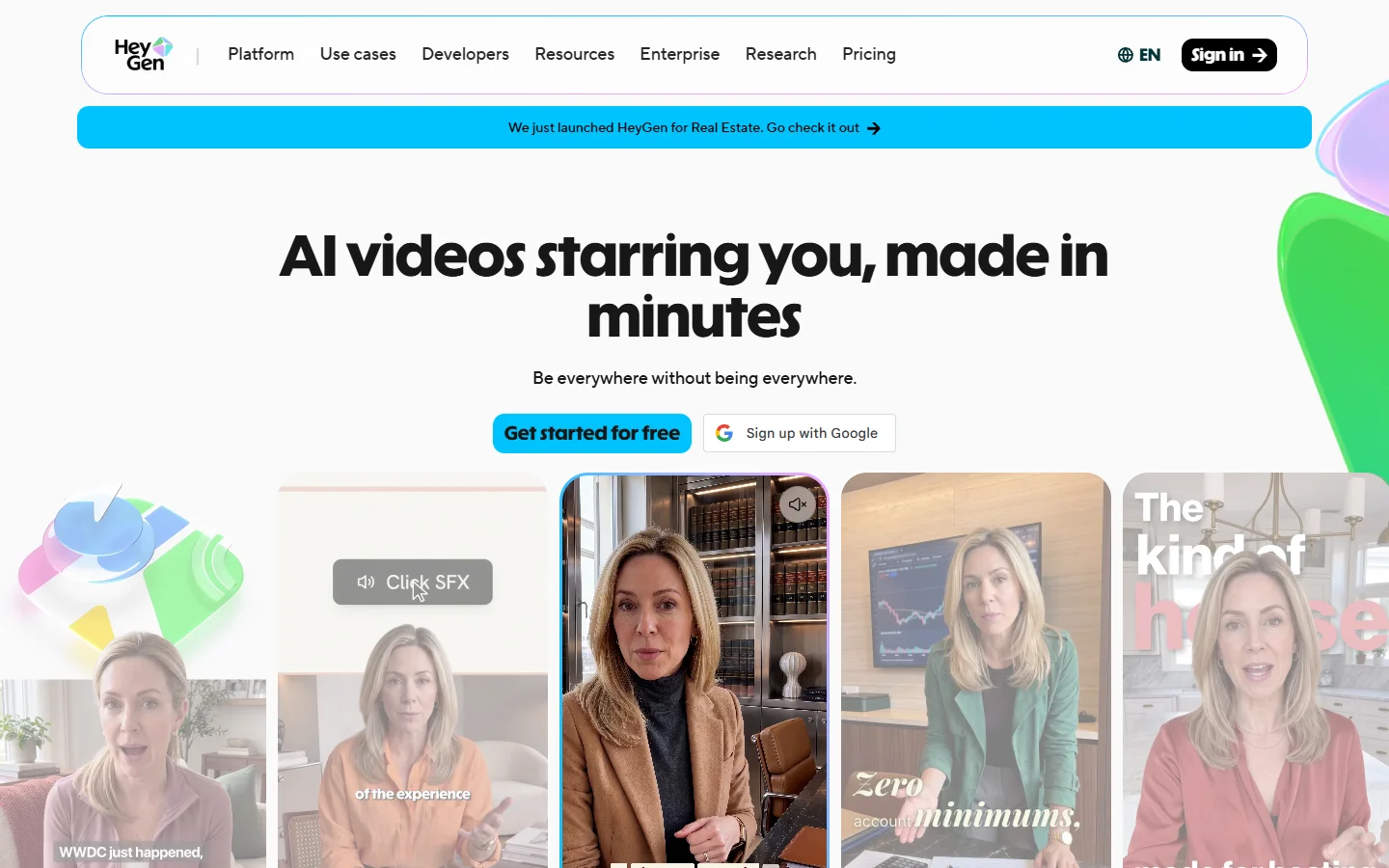
HeyGen has the most natural facial motion and lip sync of anything in this list, with plans from about $29 a month and a limited free tier. It also handles 40 or more languages, which makes it the obvious pick if one creative has to run across several markets.
It is a general video platform rather than an ad tool, so there is no product-URL shortcut and no ad-specific script assistant. You bring the script. If your bottleneck is the avatar looking synthetic rather than the volume of variants, that tradeoff is worth taking. Creators building a custom presenter from their own footage should read the walkthrough of making AI avatars from photos before paying for a custom avatar slot.

4. Synthesia
Best for training and explainers.
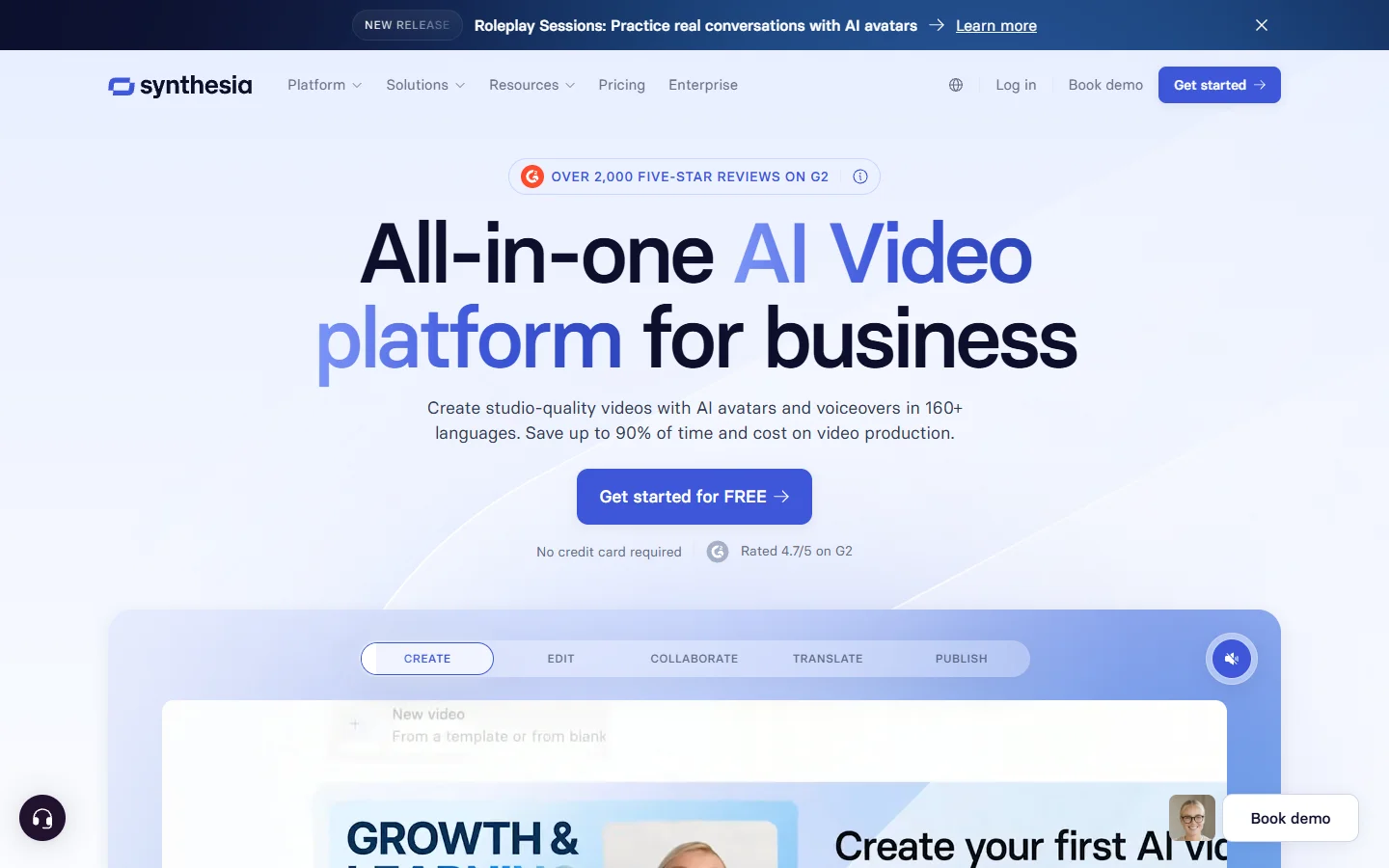
Synthesia carries 230 or more avatars and starts around $18 a month billed annually. It is the most established tool here and the one with the cleanest enterprise story: brand kits, approvals, and a library that will not disappear.
For paid social it is the wrong shape. The avatars read as corporate presenters standing in a studio, not as someone filming a review in their kitchen, and that register kills UGC performance. Use it for onboarding videos and product explainers, and use something else for the ad account. A fuller breakdown of where it fits sits in the roundup of Synthesia alternatives for avatar video.
5. Captions
Best mobile option.
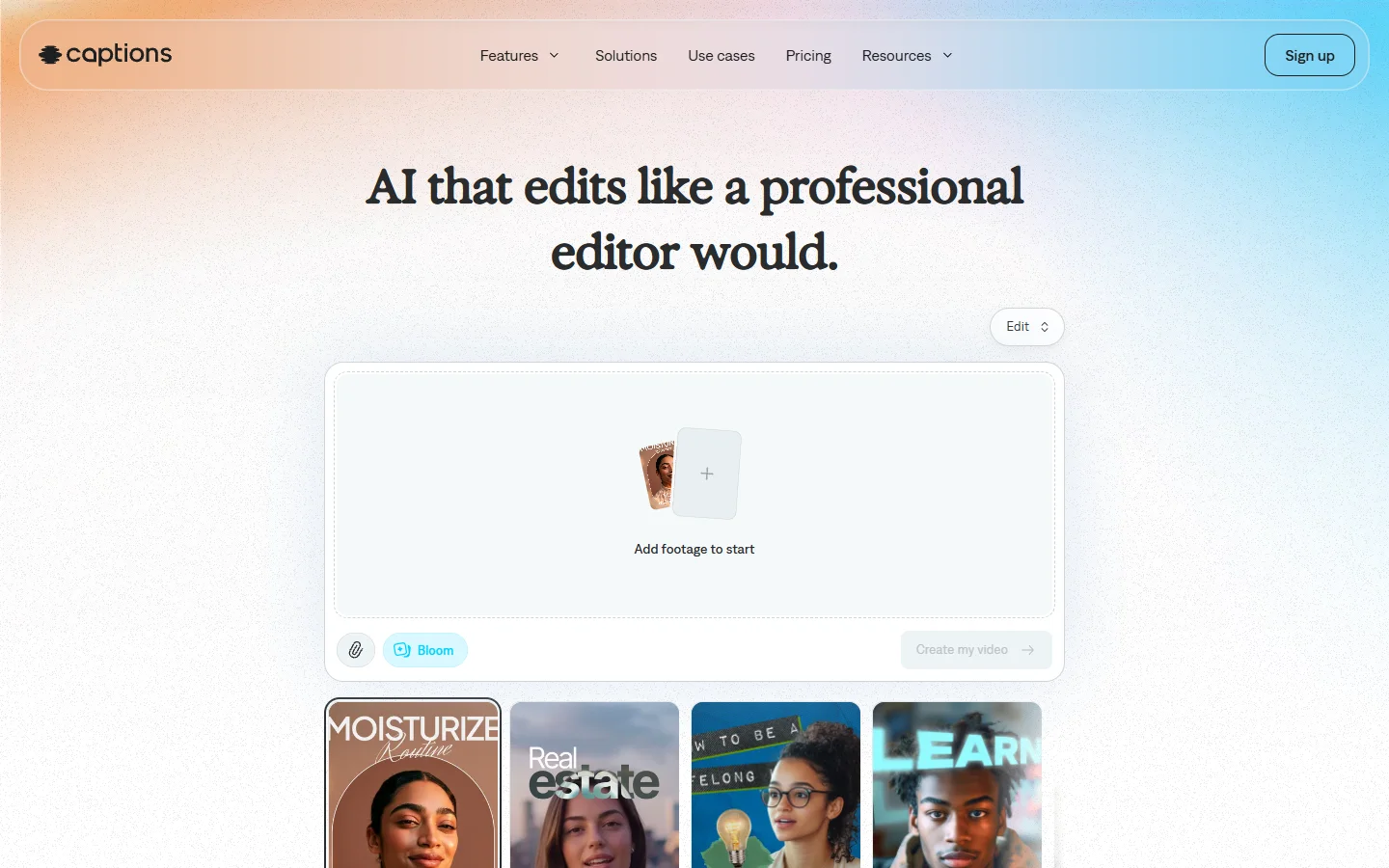
Captions starts near $10 a month and is built phone-first. Its AI Ads feature generates UGC-style spots with AI creators, but the app is strongest when you feed it real footage and use it for captioning, eye contact correction and trimming.
That makes it a good companion rather than a replacement. Shoot or generate elsewhere, finish in Captions. If watermarks on the free tier are what pushed you off a previous tool, the survey of AI video generators without watermarks covers which free plans actually ship clean exports.
6. MakeUGC
Best for volume testing.

MakeUGC sells the same promise as Arcads at a lower credit price, with an entry plan around $49 a month covering about 10 videos plus static ad generation. Avatar quality is a step below HeyGen and Arcads, with stiffer gestures and occasional lip sync drift on longer scripts.
For hook testing that barely matters. A three second opener does not give a viewer time to audit the mouth, and you are measuring thumbstop rate rather than production value. Keep the scripts short, then rebuild the winner in a higher-fidelity tool. The broader comparison of AI video generators is a reasonable map if you want to see where the quality tiers currently sit.
What Arcads still does best
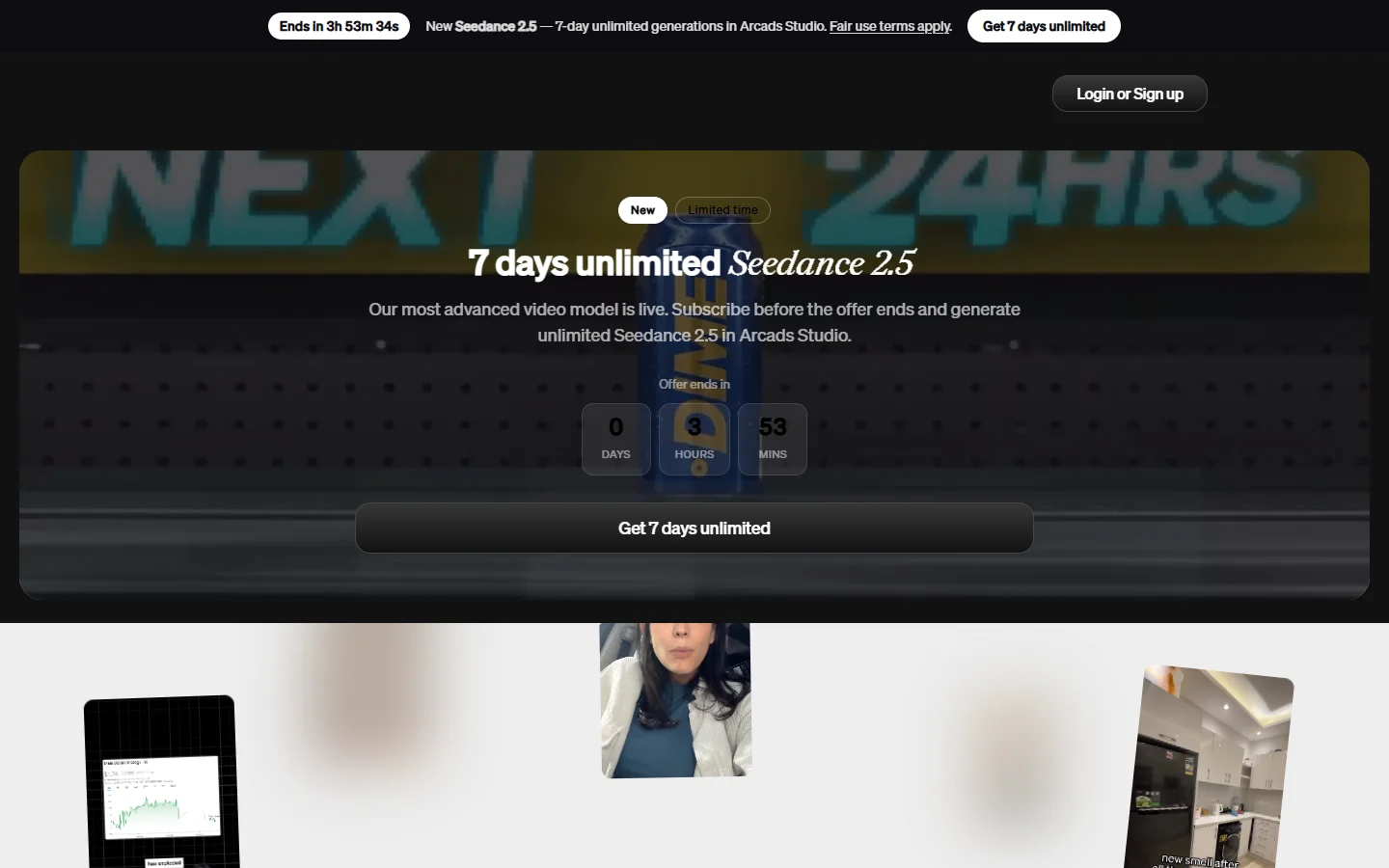
Arcads is not a bad product, it is an expensive one with a narrow shape. Its actor library is the best-curated set of ad-native faces available, the delivery reads as native UGC more consistently than most competitors, and the script-to-video path has almost no friction. Agencies charging clients per creative often find $11 a clip trivial next to the retainer.
The problem is the pricing model punishing iteration, which is exactly what paid social requires. If you are testing rather than delivering, a per-render fee on every small change becomes the tax on your process, and the rundown of AI tools for TikTok UGC ads shows how many cheaper options now cover that same brief.

Quick comparison
- Wireflow - Strength: full pipeline control, free to start · Weakness: setup time · Best for: repeatable weekly ad structures
- Creatify - Strength: URL-to-ad, about $39/mo · Weakness: generic default scripts · Best for: product-page ads at volume
- HeyGen - Strength: best lip sync, 40+ languages · Weakness: not ad-specific · Best for: multilingual creative
- Synthesia - Strength: 230+ avatars, from about $18/mo · Weakness: corporate register · Best for: training and explainers
- Captions - Strength: near $10/mo, mobile-first editing · Weakness: weaker generation · Best for: finishing and captioning
- MakeUGC - Strength: about $49/mo entry, high volume · Weakness: stiffer avatars · Best for: hook testing
FAQ
Is there a free Arcads alternative? Yes. Creatify, HeyGen and Captions all run limited free tiers, and several general video tools do too. Free plans usually cap resolution or add a watermark, so check the export before you build a campaign on one. The list of free AI video generators you can use online is the fastest way to find one that fits.
What does Arcads actually cost per video? The Starter plan is $110 a month for 10 videos, so about $11 each, and the Creator plan is $220 for 20. One credit equals one generated video, and re-rendering after an edit spends another credit.
Which alternative is closest to Arcads? Creatify. Same product-URL to avatar-ad path, similar actor library depth, roughly a third of the price at entry. The wider avatar video generator landscape has more options if the actor library is your deciding factor.
Do AI actor ads still perform on Meta and TikTok? They perform when the script and the hook do the work. Platform audiences have gotten better at spotting synthetic delivery, so short openers and specific claims outperform polished monologues. What works on each platform shifts fast, and the current TikTok UGC ad toolset reflects most of those shifts.
Can I use my own face instead of a stock actor? Most of these tools support a custom avatar trained from a short recording, usually on a higher tier. HeyGen and Synthesia have the most mature versions of this, and the guide to creating AI talking videos covers what a usable source recording looks like.
What if none of these fit my workflow? The common complaint with every tool here is the same one: the template decides the video, so anything outside actor-plus-script means exporting to another editor. If that is the wall you keep hitting, Wireflow's breakdown of Arcads alternatives argues the case for assembling the pipeline yourself on a node canvas, where the ad format is something you define rather than something you inherit.
How many variants should I test before scaling one? Most media buyers we talk to run between eight and twenty hooks against a single offer before committing budget, which is why per-render pricing decides the shortlist more than avatar quality does. The 2026 generator comparison is worth a scan if you want to see which tools price by seat rather than by clip.
The short version
If you want a straight Arcads replacement, use Creatify and keep the money. If avatar realism is the thing your ads are failing on, use HeyGen. If you keep running into the template wall, move to a canvas where you build the pipeline. The Runway alternatives roundup covers the adjacent question of generative footage, which is usually the next tool you will need once the actor problem is solved.