

Most writing about AI UGC treats it as a solved problem for one advertiser: pick a tool, type a script, get a talking-head video that looks like it was shot on a phone. That holds up for one brand testing one offer. It comes apart when the same process runs across six retainers with different products, different risk appetites, and different people signing off. Agencies are the hardest case for this technology and its fastest adopters, which is why the useful questions have moved from output quality to operations. Roundups of the tools built specifically for TikTok-style UGC ads cover the field-level differences well.
The quality argument is mostly settled. A 2026-era avatar reading a decent hook survives the first two seconds of a paid social feed, and audiences consistently say they prefer creator-style ads to polished studio spots. That does not mean synthetic UGC wins everywhere. It means the bottleneck moved somewhere less interesting.
What moved into the bottleneck is everything wrapped around the render: brief intake, script variance, brand safety review, client approval, disclosure, and asset governance across accounts. Those are agency problems, not model problems, and no vendor solves them for you. Generation has gotten cheap enough that the ad-creation layer is close to commoditized, which puts the margin back where it always lived, in the process.
The Unit That Changed Is Cost Per Concept
The number agencies managed was cost per video, and under a human-creator workflow it is stubborn: a briefed creator produces roughly five to ten usable ads per cycle, each carrying sourcing, shipping, and revision overhead. How many concepts you dare to test was shaped by that. It is the same constraint that made most marketing video production expensive to iterate on long before AI entered the conversation.
Synthetic UGC does not lower cost per video so much as detach cost from volume. Once a script exists, the fortieth variant costs roughly what the fourth did. The meaningful unit becomes cost per validated concept, and the practical question becomes how many structural variants you need before the data says anything, a discipline familiar to anyone who has tested short-form hooks at volume.
Performance teams that run this properly tend to land on a similar shape:
- Vary hooks first. The opening three seconds explain most of the variance in short-form ad performance, so the first batch holds the body constant and swaps only the opening line.
- Vary format second. Same hook, different structure: unboxing, problem-agitate, side-by-side demo, direct address. This is where product-led video formats earn their keep.
- Vary the presenter last. Avatar, voice, and setting are the cheapest things to change and the least likely to move performance alone.
- Reserve real creator budget for the winner. AI absorbs the cost of discovery; once the data names a concept, that concept is worth filming with a human. Skipping that step is how accounts end up with forty pieces of creative that all perform identically badly.
What Actually Slows an Agency Down
Rendering is not the constraint. Approval is. A single-brand operator can generate at eleven at night and launch at midnight; an agency routes the same asset through an account manager, a client marketing lead, and sometimes a legal reviewer who reasonably wants to know who that synthetic presenter is. Teams with shared review conventions for AI assets, similar to how creator-side workflows standardize prompt and output review, lose far less time here than teams improvising per client.
The second drag is asset governance. Six clients means six avatar rosters, six voice choices, six sets of banned claims, and six naming conventions. Without a system you get a shared drive full of files named final_v3_client_REAL.mp4 and no reliable way to answer which avatar ran in which market. It is unglamorous, and it decides whether the workflow survives a fourth client.
The Tool Tiers Agencies Buy
Three categories cover most agency stacks in 2026. They are less competitors than different answers to where the script stops and the render begins, and the boundary keeps moving as avatar-led short-form video absorbs more of the format.
Creatify
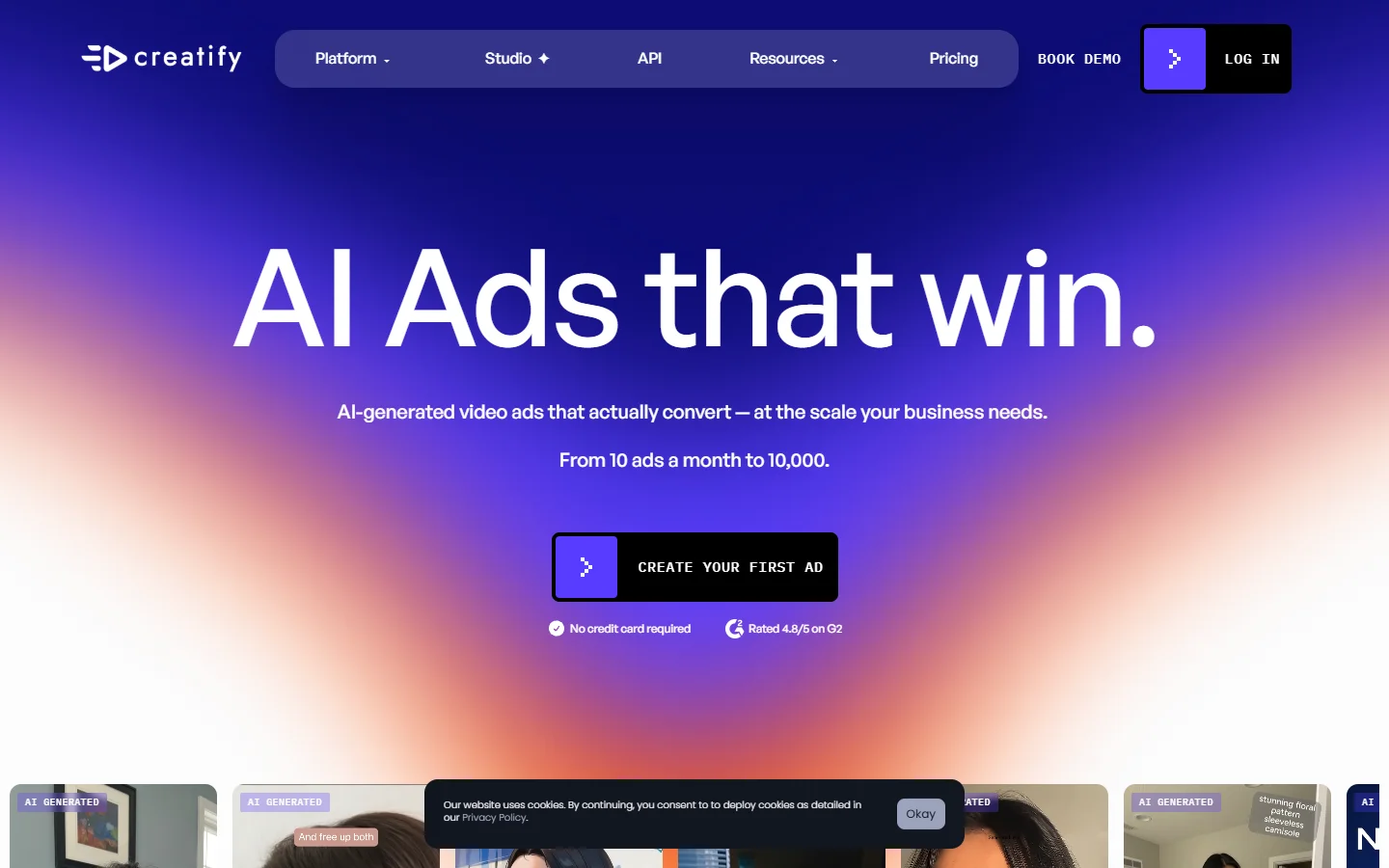
Creatify sits closest to the performance-marketer workflow: paste a product URL, get scripts and avatar-led variants back, then batch them. The pull for agencies is that batch layer, not any single output, since the value appears only at dozens of structural variants per concept. It overlaps with the broader category of AI ad generators aimed at social placements, differing mainly in how much scripting it does unprompted.
Best for: high-volume hook testing on ecommerce accounts.
HeyGen
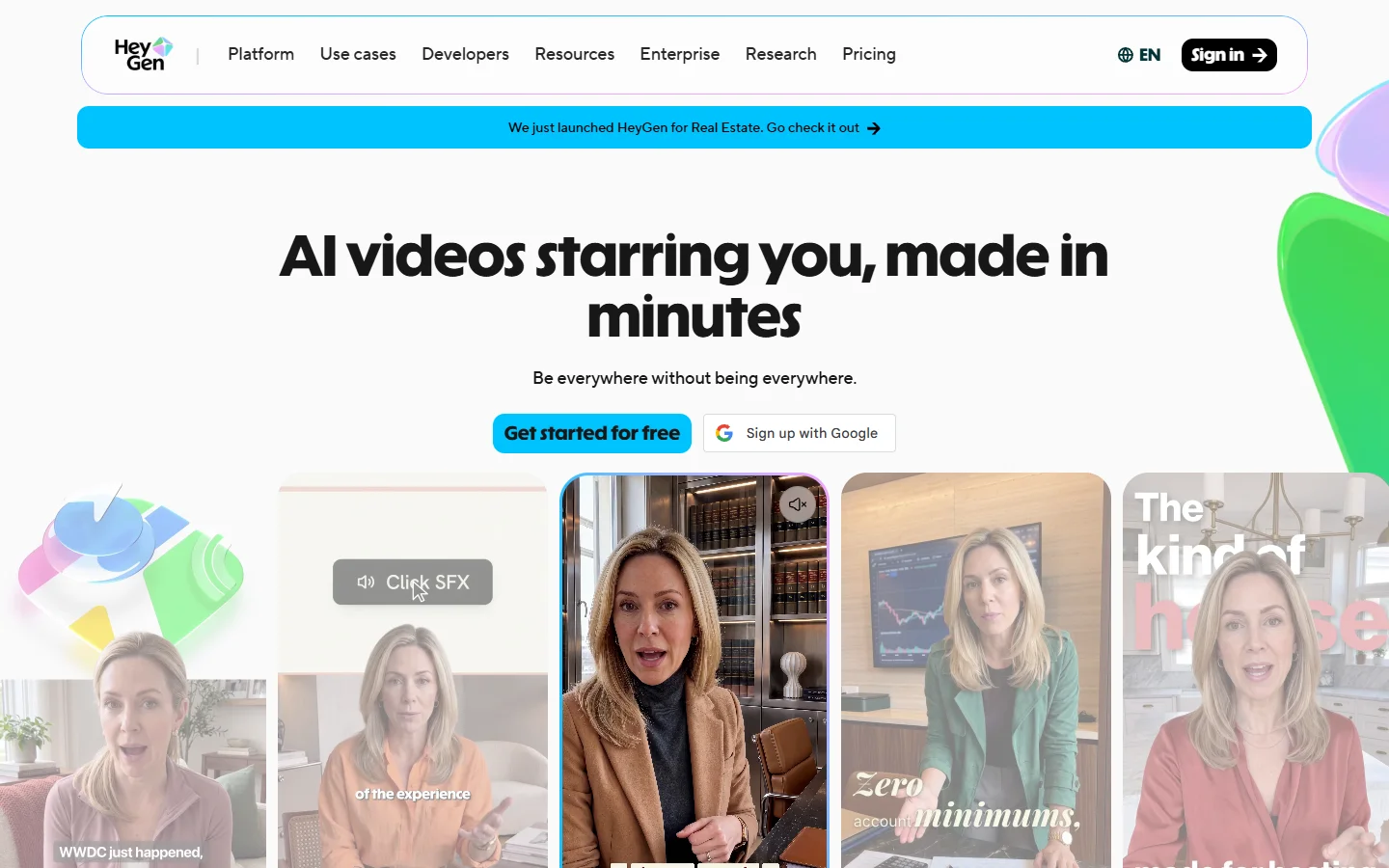
HeyGen is the avatar and localization tier. Its agency strength is breadth rather than UGC aesthetics: large avatar libraries, custom avatars trained on a real spokesperson with consent, and translation into many languages from one master script. If a client founder will sit for one capture session, that session becomes an asset the account draws on for a year.
Best for: multi-market accounts and founder-led brands.
Arcads
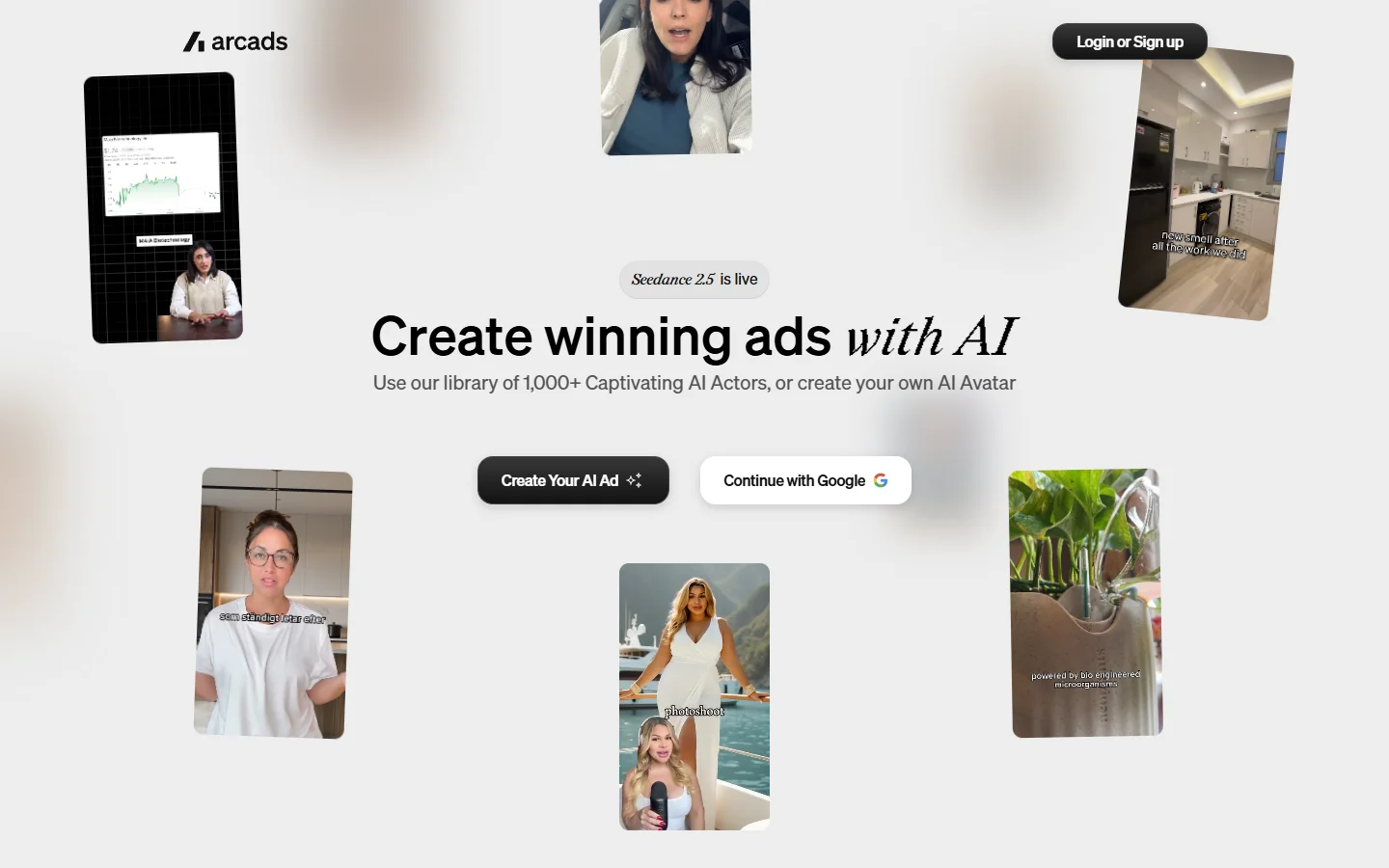
Arcads leans hardest into the UGC register, with actors shot in the handheld, imperfect, phone-camera style that reads as native in a feed. The tradeoff is a narrower job: it makes ads, not general video, which is what some agencies want and what makes others keep a broader tool alongside it. Head-to-head tests of the dedicated UGC generators are more useful here than feature lists.
Best for: feed-native creative where the aesthetic is the point.
Disclosure Is Now a Deliverable
This is the section agencies skip and later regret. As of August 2026 the EU AI Act's transparency obligations under Article 50 are in force, so synthetic content shown to people in the EU carries labeling duties that fall on whoever deploys it. The FTC's rule on fake reviews and testimonials separately treats fabricated consumer endorsements as deceptive, and a synthetic person describing a product they never used sits close to what that rule addresses. Neither is a reason to avoid the format. Both are reasons to write disclosure into the statement of work.
Platform rules add a third layer. Meta and TikTok both require disclosure of realistic AI-generated content, and both increasingly read provenance metadata to apply labels automatically whether you volunteered them or not. The label is coming either way, so the real decision is whether you control its wording. Agencies working with synthetic presenters and AI-led brand personas should assume the audience will be told, and write creative that still works once they are.
A Loop That Survives Six Clients
The agencies running this well converge on a fixed loop, and it is deliberately boring. One versioned script library per client, banned claims at the top. One locked avatar and voice roster, so nobody relitigates presenter choice per batch. One naming convention encoding client, concept, hook number, and date. One weekly batch window instead of continuous ad-hoc generation. Shops that also standardize voice and narration choices across accounts remove another recurring decision from the queue.
None of that is a technology decision, which is the point. The tools are converging on similar capability, and within a year the gap between the top platforms will be narrower than today. The durable advantage is a loop the team runs without thinking, plus the judgment to know when a concept has earned a real creator and a real camera.
FAQ
Do AI UGC ads actually perform as well as ads with real creators? On average no, and that is the wrong comparison. Synthetic variants underperform a strong human-creator ad while beating the ad that never got made because the budget ran out. As a discovery layer they raise portfolio performance; as a permanent replacement for proven creator-led video they usually flatten it.
How many variants should an agency generate per concept? Five to ten is the working floor for a signal you can act on, and mature performance teams often run ten to forty per campaign. Scale the number with spend, not with what the tool makes easy: reading forty results properly costs analyst time a small retainer will not cover.
Do we have to tell clients the ads are AI-generated? Yes, and it belongs in the contract rather than a conversation. Disclosure duties sit with the deployer and platforms label realistic synthetic content independently, so no agency wants that discovery arriving through a client's legal team. The same applies to avatar assets built from a real person's likeness, where written consent belongs on file before the first render.
Which is better for agencies, an avatar platform or a UGC-specific tool? Avatar platforms win on localization and on turning one founder capture into a durable asset, which is why comparisons of the avatar video tier rarely map onto UGC needs. UGC-specific tools win on aesthetic: the handheld, imperfect look is hard to fake with a studio-grade avatar. Agencies past three active accounts usually pay for both.
What is the realistic time saving? The generation step compresses from days to minutes, but total cycle time falls by much less, because approval and review do not compress at all. Agencies reporting larger savings changed their approval process too, not just their tooling.
Can this replace a creator roster entirely? For discovery and volume testing, largely yes. For the hero asset behind real spend, not yet. The pattern that holds up is synthetic breadth feeding human depth, run with the discipline of any high-output short-form video pipeline.
The Short Version
AI UGC is no longer a creative question for agencies. It is an operations question wearing a creative costume. The platforms are close enough in output that tool choice matters less than the loop around it, and the shops pulling ahead treat disclosure, asset governance, and approval routing as billable process rather than overhead. Pick the tool that fits how your team already batches work, build the boring parts once, and keep the creator budget for the concept the data has proven. The wider set of AI video platforms behind these workflows will keep converging around you.