
Seedance 2.0 changed the shape of AI video work in a way that surprised almost nobody who had been watching ByteDance ship. Multi-input conditioning, native audio, and shot-to-shot continuity arrived in one model, and within weeks half the API resellers on the internet had a Seedance endpoint. The interesting question stopped being "is the model good" and became "whose plumbing do I run it through". If you want the model behaviour itself explained first, our breakdown of multi-shot storytelling in Seedance 2.1 covers the generation side.
This piece is about the boring layer underneath: the seven or so places you can currently buy Seedance inference, what each one charges, and which failure modes show up once you are past the demo stage. We have run production video jobs through most of them, and the differences are rarely about output quality. The model is the model. What varies is queue behaviour, resolution ceilings, billing granularity, and how fast a provider ships the next version.
One thing to set expectations on before the list. Almost every third party charges a markup over ByteDance's own rate, and some of those markups are large. That is not automatically a rip off, since you are paying for aggregation, webhooks, and not having to hold a prepaid balance in a Chinese cloud console. But you should know what the spread is, which is the same discipline we applied to programmatic video generation platforms generally.
What counts as a "Seedance API tool"
There are three distinct product shapes hiding behind the phrase, and confusing them is how teams end up rebuilding an integration twice. The first is the source: BytePlus and Volcengine, ByteDance's own clouds. The second is the aggregator: fal, Replicate, WaveSpeed, Kie, PiAPI, OpenRouter, all of whom resell the same weights behind their own job API. The third is the orchestration layer that sits above whichever endpoint you picked and handles prompts, references, retries, and asset storage, a distinction we drew out in our guide to AI generation APIs for SaaS apps.
Most teams need two of the three. You pick a source or aggregator for inference, then you build or buy the orchestration. Buying inference from an aggregator and then also buying their opinionated workflow product is where lock-in creeps in.

The providers worth an API key
Listed roughly by how much control they give you, not by how much we like them. Prices move constantly, so treat every number here as a starting point to verify, the same caveat we attach to our Veo 3.1 API pricing notes.
BytePlus ModelArk
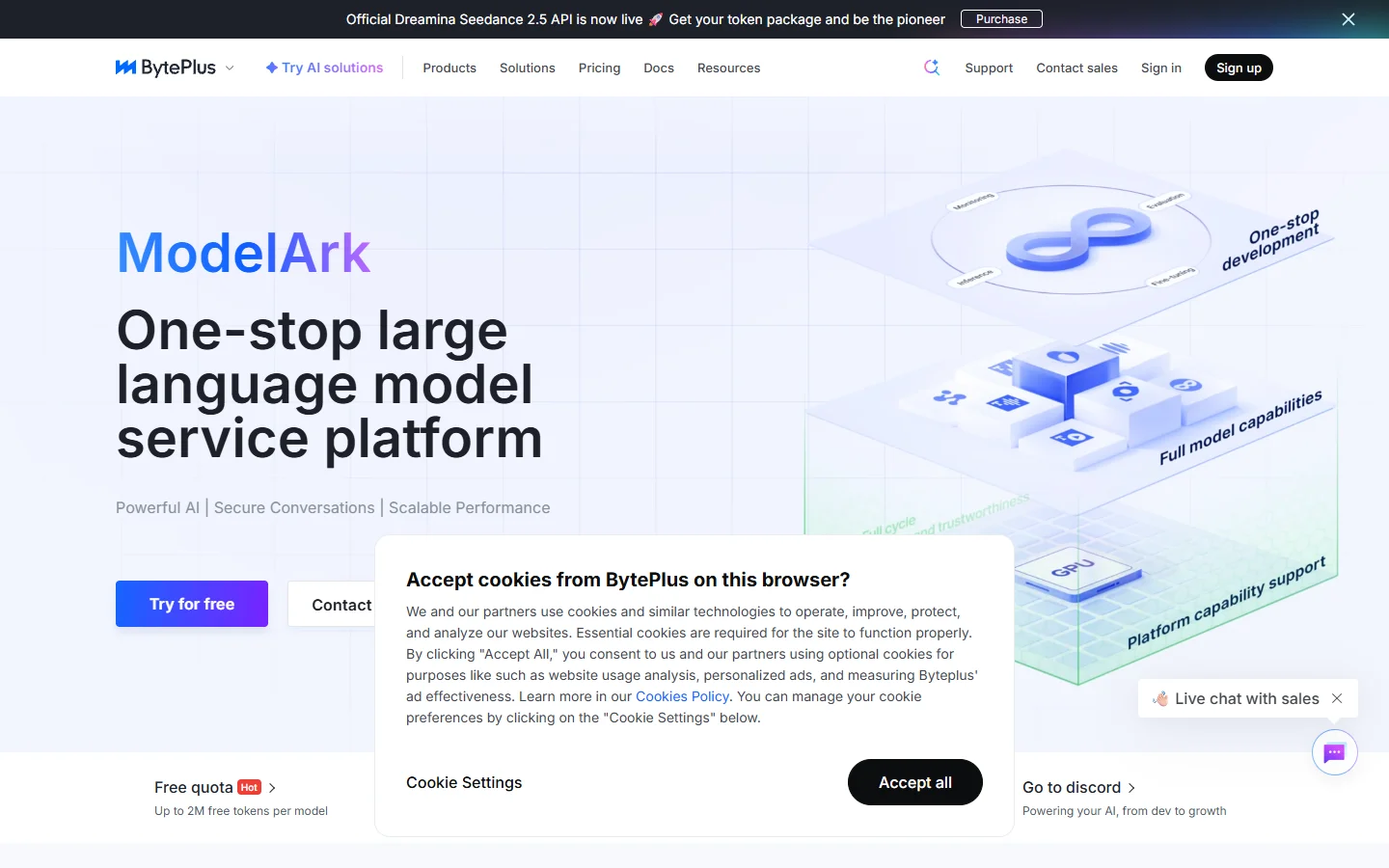
BytePlus is the source of truth. You get the full published spec, the earliest access to new checkpoints, and the lowest per token rate at roughly $7.70 per million. The catch is commercial rather than technical: activating Seedance 2.0 requires a prepaid resource pack starting around $30, non refundable, expiring after ninety days, with no free trial tier. For a studio burning tokens weekly that is nothing. For a team still validating an idea it is a real barrier, which is why so many prototypes start on an aggregator and migrate later. Teams that care about spend ceilings should read our notes on AI generation APIs with spend limits before committing to a prepaid model.
fal
fal is the default developer choice for a reason. fal.ai has clean pay per use billing, a good async job API, and generations that typically land inside two minutes. The published ceiling is 720p, which is the lowest of the group, and the rate sits near $14 per million tokens, roughly 1.8 times ByteDance direct. If your product delivers social-format video, 720p and speed is a fine trade. If you are delivering to broadcast or paid ad placements, it is not.
Replicate
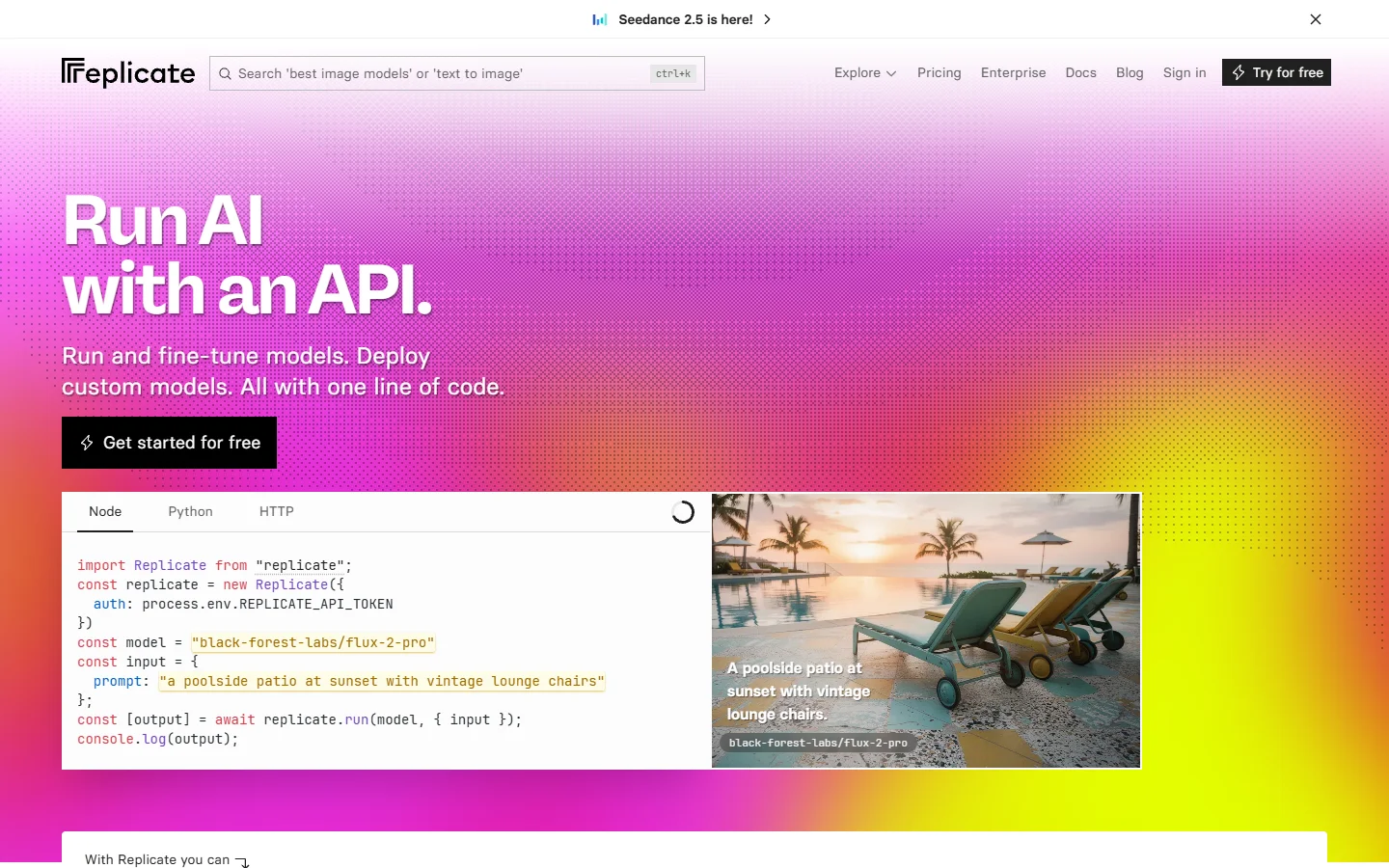
Replicate bills per second of output and exposes Seedance through the same versioned model interface it uses for everything else. That consistency is the whole pitch. If you already run image models, upscalers, and audio through Replicate, adding video is a config change rather than a project. The tradeoff is that version pinning and cold starts behave the way they do on community infrastructure, which we have written about in the context of batch image generation via API.
WaveSpeed

WaveSpeed optimises for two things: latency and being first. Through direct partnerships it usually has new Seedance point releases live before the wider aggregator market, and its inference times are consistently at the fast end. If your roadmap depends on shipping a demo the week a model drops, that matters more than a few cents of margin.
Kie.ai
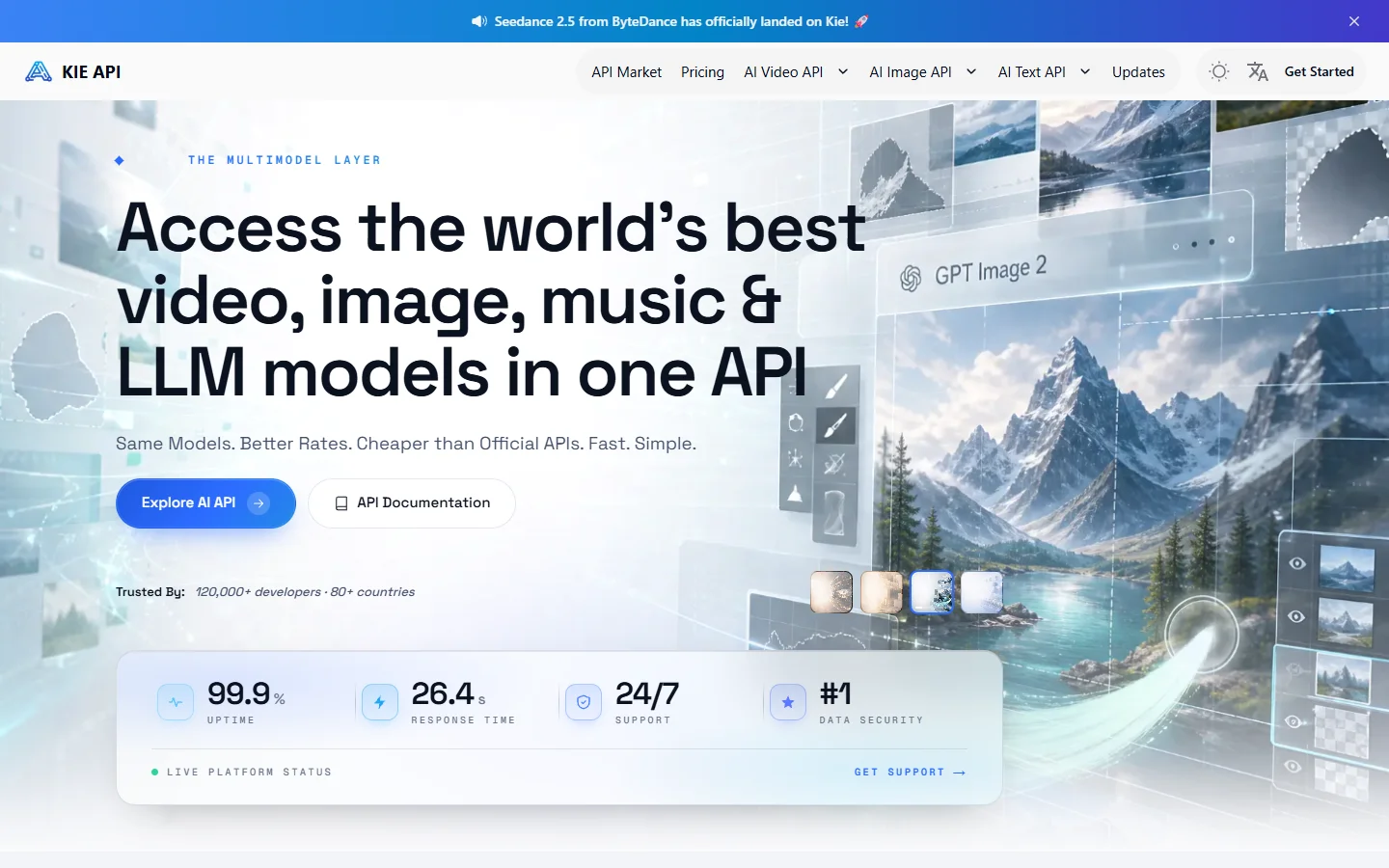
Kie.ai exposes tier level control, splitting Seedance into Standard, Fast, and Mini variants with a 4K ceiling on the top tier. That is the most useful lever on this list for anyone running mixed workloads, because draft renders and final renders should not cost the same. The same logic applies across model families, which is why tiering shows up in most serious developer-facing AI API stacks.
PiAPI and OpenRouter
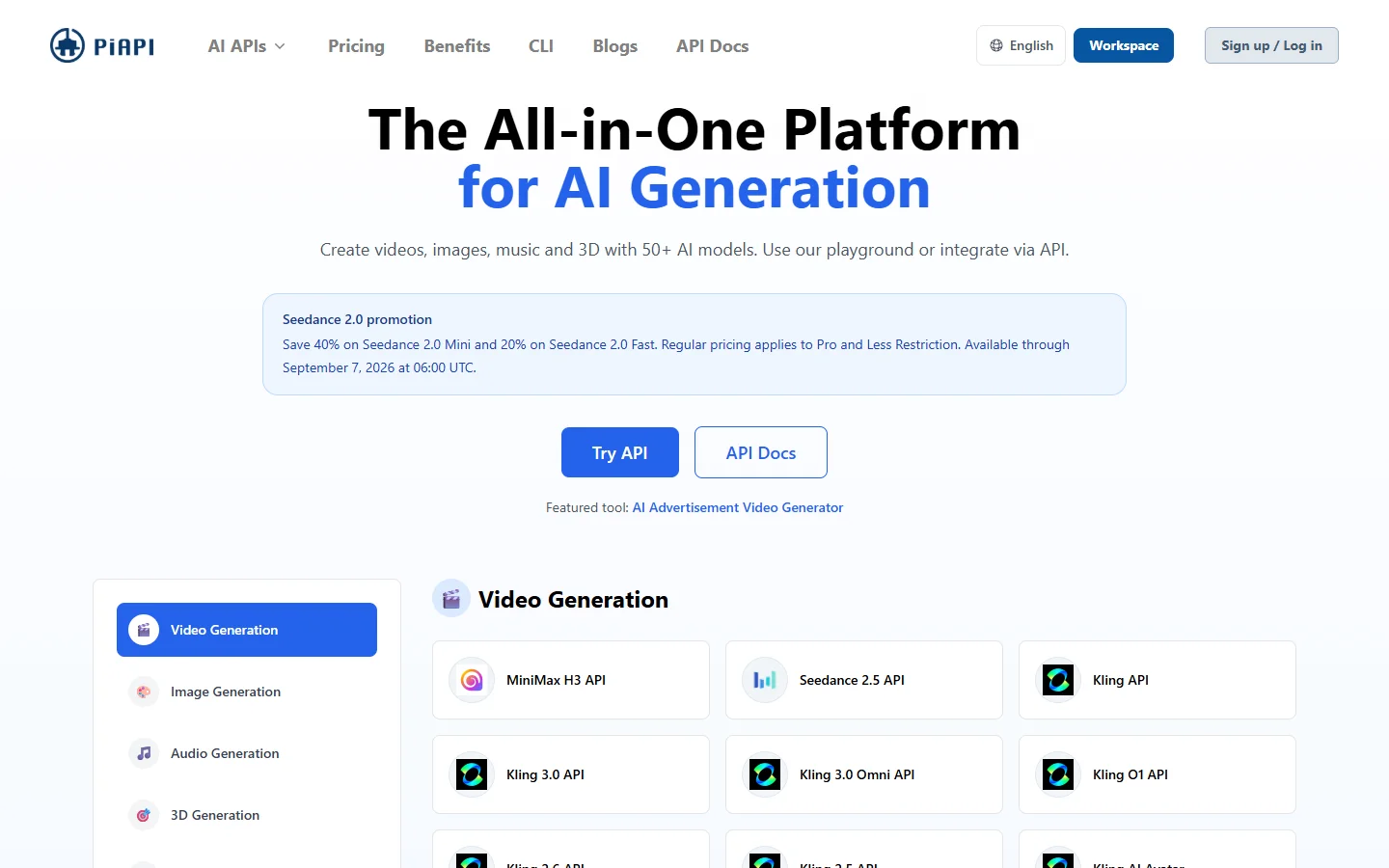
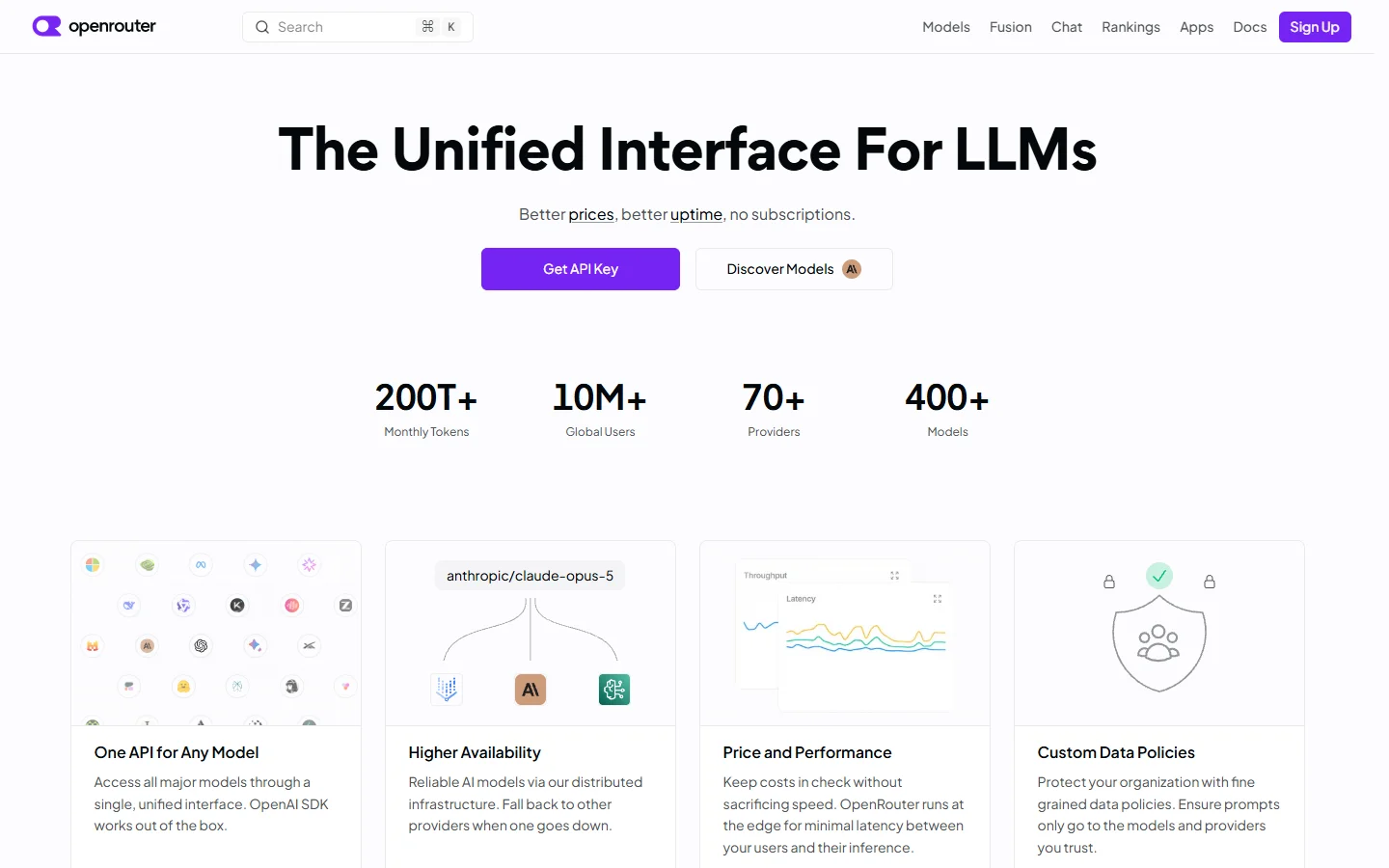
PiAPI targets budget-conscious builders with tunable cost and quality settings and unpublished headline pricing, which means you should benchmark before you plan around it. OpenRouter takes the opposite angle: it routes to whichever backend is cheapest or healthiest, starting near $7 per million, so you can swap providers without touching your integration. That routing layer is genuinely useful insurance when a single provider queues up.
Cost, honestly
At 720p a five second Seedance clip lands around $0.05 through a typical aggregator. That is cheap enough that inference is usually not the line item that hurts. What hurts is retries, and retries come from weak prompt and reference handling rather than from the model, a point that also holds across the AI workflow platforms with API access we have benchmarked.
- BytePlus · Strength: lowest rate, earliest features · Weakness: prepaid, expiring, no trial · Best for: steady high volume
- fal · Strength: speed and billing clarity · Weakness: 720p ceiling · Best for: social-format products
- Replicate · Strength: one interface for every model · Weakness: community infra quirks · Best for: existing Replicate shops
- WaveSpeed · Strength: day-one model access · Weakness: smaller ecosystem · Best for: fast-moving teams
- Kie.ai · Strength: quality tiers up to 4K · Weakness: newer platform · Best for: mixed draft and final workloads
- PiAPI and OpenRouter · Strength: price flexibility and failover · Weakness: less predictable specs · Best for: hedging, as with other multi-provider video API setups
Wiring it into something that ships
Picking the endpoint is the small half of the job. The larger half is the layer that assembles a prompt, attaches reference images and audio, fires the job, waits on the webhook, and files the output somewhere your app can read. Plenty of teams write that by hand and regret it around the third model swap. A multi-model AI workflow tool is the alternative, keeping the provider call as one swappable node instead of a hardcoded client scattered through your codebase.
Whatever you build it on, budget real time for reference conditioning. Seedance rewards precise inputs more than clever prompt phrasing, and the continuity behaviour we documented in AI video consistency across shots only holds when your references are consistent too.

FAQ
Is Seedance 2.0 available directly from ByteDance? Yes, through BytePlus internationally and Volcengine in China. Both give you the source spec and the lowest rate, at the cost of a prepaid, expiring balance. Aggregators exist mostly to remove that friction, in the same way they do for Kling video generation.
Which provider is cheapest? BytePlus direct, at roughly $7.70 per million tokens, with OpenRouter close behind by routing to cheap backends. Aggregator markups typically run 1.5 to 2 times the source rate.
Can I get 4K output? Kie.ai publishes a 4K ceiling on its top tier and several aggregators advertise 4K support. fal caps at 720p. Verify at the tier you plan to buy, since ceilings differ by variant and not just by provider, a pattern also visible across Runway API alternatives.
Does the API support native audio? Seedance 2.x generates synchronised audio as part of the model rather than as a post step. Support at the API layer depends on whether your provider exposes the audio parameters, so check the endpoint schema rather than the marketing page.
How does Seedance compare to Veo and Sora on price? At 720p Seedance runs dramatically cheaper per clip than Sora 2 at comparable resolution. The quality gap is narrower than the price gap, which is the core argument in our Sora 2 versus Veo 3 comparison.
Should I integrate against one provider or several? Several, if video is core to your product. Queue times and outages are the normal failure mode, not bad output, and a routing layer costs less than an incident. The audio side is worth testing separately, as we did when covering native audio in Seedance 2.1.
The short version
There is no single best Seedance API tool, only a best fit for your volume and your delivery format. High volume and steady spend points at BytePlus direct. Prototyping and social output points at fal. Mixed draft and final work points at Kie. Anything mission critical points at running two providers with failover.
The part worth investing in is the layer above the endpoint, because that is what survives the next model release. Whether you assemble it yourself or use a visual AI workflow builder, the goal is the same: make the inference provider a detail you can change on a Tuesday afternoon rather than a rewrite you schedule for next quarter.