
Why This Topic Matters in Today’s Creator Economy
Short-form video has become the dominant format across platforms, and music-driven visuals are at the center of that shift. Creators now face constant pressure to produce engaging content quickly, often without access to professional tools or teams. This is where the concept of an AI Music Video Generator becomes relevant, offering a way to reduce production time while maintaining visual coherence.
At the same time, the rise of AI-generated media raises questions about quality, originality, and creative control. Tools like OpenMusic AI sit at this intersection, attempting to balance automation with usability. Understanding how such platforms function is essential for anyone working in digital content creation.
What OpenMusic AI Actually Does
A Hybrid Tool for Audio-Visual Creation
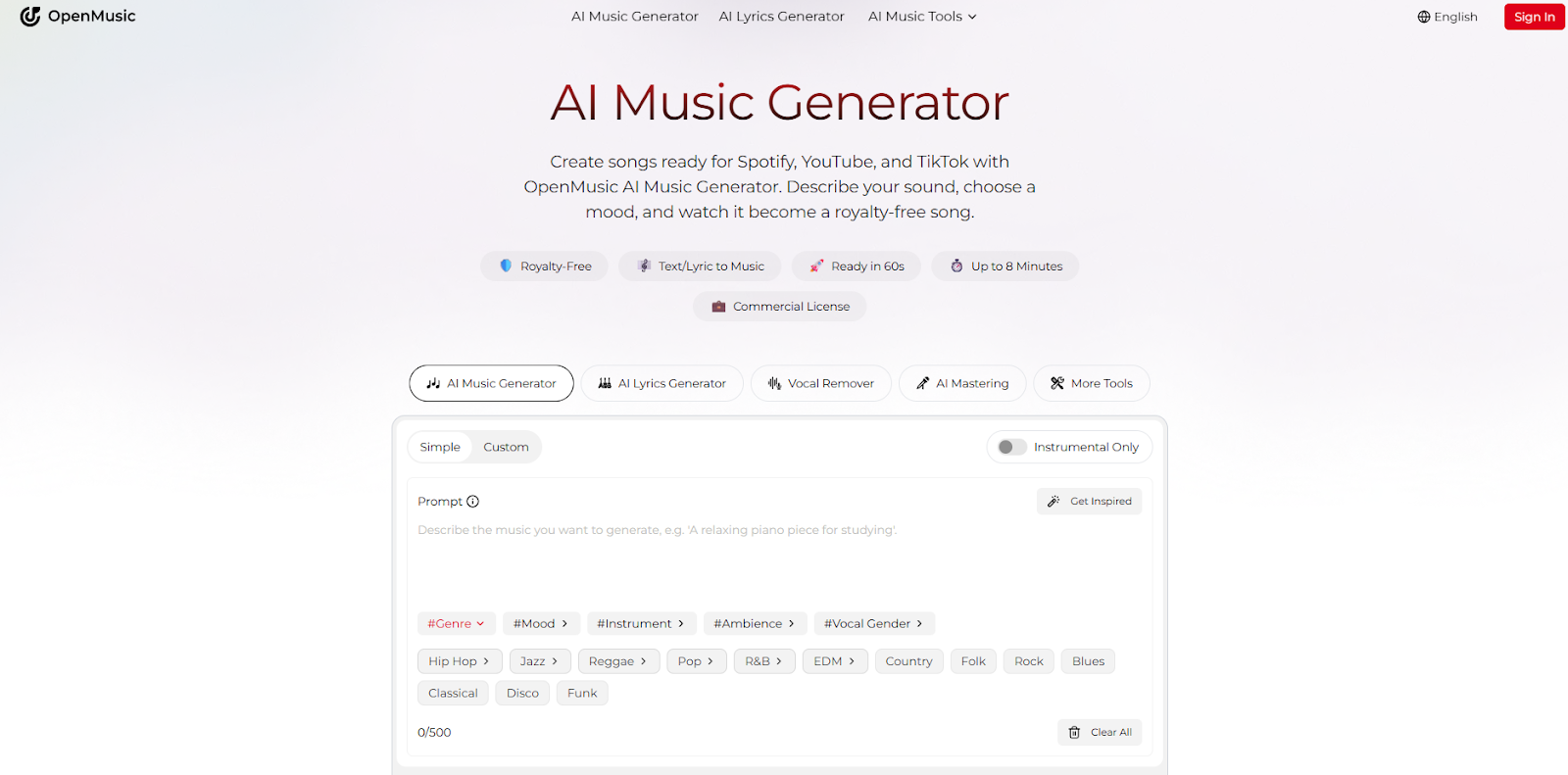
OpenMusic AI is designed to generate synchronized music videos using artificial intelligence. Instead of separating music production and video editing into different workflows, it merges them into a single pipeline. This allows users to move from concept to output without switching between multiple tools.
The platform focuses heavily on automation, which means much of the technical work happens behind the scenes. Users provide input, and the system handles timing, transitions, and visual composition. This approach reflects a broader shift toward simplified creative systems.
Core Positioning in the AI Landscape
Unlike traditional editing software, OpenMusic AI is not built for frame-by-frame precision. It is closer to a generative system that interprets prompts and produces results based on trained models. Within the broader ecosystem of an AI Music Video Generator, it positions itself as accessible rather than deeply customizable.
Key Functional Highlights
Automated Beat Synchronization
One of the more critical technical challenges in music video creation is aligning visuals with rhythm. OpenMusic AI addresses this by detecting tempo and structuring visuals accordingly. This reduces the need for manual editing, which is often time-consuming for beginners.
In practical terms, this means that transitions, cuts, and effects are automatically matched to the music’s structure. While not always perfect, the system generally produces outputs that feel cohesive.
Prompt-Based Visual Generation
The platform allows users to describe scenes using text prompts, which are then translated into video sequences. This removes the need for raw footage or design assets. For creators experimenting with abstract or stylized content, this feature opens new possibilities.
However, the quality of results depends heavily on how specific the input is. Broad or vague prompts may lead to generic outputs, requiring iteration.
Multi-Platform Output Adaptation
Another notable feature is format flexibility. OpenMusic AI supports different aspect ratios, making it easier to create content for vertical and horizontal platforms. This is particularly relevant for creators managing multiple channels.
Instead of manually resizing content, users can generate outputs optimized for each platform. This improves efficiency, especially in high-volume workflows.
Step-by-Step Usage Flow
Step 1: Input and Concept Definition
Users begin by entering a prompt or selecting a style. This step defines the direction of both the music and visuals. Clear inputs tend to produce more consistent outputs.
Step 2: Audio Selection or Generation
The platform allows users to either upload their own music or generate tracks internally. This flexibility is useful for creators who want to experiment with different sounds.
Step 3: Video Generation Process
Once the audio is ready, the system generates a video that aligns with the track. This includes scene transitions and visual effects. The process is largely automated, requiring minimal user intervention.
Step 4: Review and Export
Users can preview the generated video and make minor adjustments. Final outputs can then be exported in formats suitable for various platforms. This streamlined process highlights the efficiency of an AI Music Video Generator in real-world use.
Strengths and Weak Points
Advantages Worth Noting
One of the main strengths of OpenMusic AI is speed. The platform reduces production time significantly compared to traditional workflows. This makes it useful for creators who need to publish frequently.
Another advantage is accessibility. The interface is relatively simple, which lowers the barrier to entry. Users without technical backgrounds can still produce functional content.
Limitations to Consider
Despite its efficiency, the platform has limitations in terms of control. Advanced users may find the customization options insufficient for detailed editing. This can be a drawback for projects requiring precise visual storytelling.
There is also variability in output quality. Since the system relies on AI interpretation, results may differ depending on input. This unpredictability can require multiple iterations.
Broader Market Impact
The Shift Toward Automated Creativity
The emergence of tools like OpenMusic AI reflects a larger trend in digital media. Automation is becoming a core component of creative workflows. This shift is changing how content is produced and consumed.
Data from recent industry reports suggests that AI-assisted content creation is growing rapidly, especially in video formats. This indicates strong demand for tools that simplify production.
Implications for Traditional Workflows
While AI tools increase efficiency, they also challenge traditional roles in video production. Tasks that once required specialized skills can now be performed with minimal input. This raises questions about the future of creative professions.
At the same time, these tools may expand access rather than replace expertise. More people can participate in content creation, leading to a more diverse media landscape.
Unique Perspective: Creativity vs Automation
One of the ongoing debates around an AI Music Video Generator is whether automation enhances or limits creativity. On one hand, it removes technical barriers, allowing more people to experiment. On the other hand, it can constrain outputs within predefined patterns.
OpenMusic AI illustrates this balance. It enables rapid production but may not fully capture highly specific artistic visions. This trade-off is central to understanding the role of AI in creative industries.
Final Evaluation
A Practical but Imperfect Tool
OpenMusic AI offers a functional solution for generating music videos quickly. Its strengths lie in efficiency and accessibility rather than deep customization. For many users, this is a reasonable trade-off.
Where It Fits in the Ecosystem
Within the broader category of AI Music Video Generator tools, OpenMusic AI occupies a middle ground. It is more integrated than basic tools but less flexible than professional software. This makes it suitable for certain use cases but not all.
Closing Thoughts
As AI continues to evolve, tools like OpenMusic AI will likely become more advanced. For now, it serves as a clear example of how automation is reshaping content creation. Whether it becomes a primary tool or a supplementary one depends on the user’s needs and expectations.