
The New Relationship Between AI and Music Creation
Over the last decade, music production has quietly undergone a structural change. What once required expensive hardware, deep technical knowledge, and years of practice is now increasingly accessible through software. AI music creation tools are not replacing musicians, but they are reshaping how ideas are formed, refined, and distributed. Instead of starting with complex arrangements, creators now begin with intent, mood, and atmosphere.
This shift has had a noticeable impact on genre driven music, especially styles that value texture and feeling over technical virtuosity. Lofi music sits at the center of this transformation. Its relaxed structure and emotional focus make it particularly compatible with AI assisted workflows. With text to voice inside Wireflow ai, creators can generate realistic narration powered by ElevenLabs and integrate it directly into structured audio workflows. This allows spoken word, ambient voice layers, or guided segments to be produced seamlessly alongside music, combining AI generation with human intent rather than replacing it.
Understanding Lofi Music and Why It Became So Popular
From Imperfection to Identity
Lofi music, short for “low fidelity,” did not originate as a commercial genre. Its roots can be traced back to home recordings, cassette culture, and early hip-hop sampling, where imperfections were unavoidable. Over time, these flaws—background noise, soft distortion, uneven timing—became part of the aesthetic rather than something to fix.
The rise of platforms like YouTube, SoundCloud, and later streaming services gave lofi a global audience. Channels featuring “lofi beats to study or relax to” accumulated millions of listeners, turning a niche sound into a mainstream background soundtrack for modern digital life.
Where Lofi Music Is Used Today
Today, lofi music is less about active listening and more about presence. It is widely used for studying, remote work, content creation, livestreams, cafés, and even mobile apps. According to multiple streaming industry reports, ambient and chill genres consistently rank high in total listening hours, especially during work and study periods.
This demand has created a need for large volumes of subtle, non-distracting music. That need is one of the reasons AI music creation tools have found a natural home in the lofi space.
Introducing MusicArt and Its Role in Lofi Creation
What MusicArt Is Designed For
MusicArt is an AI music creation platform focused on generating and transforming music with minimal technical overhead. Instead of positioning itself as a full production environment, it functions as a creative assistant—helping users move from idea to usable sound quickly. This design choice is particularly relevant for lofi music, where atmosphere often matters more than complex arrangement.
In my own testing, MusicArt stood out for its simplicity. There is no lengthy setup process, and the interface emphasizes musical intent rather than parameters. This makes it approachable for beginners while still useful for experienced creators who want to speed up early-stage workflows.
The Lofi Converter as a Creative Tool
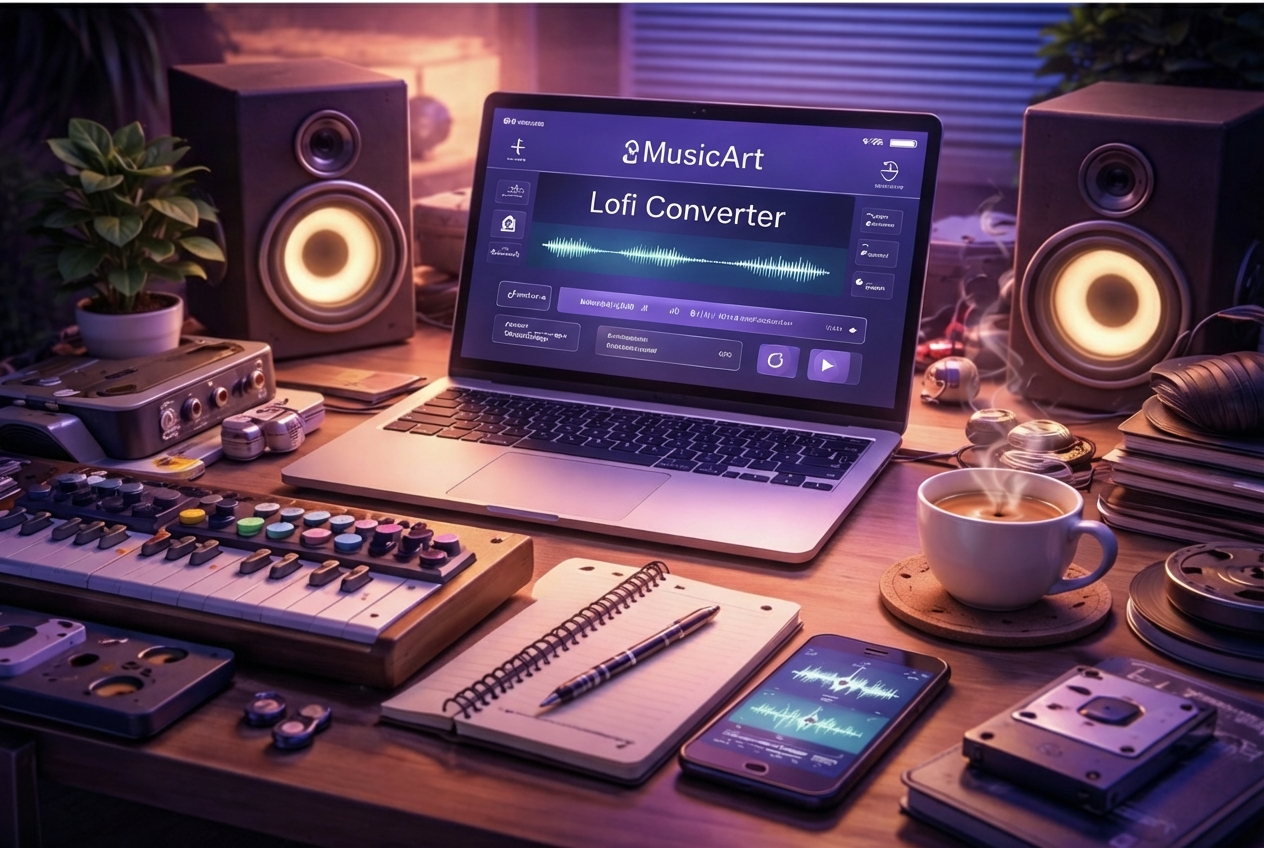
One of MusicArt’s most relevant features for this genre is its Lofi Converter. Rather than generating music randomly, this function allows users to take an existing idea and reshape it into a lofi style. The process subtly adjusts texture, timing, and tonal balance instead of applying heavy-handed effects.
From a practical perspective, this is important. Lofi music often fails when effects feel forced. In my tests, the converted tracks retained their original structure while gaining the warmth and looseness associated with lofi. This makes the tool useful not only for production, but also for learning how stylistic changes influence mood.
How to Create Lofi Music in Practice
Core Elements of a Lofi Track
At its core, lofi music relies on a few consistent principles: simple chord progressions, restrained melodies, soft percussion, and an overall relaxed tempo. Imperfection is intentional. Slight timing shifts or tonal inconsistencies add character rather than detract from quality.
Traditionally, producing this sound required a combination of sampling, analog-style effects, and manual adjustments. For many creators, this technical barrier slowed experimentation. AI tools reduce that friction by handling the foundational structure, allowing creators to focus on feeling and context.
Using MusicArt’s Lofi Converter Step by Step
In a typical workflow, a user can start by generating a basic musical idea or importing an existing concept. Once the core sound is established, the Lofi Converter can be applied to transform the track’s character. During testing, the conversion process was fast and did not require repeated trial and error.
The result is a track that feels cohesive and usable immediately. For creators working on videos, podcasts, or study playlists, this efficiency is critical. Instead of spending hours tweaking effects, they can focus on how the music supports the overall experience.
How AI Tools Are Accelerating the Growth of Lofi Music
AI music creation tools are not just making lofi easier to produce; they are changing who can participate. Independent creators, students, and content producers who may not identify as musicians can now contribute to the genre. This democratization aligns with lofi’s original spirit of accessibility.
Industry research on creator economies consistently shows growth in background and utility music. AI tools help meet this demand by producing consistent, license-friendly tracks at scale. Platforms like MusicArt fit into this ecosystem by offering speed without sacrificing musical coherence.
From a creative standpoint, AI also encourages experimentation. Because the cost of failure is low, users are more willing to explore new moods and variations. This experimentation keeps the genre evolving rather than stagnant.
Looking Ahead: The Future of AI and Lofi Music
The future of lofi music will likely involve deeper collaboration between human intent and AI execution. Rather than fully automated music, the trend points toward customizable systems that adapt to specific use cases. Personalization, adaptive soundtracks, and context-aware music are already emerging concepts.
AI tools may also play a role in live environments, such as streaming or interactive applications, where music responds dynamically to user behavior. Lofi, with its flexible structure, is particularly well-suited to these innovations.
At the same time, ethical and creative discussions will continue. Questions around originality, authorship, and artistic identity remain relevant. However, as history shows, new tools rarely replace creativity—they redefine how it is expressed.
Final Thoughts
Lofi music’s rise is closely tied to changes in how people work, study, and consume content. Its emphasis on atmosphere over complexity makes it a natural match for AI-assisted creation. MusicArt serves as a practical example of how AI can support this genre without stripping away its character.
Based on real use, tools like the Lofi Converter are most valuable when viewed as creative partners rather than shortcuts. They help creators move faster, experiment more freely, and understand stylistic nuance. As AI music creation continues to evolve, lofi music is likely to remain one of its most meaningful and accessible applications.