
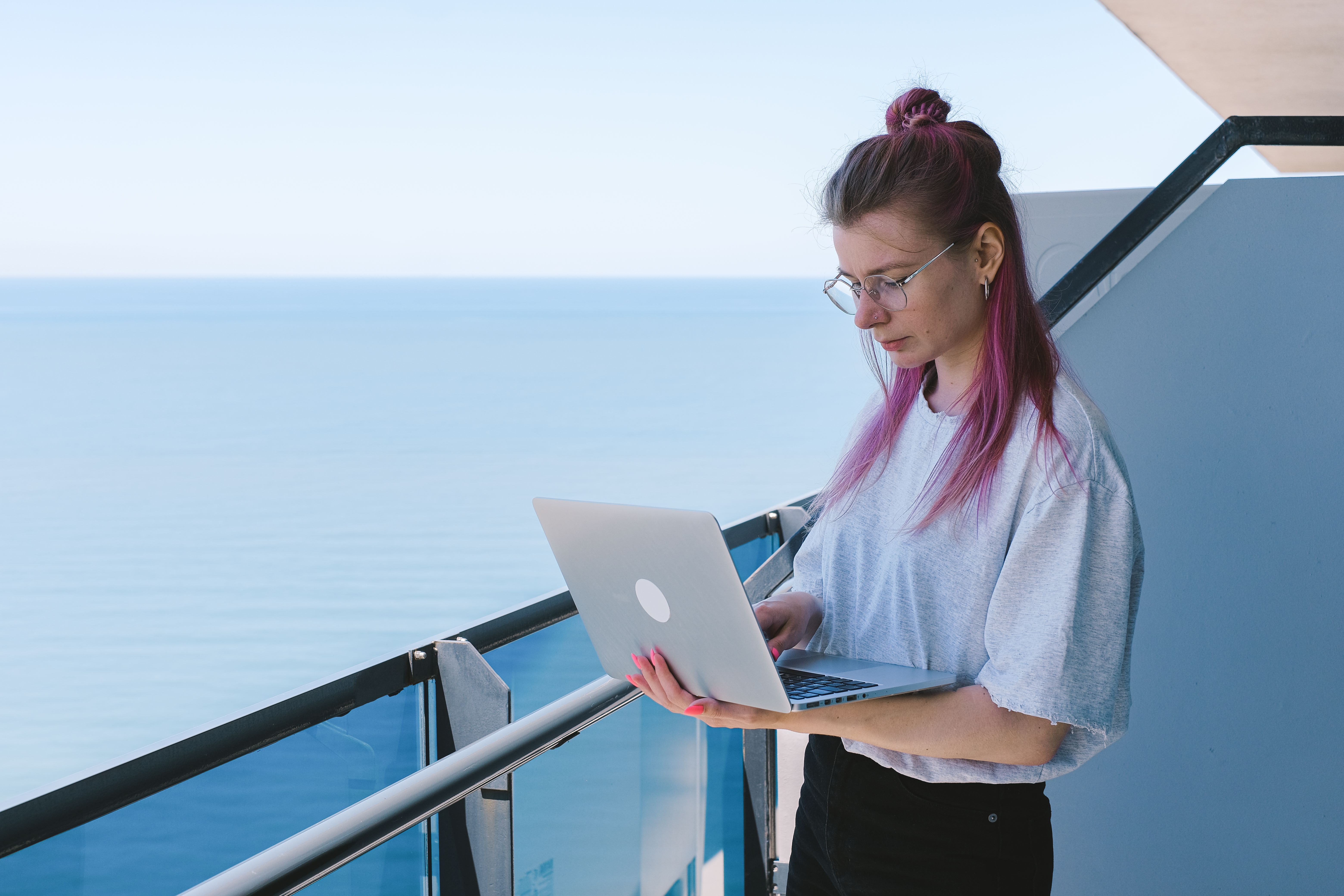
The freedom to pack your bags and start life anew in an unfamiliar city on a whim is one of the most appealing things about the digital nomad experience. It can also be one of the biggest threats to your productivity, though.
So, how do you stay productive when your surroundings change completely every few weeks? How do you account for and prevent problems before they derail your plans? Here’s what to do to remain productive, organized, and content as a digital nomad.
Keep Your Work Setup Light
One trick experienced nomads keep emphasizing is to build your workspace for mobility, not comfort. Adopting a minimalist mindset will let you set up shop anywhere while making packing and moving that much more convenient.
What exactly this means depends on the type of work you do, but a laptop, charger, headphones, and one more particularly useful accessory should be enough for most people’s needs.
Build Resilient Routines
It’s common knowledge among nomads that sticking to a routine helps you adapt to new places and get back up to speed quicker. The advice you don’t see often is to build your routine around core activities rather than rigid schedules.
Structure each day around familiar touchstones. This can be anything from taking a shower and a walk before work to scheduling check-ins with clients in the afternoon. This way, much of your routine can remain largely intact even on days when you’re moving or have to work more than expected.
Prioritize Your Most Productive Time
There are likely certain times of day when concentrating and working in general comes easier to you. Identifying and protecting these times is a reliable way of getting more done faster.
Dedicate a few hours to deep work each day and use that time to tackle tasks that either take priority or push your projects forward the most. You can structure less demanding tasks like admin or client interactions around them. Once you’re done for the day, you can enjoy the travel and exploration part of nomadic life guilt-free.
Never Leave Connectivity Up to Chance
Since your livelihood literally depends on it, you have to pay much more attention to connectivity than the average tourist. Making sure that your accommodations or a nearby coworking space have fast Wi-Fi is only one part of the equation. The other is not assuming that Wi-Fi will always be available or fast enough and doing something about it proactively.
Backup internet access is non-negotiable. You can go about it in different ways, but eSIM apps fit the digital nomad use case best. They’re often cheaper than roaming and provide the same local coverage as physical SIMs without the hassle. Better yet, you can activate a regional eSIM plan and freely travel between multiple countries without having to set anything else up or impact internet access.
Put Moving on Pause
Staying efficient also means realizing that moving a lot has many hidden downsides. Each new city means having to hunt for accommodations, get to know a new neighborhood, find a suitable coworking space, and get back into your routine. All of this takes time that would be better spent on work.
No one is saying you should effectively trade your old home for a new one. However, moving only a couple of times per year instead of every month or two creates fewer interruptions while giving you more time to make genuine connections and build a more worthwhile life in each destination.
Establish Firm Work Boundaries
Being on the move makes blurring the lines between professional and other aspects of your life easier. Confusing your brain by working from your bed or constantly checking Slack for updates while sightseeing means neither activity gets the attention it deserves.
The solution is to set firm boundaries and stick to them. Go to a coworking space or designate a desk in your Airbnb as a work area, do your best each day, and clock out completely after you’re done. Be transparent about your work schedule with clients. Try to accommodate them by at least partly overlapping your workday with their regular hours, but make it clear that you'll be unavailable past a certain time each day.
Key Takeaways
- Keep travel between cities simple by only bringing equipment you actually need.
- Anchor your daily routine to consistent habits, yet leave some room for flexibility.
- Reserve your best hours each day for the most impactful work.
- Fewer location changes mean fewer interruptions and more time to settle into your new life.
- Work and leisure both deserve dedicated time and space.
- Get a regional plan for internet access, like the best eSIM for Europe, so that you have a viable connection wherever you go within that continent.
In short, don’t overcomplicate things
You don’t need some kind of sophisticated system to stay productive while traveling frequently. If anything, you need to simplify your approach so that as few issues and situations as possible can throw off your rhythm.