
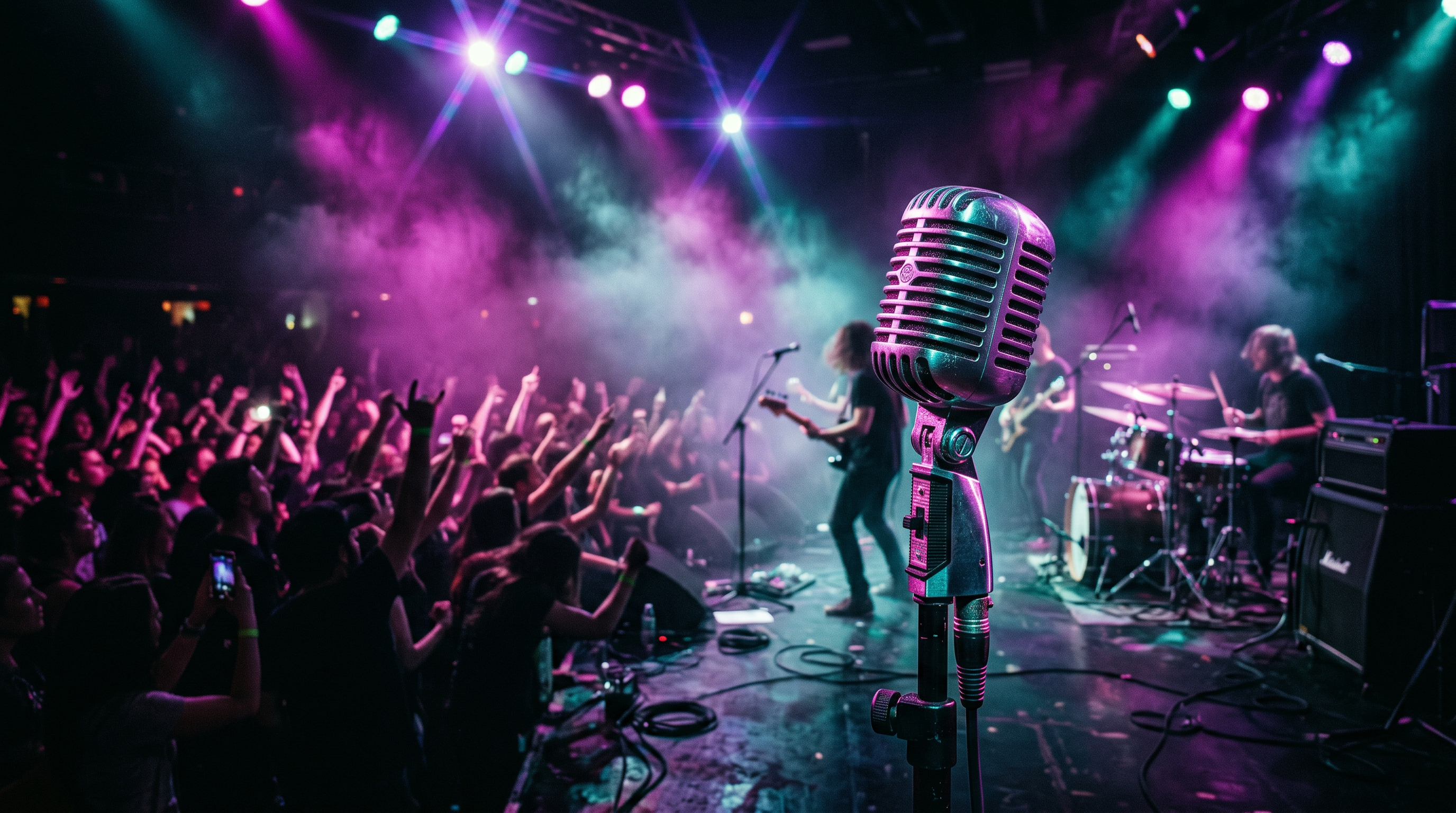
There was a time when making a music video meant organizing people, equipment, schedules, revisions, and at least one emotional breakdown in the editing room at 3 a.m.
Now, the workflow looks more like this:
You describe an idea.
A system generates music.
Another system writes lyrics.
A third system builds visuals.
And suddenly, you have a finished music video before your coffee gets cold.
It sounds like exaggeration, but it isn’t. AI music video generation has quietly become one of the most disruptive creative shifts in digital media. Not because it replaces creativity, but because it removes almost everything that used to slow creativity down.
What’s left is something new: a creative process built around conversation instead of production.
The New Creative Pipeline: From Technical Workflows to Idea Translation
Traditional music video production followed a rigid pipeline:
- Write the song
- Record the music
- Plan the video
- Shoot footage
- Edit everything together
- Revise endlessly until everyone is tired
Each step required time, money, and coordination. Creativity existed, but it was constantly delayed by logistics.
AI collapses this pipeline into a loop instead of a line.
Now the process looks more like:
- Describe idea
- Generate music
- Generate variations
- Generate visuals
- Refine direction
- Repeat instantly
The key difference is speed, but the deeper change is structural. Creativity is no longer blocked by execution. It is only limited by how clearly an idea can be expressed.
In other words, the bottleneck has moved from “making things” to “explaining things.”
Why AI Music Video Tools Are Exploding Right Now
This shift didn’t happen randomly. It is the result of several cultural and technological forces colliding at once.
1. Short-form content rewired attention expectations
On platforms like TikTok and YouTube Shorts, content is judged instantly. A video doesn’t have time to “warm up.”
It must immediately communicate:
- Mood
- Energy
- Identity
- Visual hook
AI systems are extremely effective in this environment because they can generate dozens of variations in minutes. Instead of guessing what works, creators can test multiple directions immediately.
2. Traditional production is too slow for modern content speed
Even a simple music video involves:
- Planning
- Shooting
- Editing
- Feedback cycles
- Revisions
- Final approval delays
Each layer introduces friction. AI replaces most of that with regeneration. If something doesn’t work, you don’t fix it—you re-create it instantly.
That single change has completely reshaped production economics.
3. Creators now prioritize experimentation over perfection
Instead of aiming for one perfect output, creators now operate like this:
- Generate 10 versions
- Pick 2 promising ones
- Refine those
- Publish quickly
AI makes experimentation cheap enough that iteration becomes the primary creative strategy.
The Foundation Layer: AI Music as the Starting Point of Visual Creation
Before any visuals exist, there must be music. In modern workflows, that music is often generated by AI systems designed to understand emotional intent rather than just sound synthesis.
This is where AI Song Generator plays a foundational role in the creative pipeline.
Instead of requiring knowledge of music theory, instruments, or production software, users simply describe a mood or idea. The system then translates that input into a structured musical composition.
A typical output includes:
- A defined intro that sets emotional tone
- Melodic progression that develops intensity
- Chorus or hook sections that anchor memory
- Transitions that guide emotional movement
- A structured ending that resolves the piece
What matters here is not just sound generation, but structure generation.
Because AI music video systems rely heavily on structure to determine visual pacing. Without structure, visuals become random. With structure, visuals become narrative.
So in practice, AI-generated music is not just audio. It is the skeleton that the entire visual experience is built on.
AI Rap Generation: Where Personality, Rhythm, and Storytelling Collide
Not all AI-generated music plays the same role in this ecosystem. Some tools focus on atmosphere and emotion, while others focus on identity and narrative voice.
Rap generation belongs firmly in the second category.
Rap is difficult to automate because it depends on more than melody. It requires:
- Flow consistency
- Rhythmic precision
- Linguistic creativity
- Tone and attitude
- Narrative structure
Despite this complexity, modern systems have become surprisingly capable of producing structured rap content that fits musical timing.
This is where AI Rap Generator becomes especially relevant in modern workflows.
Instead of producing random lyrical text, these systems focus on:
- Verse and hook structure alignment
- Rhyming consistency across bars
- Beat-synced phrasing
- Tone adaptation (humor, aggression, storytelling, motivation)
- Rhythm-aware lyric placement
What makes AI rap generation particularly interesting is how it behaves with unconventional prompts. Instead of breaking down, it often produces structured, performable output—even when the input is chaotic.
From a video generation perspective, this is extremely valuable because rap naturally implies storytelling. It already suggests:
- Characters
- Conflict
- Emotional shifts
- Scene progression
That makes it one of the most “video-ready” forms of AI-generated music.
How AI Music Video Systems Turn Audio Into Visual Storytelling
Once music and lyrics are generated, the final stage is transformation into visuals.
This is where AI music video systems interpret sound and convert it into structured imagery.
The process usually follows a multi-step interpretation model:
- Audio analysis identifies tempo, energy, and emotional tone
- The track is segmented into structural sections (verse, chorus, drop, etc.)
- Each section is mapped to a visual theme
- Scenes are generated to match emotional direction
- Final rendering synchronizes visuals with beat timing
The important idea here is interpretation, not replication.
The system is not simply matching beats with images. It is attempting to translate emotional structure into visual language.
A soft verse might become slow cinematic motion. A chorus might become high-energy visual transitions. A drop might trigger a complete environmental shift.
The output can sometimes be surprisingly accurate. Other times, it becomes abstract in ways that still feel emotionally aligned.
Either way, it remains structured—and that structure is what makes it usable.
Why Creators Are Moving Toward Full AI Creative Stacks
One of the biggest shifts in 2026 is that creators are no longer relying on single tools. Instead, they are building layered creative systems.
A typical workflow now looks like:
- Generate music using AI composition tools
- Add rap or lyrical layers for narrative depth
- Feed audio into video generation systems
- Iterate through multiple visual outputs
- Publish variations for audience testing
This transforms creation into orchestration. Instead of doing everything manually, creators manage a chain of specialized systems.
Each layer contributes a different aspect:
- Music defines emotion
- Lyrics define personality
- Video defines perception
Together, they form a complete multimedia experience.
Real-World Adoption: Who Is Using These Tools Today
AI music video generation is no longer experimental. It is already being used across multiple sectors.
Independent musicians use it to test visual concepts before committing to full production. Social media creators use it for rapid content generation. Marketing teams use it to produce campaign visuals without long production cycles. Even hobby creators use it to turn abstract ideas into fully formed audiovisual content.
Across all use cases, the dominant factor is speed. The ability to move from idea to output in minutes changes not just production workflows, but creative expectations themselves.
The Bigger Shift: Creativity Has Become a Communication Skill
The most important transformation is not technical. It is cognitive.
In this new environment, creativity depends less on tool mastery and more on communication clarity.
That means:
- Better descriptions produce better outputs
- Emotional precision improves results more than technical skill
- Iteration replaces manual editing
- Creativity becomes conversational rather than procedural
In this sense, AI does not replace creativity. It reorganizes it around language.
The ability to clearly express intent becomes more valuable than the ability to operate software.
Final Thoughts: The Studio Has Disappeared Into the Conversation
AI music video tools have not removed creativity. They have compressed the distance between imagination and execution.
What once required a full production team, technical expertise, and long timelines can now be achieved through layered AI systems working together in sequence.
Within this ecosystem, AI Song Generator and AI Rap Generator represent two foundational components—one shaping musical structure, the other shaping lyrical identity. Together, they feed into visual systems that transform sound into storytelling at unprecedented speed.
The result is a creative environment where production is no longer the barrier.
Expression is.
And in this new landscape, the real advantage no longer belongs to those who have the most advanced tools—but to those who can describe the clearest vision of what they want to create.